
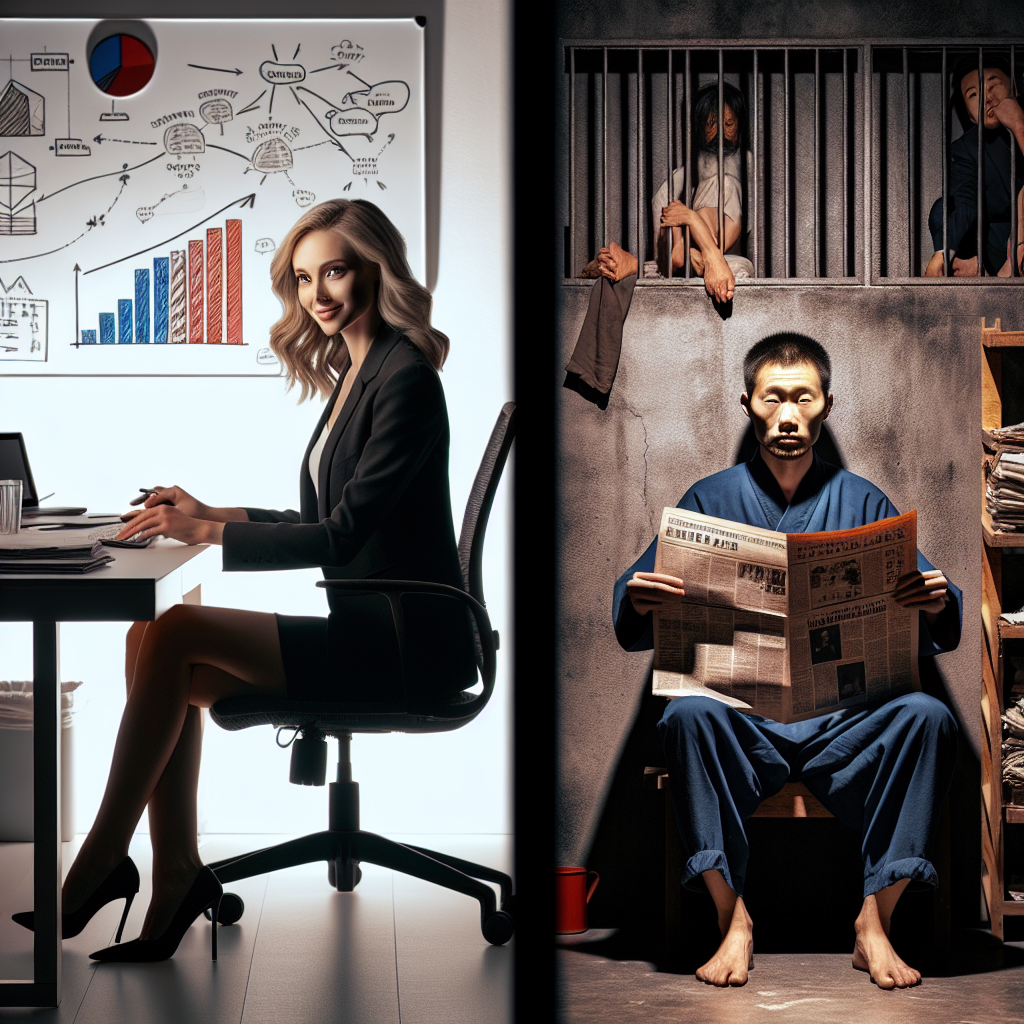
In the United States, young people have the freedom to express themselves and pursue entrepreneurship when faced with stress and anxiety. However, in China, young people are experiencing a comprehensive regression in politics and the economy, lacking the freedom of expression. Despite their efforts, unable to change their fate, they are not responding to the political mobilization promoted by the Chinese Communist Party. Instead, activities like “lying flat” and “slacking off” have become popular, with the emergence of a new trend called “emotional consumption”.
In China, the emotionally-driven economy led by young people is experiencing exponential growth. Engaging in seemingly unrelated activities such as buying mystery boxes or attending pottery and ring-making workshops over a weekend are all forms of emotional consumption. The value of these products lies not in practicality but in providing emotional comfort, relieving stress, and offering a sense of identity.
According to a survey conducted by “Daxue Consulting” in 2025 with a sample size of 2338 people, emotional consumption in China is primarily driven by those born between 1990 and 2005, accounting for 84% (aged 20-35).
While emotional consumption is a global trend, the expansion rate in the Chinese market significantly exceeds the global average. From 2022 to 2025, the domestic emotional consumption market maintained an annual growth rate of 18.63%.
One of the unique aspects of emotional consumption in China is that it has achieved growth against the backdrop of a slowdown in consumer spending. In 2025, consumer spending in China increased by 2.3% compared to the previous year, lower than the growth rates of 5.2% in 2024 and 9.9% in 2023. Despite decreased interest in purchasing commodities, consumers showed the highest willingness in eight years to increase spending on social and entertainment activities in the following three months.
In contrast to China, in the United States, expenditures on emotional experiences have been in sync with overall consumer spending growth, rather than veering off the upward trend. This disparity has caught the attention of policymakers seeking to stimulate consumer demand. For instance, the Chongqing municipal government emphasized the role of emotional economy in its 2026 work report for the first time.
Economic scholar Davy Jun Huang pointed out that the phenomenon of emotional consumption among Chinese youth is a result of political and economic pressure transforming into personal emotional expenditures. In normal societies, young people can alleviate anxiety through avenues like freedom of expression, gathering freely, or even voting to change laws, thus having outlets to strive for change. However, in China, individuals feel isolated without political rights, unable to express emotions in the public sphere or effect societal change, resorting instead to some form of personal consumption for comfort and entertainment.
According to former Chinese educational teacher Geng Lutao, young people in China in their twenties face unemployment upon graduation, and even if they find jobs, the income is minimal. Those in their thirties bear the burden of marriage, buying a house, a car, and raising children, adding significant pressure. While in a normal society, effort usually yields results and provides avenues to change one’s destiny, many in China find it challenging to attain stability and security even with relentless work. Thus, they turn to low-threshold consumption choices that offer emotional solace as a temporary escape from reality.
In recent years, along with the phenomenon of being “involution”, the concept of “emotional value” has become increasingly popular as it reflects the harsh realities faced by many. Following significant shifts in Chinese politics, economy, and society post-2018, exacerbated by the impact of the pandemic, the mental well-being of young people, in particular, has been deeply affected.
It has been noted that as each person carries the weight of their personal struggles in these tumultuous times, the challenges they face appear insurmountable. Previously held progressive principles and beliefs accumulated during the reform and opening-up era have crumbled, with the specter of the “Cultural Revolution”, once considered anti-human and anti-social, resurfacing in China. Young people, hopeful of contributing to a more progressive society, find themselves abruptly halted, their minds required to occupy a specific “ideological territory”.
Under precise scrutiny by online algorithms, even the once-popular concept of “lying flat” has been labeled as “negative energy”, restricted, or even silenced, as society becomes inundated with false narratives of prosperity.
In the midst of eroding traditional values, decreasing educational value, class solidification, challenging employment prospects, and heightened insecurity post-pandemic, a mix of anger, discontent, anxiety, fear, exhaustion, confusion, and resignation permeate daily life.
With all avenues for expression seemingly blocked, the only outlet left encouraged by authorities is the guise of “consumption” under the label of “emotional consumption”.
Former foreign company executive Cao Peng expressed that those born in the 1990s in China have witnessed two decades of rapid economic growth, fostering hopeful aspirations. However, this trajectory abruptly halted as China’s economic trajectory diverged from the West, leading to sudden uncertainties in politics, economy, and demographics.
He remarked on the stark shift young people have experienced, from carefree times to facing the pressing reality of potential unemployment and an unpredictable future. Under such circumstances, they turn to pets, fictional worlds, and other forms of emotional solace for refuge.
Huang further emphasizes that the emotional consumption exhibited by Chinese youth is a form of passive resistance, albeit not organized opposition. When individuals feel their efforts are futile in altering their destinies, and their expressions fail to affect change, resources and energy are redirected from grand narratives towards fragments like mystery boxes, idols, handicrafts, aromatherapy, painting, and binge-watching short videos to seek a better existence.
With the Trump administration introducing significant changes to the global political and economic landscape, particularly through actions like the apprehension of Maduro and confronting Iran, the impact has reverberated through the global network of the Chinese Communist Party, gradually encroaching upon this malevolent entity.
Facing the harsh reality of strict pandemic lockdowns in 2022, Chinese youth had voiced slogans such as “Overthrow the Communist Party” and “Xi Jinping Step Down”. As China’s economy and society confront another significant crisis, the question arises – how will Chinese youth respond?
Presently, the psychological state of young people in China can be characterized as thoroughly disenchanted under high pressure. They possess analytical abilities, seeing through the structural issues within the reality but lack the capabilities to summarize and effect change.
Hu notes that Beijing has a vast arsenal of social engineering and social stability tactics, making significant reforms seem unlikely without external influential forces. On the other hand, Geng describes the psychological state of contemporary Chinese youth as repressed, anxious, disappointed, numb, and concurrently accumulating dissatisfaction. Although many appear silent, primarily focusing on their personal lives and emotional well-being, it does not signify acceptance but rather a means of self-preservation in a high-pressure environment.
Geng elaborates that if China were to face another significant social or economic crisis in the future, young people could stand as the first responders, awakening to take action. The “blank sheet” movement has already demonstrated that under sufficient pressure accumulation, young people will step up. Currently lacking a unifying spark to connect their divergent dissatisfactions, once such an opportunity arises, they could spearhead significant societal changes.
“Many young people are suffering and disillusioned, but prolonged pressure and indoctrination have weakened their ability to act. However, extremes will inevitably provoke a reaction, and this suppression cannot last forever,” he concludes.