
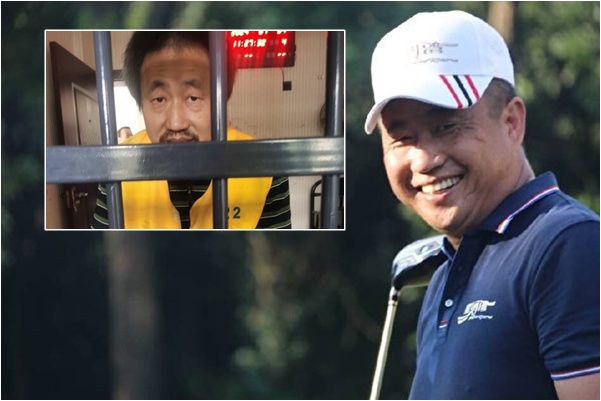
Human Rights Lawyer Xie Yang from China was recently sentenced to 5 years in prison on the charge of “inciting subversion of state power” and fined 100,000 yuan. He had been detained for 1532 days before the trial, nearly coinciding with his sentence. The lack of transparency in the trial process, prolonged detention, and criminalization of speech have sparked international attention. Xie Yang’s ex-wife, Chen Guiqiu, called the case “a huge disgrace to the Chinese judicial system” and emphasized that Xie Yang will appeal. Interviewees expressed that the current authorities’ actions are despicable and base, beyond ludicrous.
The Xie Yang case was judged on March 23, 2026, at the Changsha Intermediate People’s Court. However, defense lawyers were not notified to attend the trial, only a few family members such as his brother, sister-in-law, and niece were allowed to be present. Xie Yang expressed his dissatisfaction with the verdict in court and stated that he would appeal.
Chen Guiqiu, his former wife, pointed out on social media that the judgment cited Xie Yang’s “certain WeChat posts” and described the court’s proceedings: “During the trial, there were no defense lawyers present. Apart from a few of Xie Yang’s relatives, there were dozens of unfamiliar people who were arranged to be ‘observers’.”
The observers’ seats were accused of being “reserved seats”, mostly occupied by unknown individuals besides family members, further deepening doubts about the trial’s transparency and fairness. Defense lawyers were unable to attend or access the case files, severely limiting the defendant’s basic right to a defense.
Xie Yang’s third defense lawyer, Tan Yongpei, expressed indignation in a letter to friends, stating: “The Changsha Intermediate People’s Court did not notify me to attend; his two other lawyers also could not duplicate case materials or present a defense.” He described it as a “secret trial – a secret in the dark.”
Tan Yongpei emphasized that Xie Yang had “no ambitions, no acts of inciting subversion of state power” and his actions were solely for “speaking out for the parties involved, for speaking the truth.”
According to the Changsha People’s Procuratorate’s indictment on August 23, 2022, Xie Yang was accused of making “attacks on state power and the socialist system” through platforms such as Twitter, WeChat, starting from 2018. After 2020, he had interviews with overseas media outlets such as Epoch Times, Deutsche Welle, and Voice of America, which were deemed as “distorting facts and defaming the authorities.”
The Chinese prosecution accused him of showing no repentance, using the above statements and interview behaviors as the main basis for his conviction.
However, the United Nations Human Rights Council’s “Working Group on Arbitrary Detention” (WGAD) took the opposite stance. In its formal opinion No. 73/2025 issued on February 25 this year regarding the Xie Yang case, they deemed Xie Yang’s related statements within the scope of freedom of speech protected by the Universal Declaration of Human Rights and pointed out that the definition of inciting subversion charges was “overly broad and vague”, not a legitimate basis for deprivation of liberty.
The conclusion of the expert group’s opinion called for the Chinese authorities to immediately release Xie Yang, provide remedies and compensation, hold accountable those responsible, and conduct an independent investigation into the related violations.
Since his arrest on January 11, 2022, Xie Yang had been detained for 1532 days until March 23, 2026.
The process of his arrest was also controversial. Chen Guiqiu stated that Xie Yang was taken away from his home by National Security officers and subjected to a house search. She revealed that the safe in the house was taken by the Changsha Public Security Bureau, with all its contents illegally confiscated.
During his detention, there have been continuous allegations of torture and mistreatment, including being unable to communicate, wearing ankle and handcuffs, verbal insults, being monitored, and long-term deprivation of the right to meet with his lawyers.
The United Nations documents also detailed specific instances of abuse, such as being unable to meet with a lawyer for 7 to 8 months, being beaten, deprived of food, and forced to endure humiliating acts in front of cameras.
On January 1, 2025, in Cell 107 of the Changsha First Detention Center, Xie Yang wrote a statement that said: “Death before surrender,” raising concerns about the torture pressure he endured in prison.
Tan Yongpei also revealed: “During his days of detention, his mother passed away; and I also lost my mother during the detention period. The pain of these separations intertwines, making it hard to breathe, and the darkness suffocates.”
Regarding the verdict, Chen Guiqiu told Epoch Times: “For Xie Yang in this case, any day you sentence him, every day is innocent. Let alone sentencing him to five years, and he has already been imprisoned for four years and two months.”
She further pointed out: “This is truly a huge disgrace to the Chinese judicial system.” Criticizing the relevant departments collectively for “doing evil”, she said in anger, “Heaven is angry and people are outraged.”
Another mainland human rights lawyer Lian Jincheng (a pseudonym) also expressed strong criticism of the case to Epoch Times: “No term can describe the despicable and base conduct of the current authorities. “He pointed out that Xie Yang “only did some rights-defending actions”, yet received a heavy sentence of five years, stating that the current repression of rights defenders by the Chinese Communist Party has reached an extremely perverse level.
Regarding the current environment for speech, he added, “People in society now feel that they dare not say any slightly critical words against Xi Jinping or the CCP… it is completely a form of verbal imprisonment,” describing the situation as “once a wrong word is said, there is no turning back.”
Tan Yongpei stated, “The real harm to national security is not from lawyers like Xie Yang, but from those who frame him, those who abuse power, manipulate the judiciary, and trample on conscience.”
Tan, as a victim of the 2015 “709 mass arrest” targeting rights-defending lawyers by the Chinese authorities, had been wrongfully sentenced to 5 years on the charge of inciting subversion of state power.
The United Nations “Working Group on Arbitrary Detention” passed and formally issued Opinion No. 73/2025 in November 2025 and February 2026, determining that the Xie Yang case simultaneously led to four types of “arbitrary detention”, posing serious violations of international human rights law.
The categories of “arbitrary detention” included lacking legal basis. Xie Yang was forcibly disappeared for 7 months, with a non-legitimate charge of “inciting subversion,” as well as no presentation of an arrest warrant, prolonged pre-trial detention, and others.
Secondly, retaliation for exercising rights. Xie Yang was suppressed for peacefully exercising freedom of speech and duties as a human rights lawyer. The official media propaganda before the trial violated the principle of presumption of innocence.
Thirdly, serious violations of fair trial, with significant flaws in procedures, including long-term deprivation of the right to choose lawyers (up to 8 months), forced appointment of lawyers, and repeated torture and mistreatment.
Lastly, discriminatory treatment based on his status as a human rights lawyer and political views.
The opinion also highlighted in paragraph 74 the “crimes against humanity”, indicating the international community’s elevated concerns about the related suppression by the Chinese government to the level of international criminal law.
According to records, this is the second time the United Nations recognized Xie Yang’s detention as “arbitrary detention”, with the previous expert group releasing Opinion No. 59/2017 to the international community in 2017.
Xie Yang was born in 1972 in Changsha, Hunan. Since starting his practice in 2011, he had been involved in numerous cases of abuse of public power and long-term participation in rights protection movements.
On November 15, 2011, Xie Yang visited the human rights lawyer Chen Guangcheng, who was then under house arrest in Shandong Dongshi Ancient Village, where he was physically assaulted and robbed by local personnel. This incident led Xie Yang to shift from a commercial lawyer to a rights-defending lawyer.
During the “709 mass arrest” in 2015, Xie Yang was detained and subjected to severe torture in custody. He was charged with inciting subversion of state power and, although he was ultimately not sentenced, he continued to be monitored and restricted.
In January 2022, he was arrested again after going to Xiangxi, Hunan to support the teacher Li Tiantian, who had been sent to a mental hospital for her speech, which directly led to the triggering of this case.
Chen Guiqiu disclosed: “On December 25, 2021, Xie Yang went to Xiangxi, Hunan in heavy snow to defend citizens’ freedom of speech and support teacher Li Tiantian who was sent to a mental hospital. On January 11, 2022, lawyer Xie Yang was arrested at home.”
She wrote, “All the cruel means that the authorities can use, Lawyer Xie Yang has experienced again and again, and he has already endured them during the ‘709 mass arrest’ period.”
The development of the Xie Yang case, from indictment to verdict, revolved around his speech and rights protection activities, reflecting the Chinese Communist Party’s continuous severe repression of human rights lawyers.