
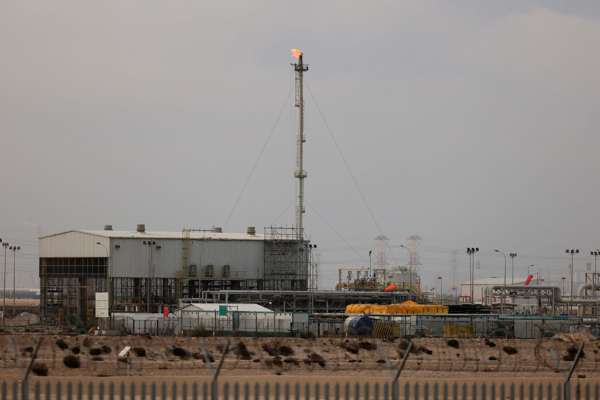
QatarEnergy announced on Tuesday (March 24) that due to the ongoing conflict with Iran, some of its long-term liquefied natural gas (LNG) supply contracts are facing force majeure, including agreements with clients in Italy, Belgium, South Korea, and China.
Force majeure is a contract clause that allows one party to be exempt from obligations due to unforeseen events. Kuwait and Bahrain’s oil companies have also recently invoked force majeure clauses.
The United States and Israel’s military actions against Iran have entered their fourth week. Iran’s blockade of the Strait of Hormuz and missile and drone attacks on neighboring countries, including Qatar, targeting oil and gas facilities, have sparked international condemnation and led to partial disruptions in global energy production and supply, with Asia and Europe being the most affected regions.
On March 18, Qatar reported that Iran had targeted its major gas facility, Ras Laffan Industrial City, causing “significant damage.”
The extent of the damage has led QatarEnergy’s CEO, Majed al-Ansari, to suggest that the company may have to declare force majeure on long-term contracts with Italy, Belgium, South Korea, and China, potentially affecting LNG supplies to these countries for up to five years.
The destruction of Qatar’s gas facilities will have the greatest impact on Asia, as about three-quarters of Qatar’s liquefied natural gas ultimately goes to Asia – particularly to countries like China, India, Taiwan, South Korea, and Pakistan. In 2022, China Petroleum & Chemical Corporation signed a 27-year LNG supply agreement with QatarEnergy, with Qatar committing to provide 4 million tonnes of LNG to Sinopec annually.
Most of the remaining supply flows to Europe – Italy, Belgium, Poland, and a small amount to the UK (which only imported about 1% of its LNG supply from Qatar last year). The majority of the UK’s gas imports come from its own North Sea oil fields, as well as from Norway and the United States.
Last week, al-Ansari stated that the Iranian attack on Ras Laffan gas facilities had damaged about 17% of the country’s LNG export capacity, resulting in an estimated annual loss of $20 billion in revenue and posing a threat to supplies to Europe and Asia. He informed Reuters that two of Qatar’s 14 LNG production lines (equipment used for LNG) and one of its two gas-to-liquid facilities were damaged in the Iranian attack.
He mentioned that the necessary repairs would lead to a production halt of 12.8 million tonnes of LNG annually over the next three to five years.
Similar to oil, natural gas exports from the Persian Gulf account for about 20% of global demand. However, natural gas (primarily methane) is fundamentally different from crude oil. Methane must be cooled to below -162°C to transport it in liquefied form.
At such low temperatures, steel becomes brittle. Therefore, storing and transporting LNG on ships is costly and energy-intensive. The liquefaction and transportation of methane can easily consume up to 15% of the initially extracted natural gas.
This also means that infrastructure capable of handling this highly flammable and explosive fuel under such extreme conditions must be extremely complex and thus very expensive. For example, the construction of the Ras Laffan gas field took decades, completed in multiple phases, costing billions of dollars.