
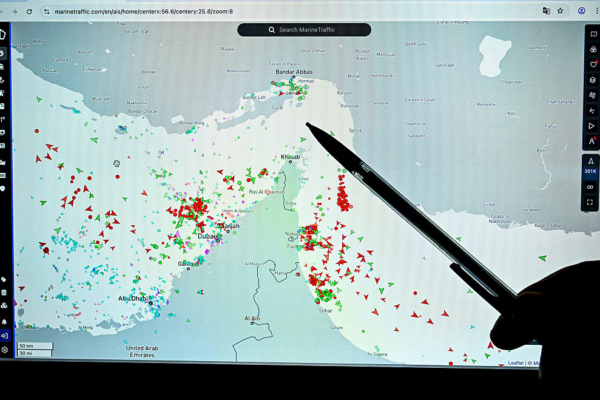
Bahrain submitted a draft resolution to the United Nations Security Council on Monday (March 23rd), proposing to authorize countries to take “all necessary means” to protect the security of commercial shipping in the Strait of Hormuz and its surrounding areas.
The use of “all necessary means” in diplomatic terms implies the use of force. This proposal has received support from countries including the United States and several Gulf states. Prior to this, 22 countries had issued a joint statement, expressing readiness to assist in safeguarding the passage rights of this global energy thoroughfare.
According to reports from Reuters, the document identifies Iran’s recent interference with navigation as a threat to international peace and security, citing Chapter VII of the United Nations Charter, which allows the Security Council to authorize various actions including sanctions and the use of force.
The draft explicitly demands that “the Islamic Republic of Iran must immediately cease all attacks on merchant ships, as well as any attempts to impede the legitimate passage or freedom of navigation in the Strait of Hormuz and its surrounding areas.”
If the draft is approved, it will authorize countries to act independently or deploy a multinational joint naval force into the territorial waters of coastal states to ensure that international waterways are not blocked or disrupted.
Last Saturday, Bahrain and the United Arab Emirates, along with 20 other countries, issued a joint statement expressing their readiness to contribute efforts to safeguard the security of navigation in the strait.
The signatory countries include the United Kingdom, France, Germany, Italy, the Netherlands, Japan, Canada, South Korea, Australia, as well as several European and Nordic countries.
These countries condemn Iran’s attacks on unarmed commercial ships and civilian infrastructure, including oil and gas facilities, and the “de facto blockade” of the strait.
The group urges Iran to stop threats, mine-laying activities, missile launches, and drone attacks, and to comply with the recent United Nations Security Council Resolution 2817.
The statement said, “Interfering with international navigation, disrupting the global energy supply chain, poses a threat to international peace and security.” The statement also added that freedom of navigation is a fundamental principle of international law.
The Strait of Hormuz carries around one-fifth of the world’s oil supply, and shipping in the area has nearly come to a halt since Iran announced on March 2nd that it might attack uncoordinated vessels.
According to U.S. officials, the U.S. military has deployed several warships, including the amphibious assault ship USS Boxer, and 2,500 Marines to the region.
While the specific mission details have not been disclosed, sources believe potential targets could include military facilities on the Iranian coast or its main oil export hub, Kharg Island.
Despite receiving support from multiple countries, diplomats predict that the draft resolution will face significant opposition in the Security Council, with Russia and China likely to exercise their veto power.
Currently, France is working on an alternative draft resolution seeking authorization from the United Nations after the situation has de-escalated. Security Council members are expected to continue consultations and negotiations on Bahrain’s proposal in the coming days.