
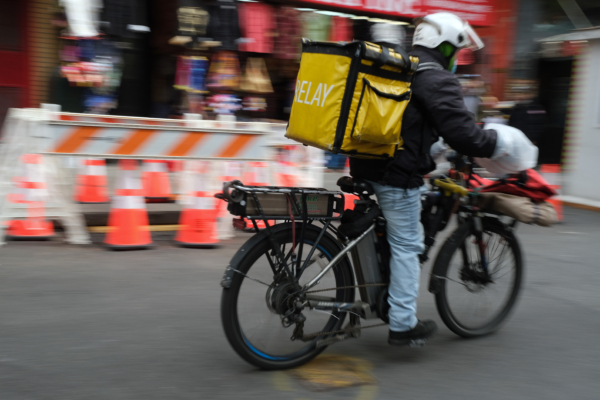
Long Island’s Nassau County recently announced that it would intensify its crackdown on electric bicycles and electric scooters, while New York City declared a relaxation of enforcement, creating a sharp contrast in governance that has drawn attention from various sectors.
Earlier this month, Nassau County announced a ban on various types of electric bicycles and electric scooters on the roads. Violators could face fines of up to $700 and their vehicles may be impounded. The Nassau County Police Department stated on social media on March 5 that according to Chapter 61 of the Nassau County Code and Section 34 of the New York State Vehicle and Traffic Law, Class 2 and Class 3 electric bicycles with a throttle and a maximum speed of 28 miles per hour, as well as electric scooters, are prohibited from operating on any road or public area in the county. The police emphasized, “We enforce the law because we care about your safety.”
New York City Mayor Mamdani announced on March 18 that starting on the 27th of this month, the city would end its strict enforcement against cyclists and electric bike riders. Minor traffic violations will no longer result in criminal summonses but will be handled with regular traffic tickets. Mamdani stated, “By canceling criminal summonses for minor traffic violations, we ensure that cyclists, including food and grocery delivery workers serving the public, are treated equally on the roads with other traffic participants.”
The New York Post reported that Nassau County’s tough measures have sparked strong dissatisfaction among local riders. Some residents pointed out that existing laws do not comprehensively ban the related vehicles as claimed by the police. Local resident Joseph Taylor mentioned that the local law only requires riders to be over 16 years old, wear helmets, abide by traffic rules, and use bike lanes when feasible.
Additionally, legal experts have raised questions about the county government’s enforcement basis. Lawyer Daniel Flanzig, who specializes in electric bicycle accident cases, pointed out that New York State law only authorizes “village and town” governments to regulate electric bicycles and does not authorize county-level government to impose such restrictions.
Statistics show an increase in serious accidents involving electric bicycles in New York City in 2025, with at least 16 riders and 4 pedestrians dying throughout the year, and nearly a hundred people being injured.