
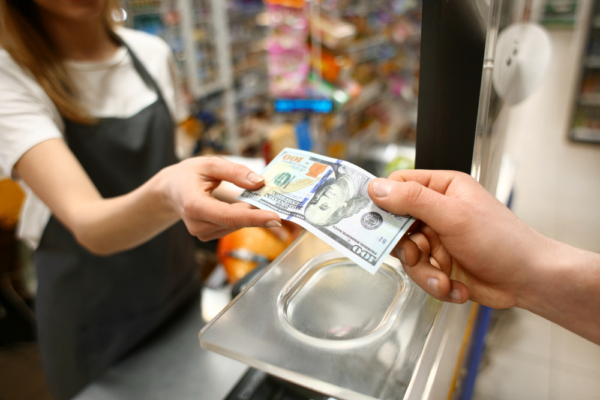
New York State’s “Must Accept Cash” new law officially took effect on March 21st, requiring all retail and food service providers in the state to accept cash payments in face-to-face transactions. New York State Attorney General Letitia James emphasized that the state government will strictly enforce this law and encouraged the public to report any violations to the Attorney General’s Office (OAG).
“New Yorkers have the right to access services regardless of their chosen payment method. Businesses cannot deny people access to basic necessities like food and clothing by refusing cash or increasing prices for cash transactions,” said James. She warned that violators could face civil fines, with a maximum penalty of $1,000 for a first offense and up to $1,500 for subsequent violations.
According to the state law (S4153A), food stores and other retailers are prohibited from requiring consumers to use credit cards or electronic payments to complete transactions, and they cannot charge higher prices to customers who use cash. The law includes exceptions, such as businesses not being required to accept paper bills over $20, exemptions for non-face-to-face transactions (such as phone or online orders), and businesses that offer “cash-to-prepaid card” equipment in-store can choose not to accept cash directly but cannot impose fees or set excessively high prepaid thresholds.
The explanation from the New York State Senate regarding the bill states that the new law aims to prevent discrimination against those who lack bank accounts or financial resources like credit cards and ensure that these groups are not excluded from basic consumption due to limited payment methods. The New York City government has also pointed out that these regulations are designed to protect the consumer rights of “unbanked” residents.
Several elected officials, including New York Democratic State Senator James Sanders, have expressed support for the new law, noting that a significant portion of New Yorkers still rely on cash for daily transactions. Lawmakers believe that a complete shift to cashless operations by businesses could present substantial barriers to unbanked individuals, the elderly, new immigrants, and low-income populations, potentially leading to systemic exclusion. Officials emphasize that cash is not just a payment tool but is fundamental to consumer rights and social equity.
However, the new law may have some impact on small businesses and food service providers. Cash transactions involve issues such as making change, manpower management, and security risks, leading to increased costs related to cash handling and theft prevention, whereas electronic payments can enhance efficiency and reduce errors. Especially post-pandemic, contactless payments have become a primary operating mode for many businesses, and the implementation of the new law may require businesses to reconfigure their processes.
To balance regulatory compliance with operational efficiency, some businesses are installing “cash-to-card kiosk” equipment, allowing customers to convert cash into electronic payment tools. As per the legal provisions, if a business provides such equipment, they are permitted not to accept cash directly, but they cannot charge fees or require minimum reload amounts exceeding $1.
The Attorney General’s Office urges the public to report any violations of the law by businesses through the online submission system or by contacting 1-800-771-7755 to report the situation.