
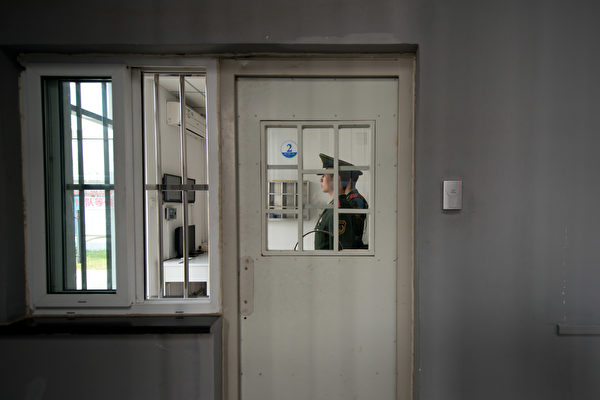
In recent times, insiders from various government institutions have disclosed to Epoch Times that the number of detainees in prisons and detention centers in certain regions has significantly increased, with a rise in the number of officials involved in corruption and bribery. Since January this year, prisons and detention centers in Shandong, Henan, and other areas have been receiving batches of individuals implicated in corruption, including retired senior officials and state-owned enterprise executives.
According to an informant within the Chinese Communist Party system named Xu Yue, in cities such as Zibo and Zaozhuang in Shandong, as well as Yuncheng in Shanxi, there is an ongoing “purge of officials”: “Since late December last year, the CCP has initiated a ‘reverse-check mode.’ These old bureaucrats are first secretly detained in detention centers and then swiftly transferred to prisons in large numbers through the so-called ‘fast trial and sentencing,’ surprising many with the speed of the actions.”
As a long-time observer of the prison system, Xu Yue is shocked by the current situation: “Prisons have never been packed with CCP members like they are now. Looking around, all you see are formerly well-dressed bribe-takers. Some have embezzled tens of millions of yuan, some have amassed hundreds of millions of illegal proceeds, and the proportion of ‘party prisoners’ far outweighs ordinary criminal offenders. After being sentenced, almost no one appeals, indicating that under the veil of secrecy, they may have been coerced into reaching some kind of agreement.”
In Zhengzhou, Henan, retired civil servant Mr. Sun told reporters: “Now, all regions are investigating bribery and retired officials. The proportion of corruption-related detainees in our detention centers is much higher than in ordinary criminal cases. A friend of mine who works at the Political and Legal Affairs Committee said that the public security, procuratorate, and court are prioritizing anti-corruption efforts, and they are arresting people everywhere. He said that prisons have now become ‘party prisons’ of the Communist Party, with almost all being party members and cadres.”
The overcrowding issue in detention centers has been growing in recent years. A criminal defense lawyer in Jiangsu revealed that many detention centers have been operating at overcapacity, with cells meant to accommodate a dozen individuals often holding more than twenty, and even situations where dozens of people squeeze together on bunks to sleep.
At the same time, official data shows a continuous increase in the number of arrests, prosecutions, and convictions in recent years, with double-digit growth. Ms. Li, a Wenzhou lawyer who has handled dozens of corruption cases, stated that the Political and Legal Affairs Committees nationwide have emphasized maintaining stability, speedy trials, and intensified anti-corruption efforts: “Previously, it took over a year to handle a bribery case, but now from prosecution by the procuratorate to sentencing by the court, it usually takes eight to nine months. In a case I recently took, the defendant suddenly told me he had pleaded guilty, but his family informed me that he had not.”
According to information from the Central Commission for Discipline Inspection and the Supervisory Commission websites, the anti-corruption campaign in 2026 started vigorously at the beginning of the year. In just one month in January, the CCP “took down ten tigers,” including Deputy Chairman of the Central Military Commission Zhang Youxia, Commission Members Liu Zhenli, Minister of Emergency Management Wang Xiangxi, and former Inner Mongolia Party Secretary Sun Shaocheng. Simultaneously, the financial and local systems were also cleaned up, with Deputy Director of Agricultural Development Bank Xu Yiding, first mayor of Sansha City Xiao Jie, 70-year-old retiree Lian Ji, and former Secretary-General of the Hainan Provincial Party Committee Ni Qiang all being investigated. In February, former Zhejiang Party Secretary Yi Lianhong was also detained.
Chinese scholar Geng Yan, interviewed by reporters, said: “There are two direct reasons behind this round of anti-corruption. One is that the top CCP leadership believes that some officials have loyalty issues and need to be reevaluated and purged. The other is that there is a serious gap in the financial system, with authorities considering a large amount of resources held by officials. Therefore, they are confiscating their property through anti-corruption means.”
According to CCP reports, since 2025, the CCP’s disciplinary system has continuously conducted investigations into the energy, financial, infrastructure, and local state-owned enterprise systems. Different from before, in this round of actions, retired but resource-connected individuals have become the key targets of scrutiny.
Apart from capturing top officials, authorities are also investigating and apprehending corruption issues among grassroots officials. Mr. Zhang, a human rights activist in Hunan who is frequently “invited for coffee” by national security agents for questioning, explained: “National security agents disclosed during our chats that due to the ‘reverse-check’ operations, certain criminal cases are temporarily suspended, while the investigation pace for economic and duty-related crimes has significantly accelerated, with police assigned to the Economic Investigation Unit to investigate tax evasion and corrupt officials’ associates.”
As the scope of the CCP’s investigations continues to widen, the number of people involved keeps increasing, putting pressure on the detention and prison systems. Many places are experiencing strained detention resources, with some regions temporarily adjusting their detention arrangements to cope with the surge in numbers.
Analysts state that the current anti-corruption efforts by the CCP are no longer just about disciplinary rectification but have evolved into a comprehensive action involving financial, power, and political security.