
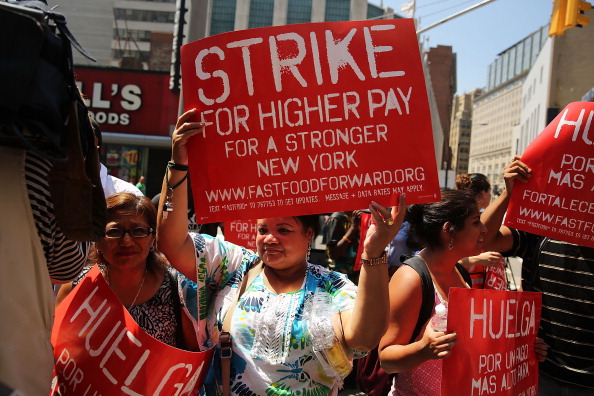
New York City Council recently introduced a legislative proposal to gradually increase the minimum wage to $30 within the next ten years. If the bill is eventually passed, New York City will become the city with the highest minimum wage in the United States.
The proposal, known as the “NYC Minimum Wage Act,” was put forward this month by Council Member Sandy Nurse, with a phased-up mechanism. According to the plan, large businesses with over 500 employees will be the first to implement the wage hike: reaching $20 in 2027, $23 in 2028, $26 in 2029, and finally $30 in 2030. Small businesses will have a longer transition period, expected to reach $29 by 2031 and fully meet the standard in 2032.
According to TimeOut report, if the bill comes into effect, New York’s minimum wage will significantly surpass that of other cities in the U.S. Currently, Seattle has a slightly higher minimum wage of over $21, and while Los Angeles has approved a plan to raise wages to $30 for hotel and airport employees, the scope is limited. In comparison, New York’s proposal covers the entire labor market, with a broader impact.
Supporters argue that the proposal reflects the continuous pressure of rising living costs in New York. Research by the City Council shows that the current minimum wage of $17 is insufficient to sustain a single adult’s basic living needs in New York. With rents, transportation, and food prices continuing to rise, the economic burden on low-wage workers is becoming increasingly heavy.
The Economic Policy Institute estimates that without policy adjustments, by 2030, around 1.68 million workers (approximately 36.7% of the city’s workforce) will still be earning less than $30 per hour. This means that once the bill is implemented, a large number of workers will directly benefit. However, some advocates argue that even with a $30 minimum wage, it may still not be enough for people to lead a “basic and decent life” in high-cost areas like Manhattan.
However, the bill has raised concerns in the business community. Some business owners have expressed worries that significantly raising the minimum wage will further squeeze profit margins in the face of high rental, insurance, and energy costs. Restaurant owners have warned that a significant increase in labor costs could lead to price hikes, reduced operating hours, or even staff layoffs, potentially impacting the job market.
Furthermore, the proposal still faces legal challenges. Currently, the state of New York holds the ultimate authority in setting the minimum wage, and existing laws do not explicitly authorize New York City to independently establish higher standards. This means that even if the City Council passes the bill, cooperation or further legislative authorization from the state government and state legislature is necessary for full implementation.
Currently, the bill has been submitted to the City Council’s Committee on Consumer Affairs and Worker Protection for review, with public hearings and debates expected to follow.