
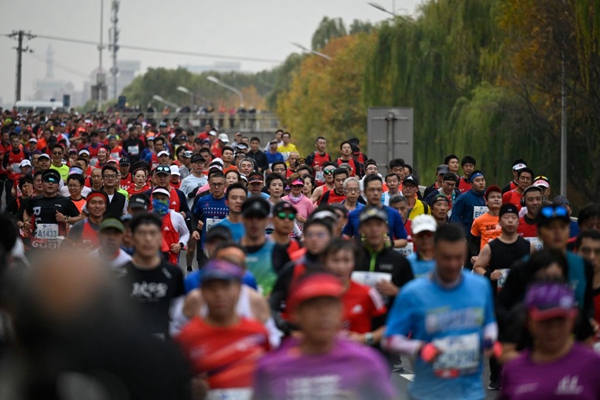
On March 15, during the 2026 Guangdong Qingyuan Marathon, a participant suddenly collapsed due to discomfort and suffered a cardiac arrest. Despite immediate medical attention, the individual unfortunately passed away on the morning of March 18.
According to reports from mainland China media such as “Sina Finance,” the 2026 Qingyuan Marathon attracted a total of 20,000 participants, with 8,000 in the full marathon category and 12,000 in the half marathon category. The scale of participation in both the full and half marathons reached a historic high.
In recent years, there have been frequent sudden deaths on marathon tracks. In January of this year, during the Chongqing Marathon, a male participant with a good physical condition and a record of breaking the “Three-hour” mark suddenly collapsed after passing the 42-kilometer milestone and unfortunately passed away despite rescue efforts.
In April 2025, during the Beijing Half Marathon, a middle-aged male participant suddenly collapsed towards the end of the race. Although onsite medical personnel immediately performed cardiopulmonary resuscitation and rushed him to the hospital for treatment, he ultimately did not survive.
Regarding these incidents, Dr. Qian Qi, Director of the Cardiovascular Center at the Second Affiliated Hospital of Nanjing Medical University, mentioned in an interview with Yangzi Evening News that moderate running is beneficial for heart health, as it can strengthen cardiac function, improve vascular elasticity, and enhance the heart’s reserve capacity. However, prolonged excessive training or extended periods of high-intensity exercise may have negative effects on the heart.
Dr. Qian pointed out that in extreme cases, high-intensity exercise can trigger the rupture of coronary artery plaques leading to a heart attack or cause sudden death directly due to malignant arrhythmias. Additionally, occurrences of low blood pressure and insufficient supply of blood to the heart due to dehydration during exercise are also significant factors contributing to sudden deaths among participants.
The frequent occurrence of sudden deaths on marathon tracks has raised public concerns about the safety of long-distance running.
A user with the pen name “Haiketanying” on the Chinese platform “Zhihu” shared, “Marathon running is not suitable for most ordinary people. Many individuals participate in marathons just to follow the trend. Many people perceive incidents like these as extreme cases, but a marathon of 42.195 kilometers is not for fitness; it represents the existence of an extreme exercise mode.”
He emphasized that event organizers must prioritize “safety” in the DNA of organizing races—marathons are not activities where as long as enough people show up, they can run. Runners themselves need to respect the limits to truly exhibit courage.
On a societal level, there’s a call to reject the trend of “internal competition,” urging everyone not to be swayed by labels like “completing three full marathons” or “breaking the three-hour mark.” The running community should foster an atmosphere where “finishing safely is the coolest,” rather than promoting a mindset of “daring to push harder.” Taking a rational approach to performance, health should be a runner’s core asset.
Some netizens expressed sentiments such as, “One must understand the principle of turning back when seeing a dead horse ahead; otherwise, one might exhaust themselves to death.” “Running a marathon is about challenging oneself and enhancing physical health. It’s crucial to pace yourself, and safety above all is paramount.” “Only with safety can one run longer!”