
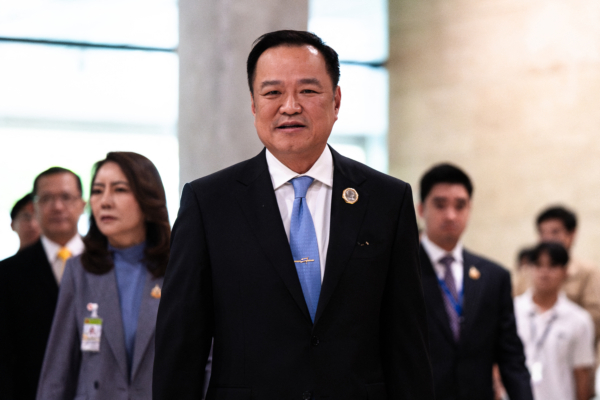
On Thursday, March 19, the Thai Parliament held a vote of confidence for Prime Minister Anutin Charnvirakul, also known as 陳錫堯 in Chinese. Anutin received majority support and was re-elected as the Prime Minister, making him the first Thai Prime Minister in nearly 20 years to be re-elected through a parliamentary vote.
Representing the Bhumjaithai Party, Anutin led in the voting process with his main rival being Natapong Lumpanyawut from the People’s Party. In the parliamentary elections last month, the People’s Party was initially predicted to have higher chances of winning, but ultimately ended up in second place.
In the lower house of the 500-seat parliament (with 499 members participating in the vote), Anutin received 293 affirmative votes, far surpassing the 119 votes received by his opponent Natapong. Anutin did not immediately comment on his victory but instead attended an energy security conference.
With a clear mandate from the people for the first time, Anutin will continue to lead the country facing multiple challenges, including economic stagnation, household debt pressure, trade uncertainties, and the impact of conflicts in the Middle East.
Following the energy security conference, Anutin stated, “Thailand currently has no problems and can still smoothly procure oil. We will ensure public confidence.”
The Bhumjaithai Party has historically had limited influence in politics, but saw a significant increase in seats in the previous month’s election.
Anutin’s re-election largely stemmed from seizing the opportunity presented by the weakening of the former major party, Pheu Thai. He first withdrew from the coalition government, then swiftly organized a new government after the court dismissed the second Thai Prime Minister, Paetongtarn Shinawatra, within just over a year.
At the age of 59, Anutin, the son of a former cabinet minister, has served as Deputy Prime Minister, Minister of Interior, and Minister of Health. He has pledged to immediately begin forming the cabinet and addressing the issues facing Thailand.
He assured non-coalition lawmakers, “Your voices will also be heard, I am ready to accept advice from all parties because our common goal is the welfare of the people.”
Some analysts point out that his political survival skills and ability to bridge party divides may be crucial political qualities.
(Credit: This article is based on reports from Reuters)