
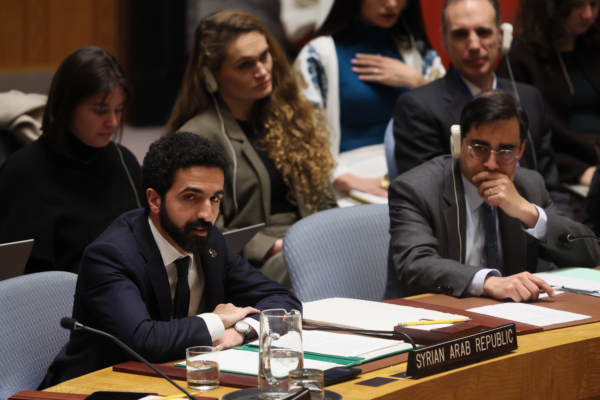
Syria’s new government officially announced an “historic plan” supported by the United States during a United Nations meeting on Wednesday, March 18, aimed at completely eliminating the chemical weapons left by former leader Bashar al-Assad’s regime and ending one of the most tragic chapters in the country’s civil war.
This plan marks a significant transformation in Syria’s national positioning. Syria’s ambassador to the United Nations, Ibrahim Olabi, stated, “For years, Syria’s reputation has been tarnished due to the former regime’s use of chemical weapons against its own people. Now, Syria is leading this elimination effort; under the previous regime, Syria was seen as a suspicious criminal nation. Today, Syria is taking the lead with the support of several major powers.”
According to this initiative, Syria will establish an international working group with countries like the United States, the United Kingdom, France, Germany, Canada, Qatar, and Turkey. This group, under the supervision of the Organization for the Prohibition of Chemical Weapons (OPCW), will track, seal, and destroy all remnants from the Assad era.
Despite the Assad regime signing the Chemical Weapons Convention in 2013 and declaring around 1,300 tons of inventory, international monitoring agencies have long pointed out incomplete declarations and illegal chemical attacks still occurring.
Currently, investigators estimate that up to 100 previously undisclosed locations within Syria need to be inspected, including military bases, laboratories, and office spaces.
Syria’s representative to the OPCW, Mohamad Katoub, noted that many details of the plans were deliberately concealed, and on-site investigators may face threats from landmines and unexploded ordnance. He admitted, “This will take time, and the future challenges are immense.”
“We don’t know what’s left, this is a secret plan,” confessed Olabi. “Now this work falls on Syria to find these things and then declare them.”
Diplomatic sources also informed Reuters that the cleanup operation could take months or even years, and the current instability in the Middle East, including the US-Iran conflict, could add variables to the actual destruction process.
The new government led by President Ahmed al-Sharaa has pledged to provide international investigators with full authority to eradicate prohibited chemical weapons.
For the current leadership of the Syrian government, this mission holds profound personal significance.
Olabi pointed out that many members of the government were themselves victims of past chemical weapon crimes. He said, “This has indeed triggered our trauma, but it also gives us the responsibility to ensure that these things never happen again.”