
This week marks the global “Super Central Bank Week,” with a total of 18 central banks worldwide set to announce their latest interest rate decisions. However, the policy paths of various countries have been shrouded in uncertainty due to the Iran conflict, causing the anticipated global interest rate cut trend to be derailed by the Middle East turmoil.
On Wednesday, the central banks of the United States, Canada, and Brazil were the first to announce their meeting outcomes. Faced with the pressure of oil prices surging above $107 per barrel, most chose to stand pat or reduce the extent of monetary easing. On Thursday, the central banks of Japan, the United Kingdom, and Europe will also announce their decisions, with market expectations leaning towards a collective shift to cautious observation, signaling a sense of alert.
The Federal Reserve (Fed) and the Bank of Canada (BoC) both decided on Wednesday to keep interest rates unchanged, displaying a hawkish stance in response to the sharp rise in energy prices.
The Federal Reserve maintained its benchmark interest rate in the 3.50% to 3.75% range. Chairman Jerome Powell admitted during a press conference, “In the short term, the rise in energy prices will push up overall inflation, but it is still too early to understand the range and duration of its potential impact on the economy.”
He stated, “I want to emphasize that no one knows: the economic impact could be larger or smaller, much smaller or much larger, we still do not know.”
Due to heightened vigilance against inflation risks, the market has pushed back expectations for a Fed rate cut to the end of 2026 or 2027.
After maintaining the policy rate at 2.25%, Bank of Canada Governor Tiff Macklem stated during a press conference, “The Governing Council will not overreact to the direct impact of the war on inflation, but if energy prices remain high, we will not let it escalate and evolve into persistent inflation.”
When asked how long the central bank would observe the impact of higher energy prices, he said, “I don’t think that can be measured in a few weeks…we still have some time to make that assessment.”
In addition, despite initiating an easing cycle on Wednesday, the Central Bank of Brazil appeared hesitant due to the impact of oil prices. The unanimous decision was made to cut rates by 25 basis points to 14.75%, only half of the market’s original forecast, and the annual inflation expectation was revised upwards from 3.4% to 3.9%.
Policymakers in their statement called for maintaining “calm and prudence” to adjust the pace accordingly based on the depth and duration of the Middle East conflict.
Following the U.S. and Canada, the Bank of England (BoE) is expected to announce its results on Thursday at 12:00 local time. The market generally expects it to maintain rates at 3.75%, delaying the pre-war era of confirmed rate cuts, mainly due to the potential spike in oil and gas prices that could push inflation back above 3%, far exceeding the 2% target.
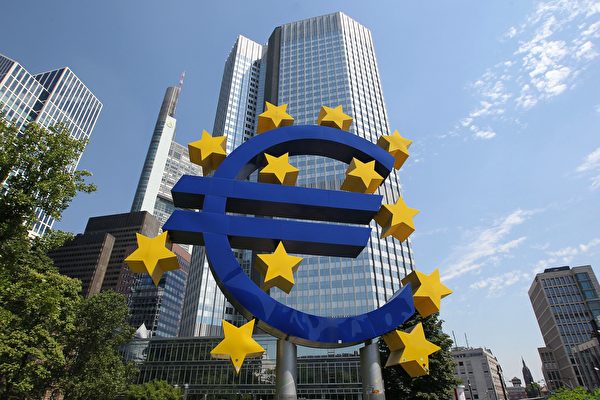
The European Central Bank (ECB) will also announce its decision on Thursday, with the market almost certain that it will maintain rates at 2%. Influenced by the lesson learned from the slow response to the 2022 energy crisis, ECB President Christine Lagarde is expected to release a “warning” signal and does not rule out taking defensive rate hikes if energy pressures persist.
The Bank of Japan (BOJ) will conclude its two-day meeting on Thursday, with expectations to maintain rates at 0.75%.
Despite the weak yen and war-driven oil prices causing Japan’s core inflation to remain above target for four consecutive years, high-ranking government and central bank officials remain cautious about premature rate hikes due to the growth risks faced by import-dependent economies.
Earlier this week, the Reserve Bank of Australia (RBA) was the first to raise interest rates to 4.1% on Tuesday, reaching the highest point in 10 months, and warning that inflation risks remain “significant.”
Since the outbreak of the Iran conflict on February 28, Brent crude oil prices have surged by about 60%. Faced with such dramatic external shocks, decision-makers from various countries including the central banks of Sweden and the Swiss National Bank are expected to abandon clear guidance and respond to this sudden global economic challenge based on “data.”