
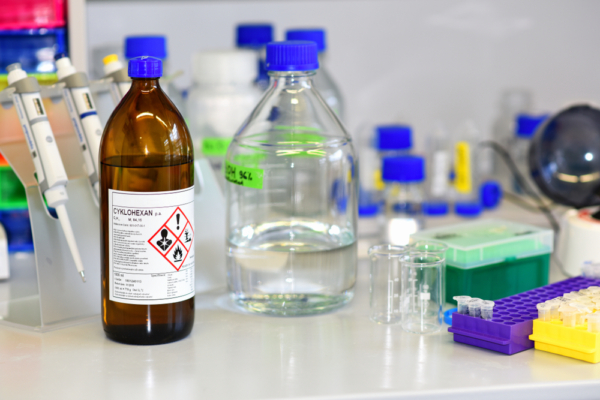
India announced on March 17 (Tuesday) that it has initiated an anti-dumping investigation into the import of ethyl chloroformate from China. The Indian manufacturer Paushak has accused China of selling such products at unfairly low prices, causing “substantial harm” to the local industry.
The Trade Remedies Directorate General (DGTR) under the Indian Ministry of Commerce stated on March 17 that an application by Paushak had led to the initiation of an anti-dumping investigation into ethyl chloroformate imported from China. The DGTR’s documents indicated that Paushak had requested an investigation into imports of the concerned products originating or exported from mainland China and Hong Kong. However, upon review, no imports from Hong Kong were found during the injury investigation and the period of investigation, leading the authorities to consider mainland China as the country under investigation.
The documents further mentioned, “The applicant alleges that the dumping of the concerned products from the involved country has caused substantial harm and requests the imposition of anti-dumping duties on imports from the involved country.”
The product under investigation is “ethyl chloroformate (ECF) at any concentration.” ECF is a crucial organic compound widely used in the pharmaceutical and agricultural chemicals industries. It is a colorless, volatile liquid with a pungent odor, classified as a chloroformate compound containing ester and chlorine groups, thus exhibiting high reactivity.
The period of investigation for dumping is set from October 2024 to September 2025 (12 months in total), and the injury investigation period not only covers the dumping investigation timeframe but also extends three previous fiscal years – from April 1, 2022, to March 31, 2025. Evidence provided by exporters, importers, and other stakeholders will be evaluated before any recommendation for imposing tariffs is made to the government.
In its submission, Paushak claimed to be the sole domestic producer of ethyl chloroformate in India, accounting for half of the national production. The company alleged that the increasing imports from China have led to price depression and declining profit margins.
Paushak also noted that there are no significant differences between the products it manufactures and those imported from China, with consumers interchangeably using the products in question and those from Paushak.
The DGTR’s preliminary assessment indicates that the extent of dumping appears to exceed the minimum threshold, suggesting significant instances of low-price dumping by Chinese exporters.
In a separate case, the DGTR has launched an anti-dumping investigation into imports of hexamine from China, Russia, and the UAE. Hexamine is another intermediate chemical widely used in the chemical and pharmaceutical industries.
Last December, India imposed import tariffs ranging from 11% to 13% on certain steel products for a three-year period to mitigate the impact of cheap Chinese steel on local Indian manufacturers.