
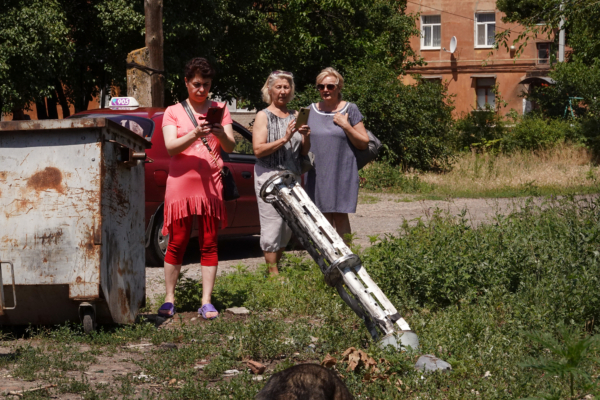
Israel’s military carried out a precise airstrike on March 17, killing the Secretary of Iran’s Supreme National Security Council, Ali Larijani, along with several top officials. In response, Iran’s state television announced on Wednesday, March 18, that they had launched a retaliatory attack using banned cluster munitions on Tel Aviv, Israel’s economic center.
The conflict between Israel and Iran has been ongoing for nearly three weeks with no signs of easing tensions. The Iran Revolutionary Guard Corps (IRGC) stated that the weapons used in the attack included the “Khorramshahr 4” and “Qadr” missiles, both equipped with multiple warhead capabilities.
These cluster munitions, manufactured by Iran, release submunitions at a height of about 7 kilometers above the target, causing widespread scattering explosions. While such attacks lack precision and struggle to penetrate reinforced bunkers, they wreak havoc on outdoor personnel and properties.
Israeli authorities confirmed that the attack resulted in the deaths of two civilians in a densely populated community near Ramat Gan, a suburb of Tel Aviv. Since the start of the conflict, 14 Israelis have lost their lives.
The Israeli military emphasized that the cluster munitions frequently used by Iran disperse a large number of small explosives in the air, covering a wide and challenging to intercept area. Footage from the Associated Press showed at least one missile releasing cluster munitions into Israeli territory, resulting in the aforementioned casualties.
According to the human rights organization HRANA, over 3,000 people have died in Iran since the outbreak of war at the end of February, with most casualties being related to the leadership of Ayatollah Khamenei, high-ranking Iranian officials, and affiliated members of the IRGC.
Additionally, besides launching missile attacks on Israel, the Tehran regime has targeted U.S. military bases in Iraq, Syria, and some Gulf countries with drones and missiles, causing numerous civilian casualties. These attacks primarily utilize suicide drones, missiles, and cluster bombs, eliciting strong condemnation from previously friendly countries towards Iran.
Cluster munitions come in various types with different design purposes. These bombs often contain metal fragments along with explosives, which produce countless sharp pieces during the explosion, targeting buildings and crowds in the vicinity.
Some bombs are designed to explode moments before hitting the ground to ensure metal fragments cover a wider area. Another type is equipped with Shaped Charges, specifically tailored to penetrate armored vehicles like tanks. There are also incendiary cluster munitions containing flammable materials like white phosphorus to ignite large-scale fires in the targeted area.
Cluster munitions designed to cripple airports drill into the surface of runways before exploding, causing extensive structural damage. Furthermore, a specific type targets electrical grids by dispersing long conductive fibers to induce short circuits, resulting in widespread power outages.
However, the most significant issue with cluster weapons is the high rate of unexploded ordnance, posing significant danger during post-war cleanup efforts that require substantial resources for location and disposal, potentially causing secondary casualties.
Simmy Allen, an international spokesperson for the United Hatzalah emergency response organization, urged the public to stay away from missile fragments and await professional handling, emphasizing the unknown dangers present. Chaim Rafalowski, a disaster management coordinator for the Israeli Red Cross, highlighted the limited awareness among the public regarding these hazards, cautioning against handling cluster bombs to prevent potentially devastating consequences.
On March 18, Israel launched airstrikes on the heart of Beirut, Lebanon, resulting in at least 6 deaths. The bombings targeted key bases of the Hezbollah terrorist group located in the southern outskirts of Beirut.
On Tuesday, March 17, the Israel Defense Forces (IDF) also carried out airstrikes on Iran’s Revolutionary Guard security headquarters and internal security maintenance centers responsible for stability.
Additionally, the U.S. Central Command announced on social media platform X that American forces successfully eliminated fortified missile launch sites near the Hormuz Strait belonging to Iran by dropping multiple heavy 5,000-pound bunker busters.