
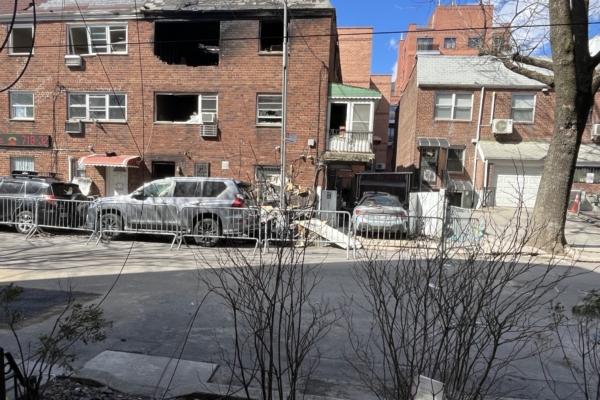
On March 18, 2026, a four-alarm fire broke out in the bustling Flushing neighborhood of New York City, resulting in the tragic deaths of four Chinese individuals. The fire occurred at a three-story residential building located at 132-05 Avery Avenue, which was not only found to have illegal gambling activities but also serious violations related to illegal renovations, as well as a mix of tenants with varied backgrounds.
Upon arriving at the scene, reporters witnessed a devastating sight of rubble and destruction. The entire third floor at the address was completely charred, with a darkened interior and a roof that had been burnt through. The second floor also sustained significant damage.
Authorities discovered two motorcycles at the scene, but it has yet to be confirmed whether the fire was caused by the lithium batteries of these motorcycles.
All four victims of the fire were Chinese individuals. Besides the identity confirmation of a 3-year-old girl, the identities of the other three victims remain unconfirmed as of the time of reporting on the 17th.
According to records from the city’s finance department, the building was constructed in 1970 and registered to a male individual surnamed Yee, who acquired the property in 2016. A Chinese acquaintance claiming to be a friend of the landlord with a Shanghai accent, but who wished to remain anonymous, disclosed on the second day after the fire that the owner, originally from Guangdong, had passed away last year. The friend mentioned that the landlord had attempted to transfer the property to him due to facing difficulties with managing the building, plagued by longstanding issues with tenants failing to pay rent.
The friend further revealed that the landlord, who had engaged in real estate business to make a living, acquired the property after a divorce, and was reliant on the rental income from the building. However, the property posed numerous challenges, with tenants of questionable backgrounds, including gamblers who caused disturbances and even refused to pay rent, leading to conflicts with the landlord.
Moreover, records from government systems showed substantial fines totaling hundreds of thousands of dollars due to violations associated with the property, in addition to property taxes.
The presence of underground gambling activities in the building further contributed to the unsanitary and chaotic conditions, with the friend noting the filthy and disorderly state of the interior, as well as the disruptive impact of the gambling den.
Upon learning of the fire, a Chinese girl was observed placing a bouquet of yellow roses across from the fire-ravaged building, bearing a message in Chinese expressing condolences and sympathy for the deceased. She tearfully paid her respects before departing the scene.
The fire initially widely reported to have occurred at 44-49 College Point Boulevard was stated later to be a different location from the actual building where the fire broke out. The landlord of the other address had faced challenges with Chinese tenants owing rent post-pandemic and had gone through eviction proceedings. The ground floor of 44-49 was operated by a Chinese business using POS machines for takeout services.
The tragic incident in Flushing has raised concerns among residents regarding the prevalent issues of illegal gambling dens, unpermitted massage parlors, unlawful renovations, unauthorized subletting, and overcrowded living arrangements, contributing to social problems and hazards. The clandestine gambling dens within residential buildings have been linked to various conflicts and crimes, posing security and fire risks.
The tenants in the building were mostly renters sharing accommodations, often neglecting safety measures and potentially leading to accidents and disasters. The accumulation of these unlawful activities and violations has added to the unease and apprehension within the community.