
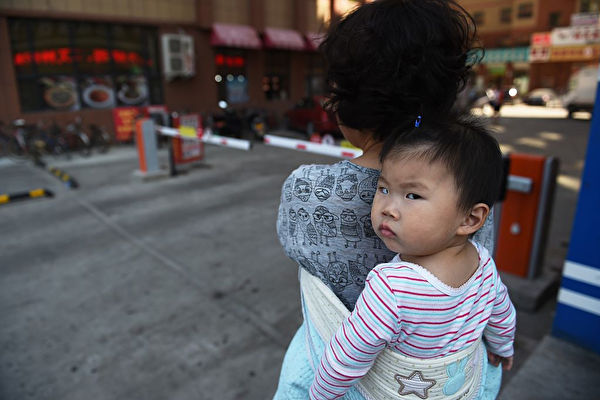
Shanghai Population Decline: Fertility Rate Hits Record Low
Recently released statistics from the Shanghai Municipal Health Commission show that in 2025, Shanghai, as a leading economic city in China, saw its fertility rate drop to 0.66, down from 0.72 in 2024. This rate is not only significantly lower than the replacement level of 2.1, but also marks the second lowest since the end of the COVID-19 pandemic. The city is now trapped in a “ultra-low fertility rate” dilemma.
The data indicates a rapid decline in the population structure of Shanghai. The average age of first childbirth in Shanghai has been delayed to 32.22 years, with the average age of childbirth reaching 32.98 years in 2025.
Looking back at recent years, Shanghai’s fertility levels have been on a clear downward trajectory. The total fertility rate was around 1.0 in 2017, gradually decreasing to 0.7 in 2022, with an average age of first childbirth at 29.81 years and average age of childbirth at 31.16 years. In 2023, it further dropped to 0.6, setting a record low in public data in recent years. After a brief rebound to 0.72 in 2024, it fell back to 0.66 in 2025. Meanwhile, the age of childbirth continues to be postponed, with both the average age of first childbirth and average age of childbirth exceeding 32 years, significantly later than before the pandemic.
On a global scale, Shanghai’s fertility levels are approaching the “ultra-low fertility rate” range, similar to some major cities in East Asia. The combination of high urbanization and high cost of living has led first-tier cities to enter a phase of low fertility rates often ahead of others. Against the backdrop of China’s overall fertility rate dropping to around 1.0 or even lower, Shanghai’s performance stands out even more.
The decline in fertility desires can be primarily attributed to the continuously rising cost of living. In first-tier cities, raising a child often means long-term and high expenses, from housing to education and childcare, each posing significant financial pressures. Particularly in an environment of fierce educational competition, families’ investments in their children’s growth keep escalating, turning from affordable to burdensome. Simultaneously, intense social competition is also eroding the life prospects of young people.
“Circumstances are just too demanding,” remarked Wang Jie (pseudonym), a Shanghai resident, expressing to the Central News Agency that the excessive competition and consumption in Chinese society, coupled with unfavorable economic conditions, have led many people to choose to “lie flat,” prioritizing stable and secure living over other life plans for the future.
The uncertainty of China’s economic environment further influences fertility decisions. Structural instability in the job market and lack of transparency in the social security system have left young people feeling insecure about the future. In an environment lacking legal protections and support for individual rights, delaying or opting out of childbirth is seen as a rational decision to mitigate risks.
The sustained decline in fertility rates reflects the deep-seated contradictions between the long-term population policies of the Chinese government and the current social governance model. Despite recent frequent announcements of the “three-child policy” and sporadic fertility subsidies, the lack of substantial national investment in core areas such as housing, education, and childcare is glaring. The exorbitant costs of raising children are essentially transferred entirely to families, turning childbirth into an economically high-risk burden.
The continuing decline in fertility rates is having far-reaching implications on urban structure. Accelerated population aging, reduced labor supply, and rising dependency ratios will impact economic vitality and the operation of social security systems in the future.