
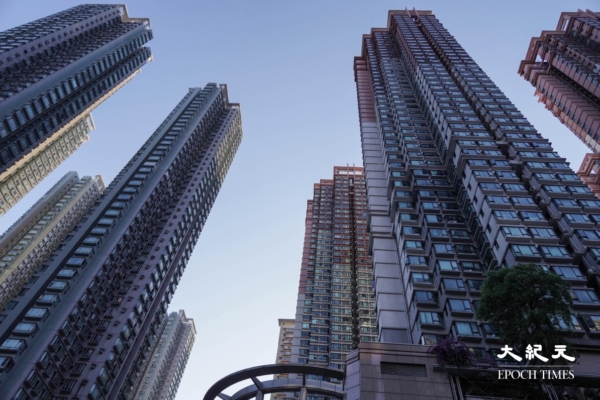
According to official data, the Chinese real estate market is still on a downward trend. In February of this year, overall housing prices in China continued to decline, with the prices of new residential properties in first-tier, second-tier, and third-tier cities all experiencing increased year-on-year drops. Additionally, in the first two months of this year, real estate development investments, construction areas, and sales amounts all saw double-digit declines.
The National Bureau of Statistics of the Chinese Communist Party announced on March 16th the latest data regarding the real estate market. In 2025, the total real estate development investment decreased by 17.2% compared to the previous year. Based on this, the real estate development investment from January to February this year was 961.2 billion yuan, representing an 11.1% decrease year-on-year, with residential investments totaling 728.2 billion yuan, down 10.7% from the same period last year.
There has been a noticeable decrease in real estate construction projects. From January to February, the newly started construction area nationwide was 50.84 million square meters, a 23.1% decrease compared to the same period last year.
In terms of real estate sales, the sales area of new residential properties was 92.93 million square meters, down 13.5% year-on-year, with residential sales areas showing a 15.9% decline. The sales volume of new residential properties amounted to 818.6 billion yuan, a 20.2% drop from the previous year, with residential sales amounts declining by 21.8%.
The data indicates that the Chinese real estate market is still in a slump.
Regarding housing prices, in February, the sales prices of new residential properties in first-tier cities dropped by 2.2% year-on-year, with the decline widening by 0.1 percentage point compared to the previous month. Looking at specific cities, prices in Beijing fell by 2.3%, Guangzhou by 5.1%, and Shenzhen by 5.5%.
Second-tier and third-tier city prices for new homes decreased by 3.1% and 4.0% respectively year-on-year, with margins expanding by 0.2 and 0.1 percentage points from the previous month.
Out of 70 major cities in China, only Shanghai, Hangzhou, Hefei, Urumqi, and Yichang experienced year-on-year increases in new home prices.
Comparing prices with the previous month, in February, sales prices of new homes in first-tier cities remained stable after a 0.3% decrease month-on-month. Specifically, Beijing and Shanghai saw a 0.2% increase, Guangzhou remained stable, and Shenzhen declined by 0.3%.
Prices for new homes in second-tier and third-tier cities decreased by 0.2% and 0.3% respectively compared to the previous month, with declines narrowing by 0.1 percentage point.
Out of the 70 major cities, 10 cities saw an increase in new home prices, while 7 cities remained stable.
Compared to the new housing market, the decline in prices for existing homes is more significant.
In February, second-hand residential prices in first-tier cities fell by 7.6% year-on-year. Specifically, prices in Beijing dropped by 8.4%, Shanghai by 6.2%, Guangzhou by 8.5%, and Shenzhen by 7.1%.
Prices for second-hand homes in second-tier and third-tier cities decreased by 6.2% and 6.3% respectively year-on-year.
Looking at the month-on-month changes, in February, prices for second-hand homes in first-tier cities decreased by 0.1%, a slight narrowing of 0.4 percentage points compared to the previous month. Beijing and Shanghai experienced increases of 0.3% and 0.2% respectively, while Guangzhou and Shenzhen saw declines of 0.5% and 0.4%.
Second-tier and third-tier city prices for second-hand homes decreased by 0.4% and 0.5% respectively compared to the previous month, with declines slightly narrowing.