
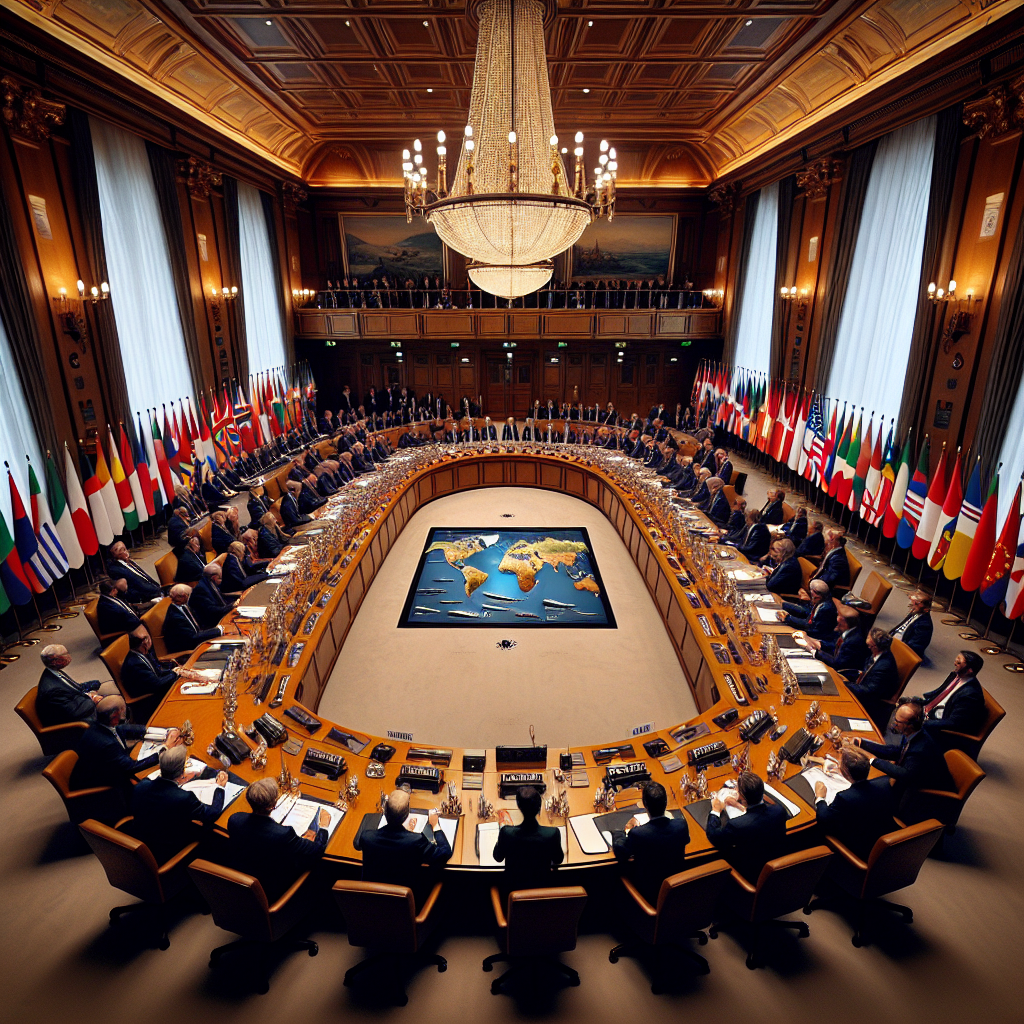
With the escalating conflicts in the Middle East causing blockades at the Hormuz Strait, the European Union’s foreign ministers are set to convene a meeting in Brussels on Monday, March 16th, to discuss strengthening their naval mission “Aspides” (which means “shield” in Greek) in the region.
While the EU is not currently expected to immediately expand the mission’s scope to include the strait, EU High Representative for Foreign Affairs Kaja Kallas is actively pushing member states to provide more resources such as additional naval vessels.
Since the military actions against Iran by the United States and Israel commenced on February 28th, a significant portion of the Hormuz Strait’s waterways has been closed off.
As a critical hub for transporting one-fifth of the world’s oil and liquefied natural gas, the current closure poses a significant threat to the global economy. This has led some EU officials to question whether the focus of the “Aspides” mission should shift towards ensuring freedom of navigation in the Persian Gulf.
Regarding the agenda for Monday’s meeting, an unnamed senior EU official disclosed to Reuters, “The discussions on Monday will revolve around efforts to encourage more member states to further enhance their support capabilities.”
Currently, the primary focus of the “Aspides” mission is safeguarding ships in the Red Sea from attacks by Houthi forces, with operational command over an Italian and a Greek warship, as well as the ability to call upon a French warship and another Italian vessel for support.
However, there are diverging opinions within the EU regarding expanding the mission.
During an interview with German TV channel ARD on Sunday, German Foreign Minister Johann Wadephul expressed doubts about the effectiveness of broadening the mission’s scope. He believes that the current responsibilities of the mission have yet to yield sufficient results.
The international community is closely monitoring the situation. U.S. President Trump has urged countries like China, France, Japan, South Korea, and the UK to collectively uphold the strait’s security and reopen the waterways.
Diplomats have noted that any changes to the authorization of the “Aspides” mission would require unanimous approval from all 27 EU member states. It is still premature to determine if the EU will collectively engage in such action.
An EU diplomat emphasized to Reuters, “Given the current circumstances, protecting ships in the Hormuz Strait is not a decision that ministers can take lightly.”