
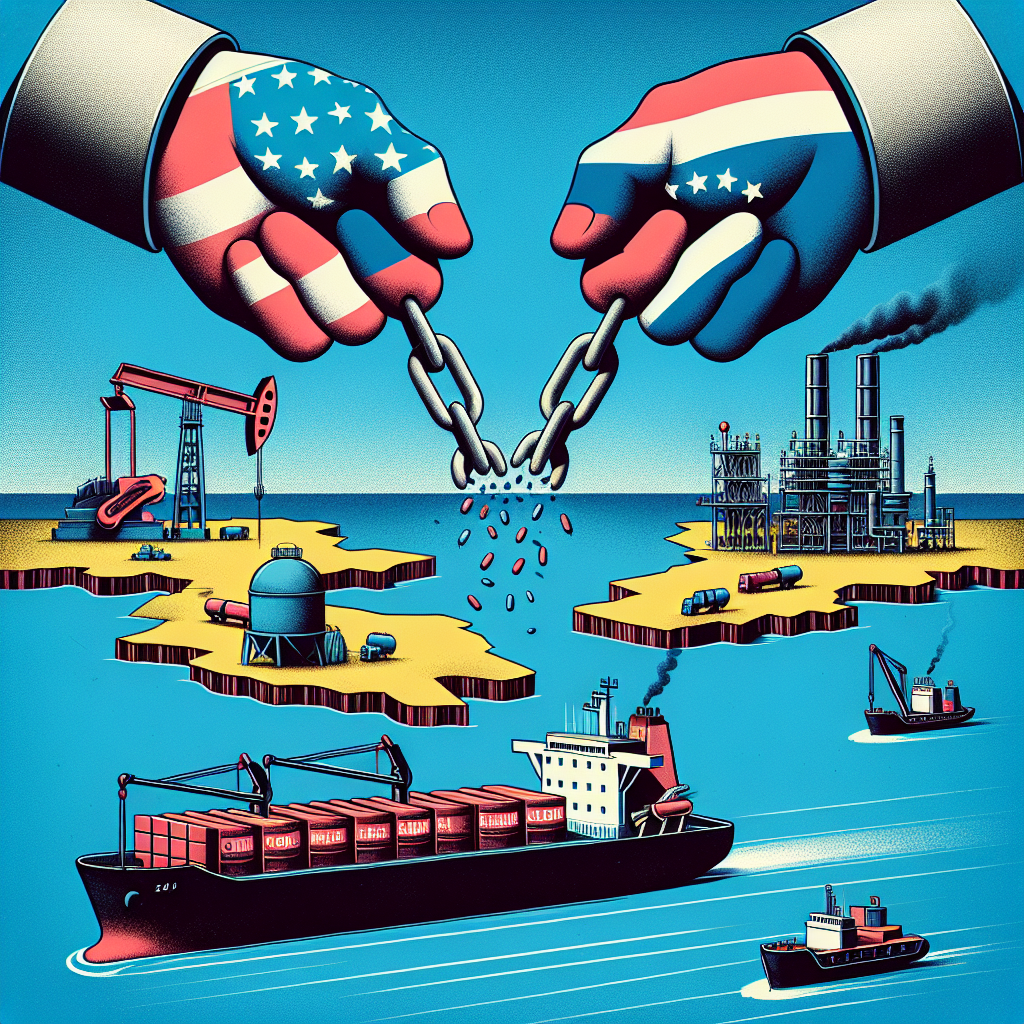
On Friday, March 13, the U.S. government announced the easing of economic sanctions on Venezuela. This move aims to strengthen cooperation between the two countries in the energy, electricity, and petrochemical industries. It also permits American companies to import fertilizers and oil from Venezuela, in order to mitigate the price surge caused by conflicts in the Middle East. This will help alleviate economic pressures on American farmers and consumers, while ensuring global market stability.
The U.S. Department of the Treasury issued three updated general licenses (46B, 48A, 49A) allowing U.S. entities to purchase Venezuelan oil and petrochemical products, including fertilizers. Furthermore, the new measures will enable American companies to provide necessary materials, technology, and software to maintain Venezuela’s power system and petrochemical equipment, covering crucial aspects such as generation, transmission, and distribution. This is intended to address Venezuela’s long-standing investment shortfall in the power sector and enhance production capacity.
Officials from the Treasury Department stated: “These authorizations expand permitted investments and activities within Venezuela’s energy industry, allowing fertilizers to be directly exported to the U.S. to support our great American farmers.”
This adjustment follows the gradual easing of sanctions on Venezuela by Washington since the detention of Venezuelan leader Nicolas Maduro earlier this year in January.
Despite the flexible shift in policy towards Venezuela, the U.S. Treasury Department emphasizes a strict prohibition on transactions involving entities related to Russia, Iran, North Korea, Cuba, or China. Additionally, all payments to sanctioned entities must be routed to designated “Foreign Government Deposit Funds” accounts, with stringent limitations on fund usage, apart from local taxes.
This policy reflects the efforts of the Trump administration to protect American consumers and farmers from the impact of price fluctuations resulting from conflicts in the Middle East.
As tensions continue in Iran, the costs of oil and fertilizers are steadily rising, raising concerns about exacerbating inflation. Senior researcher Michael Werz of the Council on Foreign Relations (CFR) pointed out in a recent article that the global fertilizer supply chain is currently under significant strain.
Countries like Bahrain, Oman, Qatar, and Saudi Arabia, which are important exporters of urea, diammonium phosphate (DAP), and anhydrous ammonia, have been affected by the conflict. With Iran attacking commercial vessels, oil tankers, and announcing the blockade of straits, the global fertilizer supply is facing disruptions.
“Previously, due to fertilizer supply losses caused by the war in Ukraine and China’s increasingly tight export restrictions, countries around the world have been increasingly relying on Gulf states to offset these losses. But now, with about a quarter of the world’s fertilizer production needing to pass through the Hormuz Strait, prices have skyrocketed,” wrote Werz. “In the Middle East, urea prices have risen by 19% in a week, posing new financial challenges to agricultural sectors worldwide.”
He also warned that conflicts have turned desalination plants into geopolitical “weapons”. If crucial desalination facilities in countries like Saudi Arabia and Kuwait are damaged, it could pose a threat to the survival of over a hundred million people in the region.