
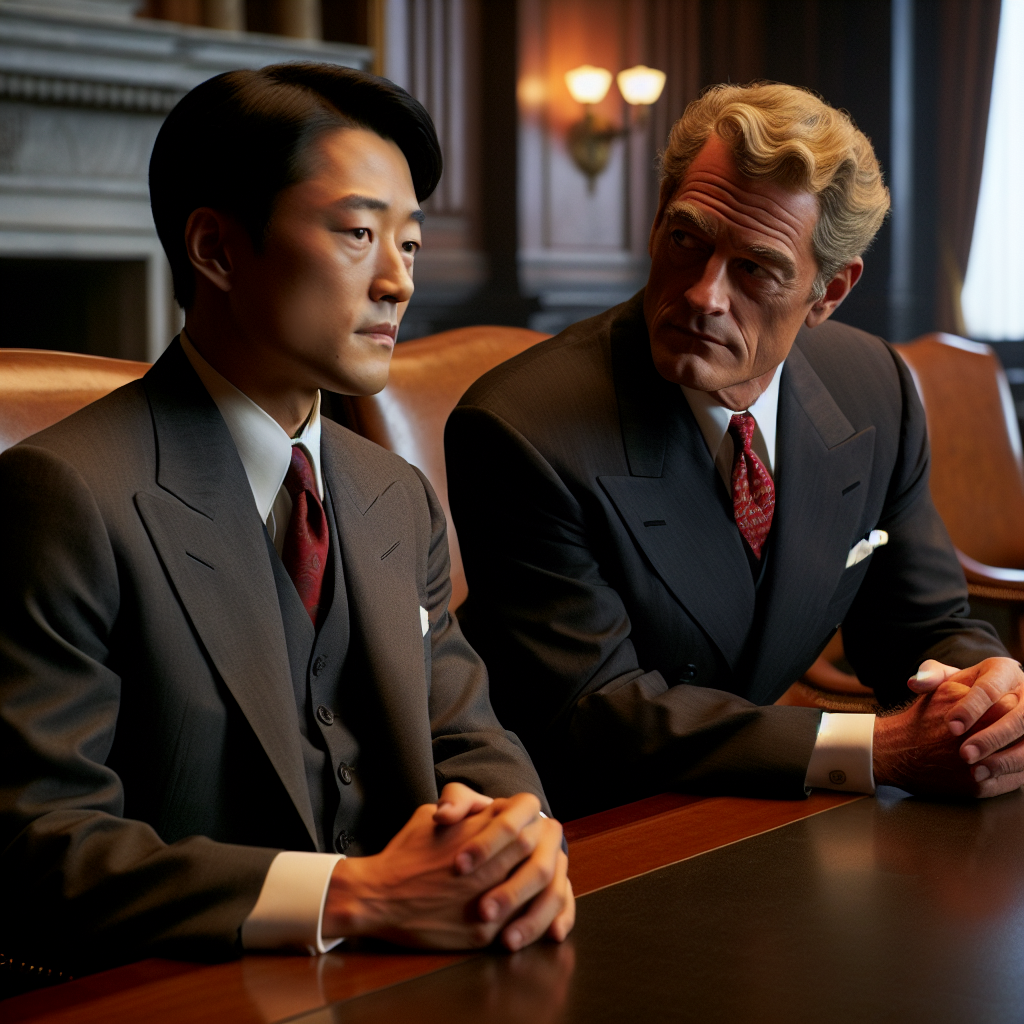
South Korean officials confirmed on Friday (March 13) that South Korean Prime Minister Kim Min-seok met with US President Trump in Washington the day before. The meeting took place after the South Korean parliament officially passed a special law supporting massive investment in the US, aiming to strengthen trade commitments between the two countries and deepen defense cooperation.
Yonhap, a South Korean news agency, released a photo on its website showing Kim Min-seok and Trump. In the photo, Trump is smiling and giving a thumbs-up.
According to the South Korean Prime Minister’s office, Kim Min-seok’s visit was intended to demonstrate South Korea’s “firm determination” to implement investment agreements. Prior to meeting with Trump, Kim Min-seok held a 40-minute meeting with US Vice President Vance, who welcomed the agreement, stating that it laid a necessary legal foundation for its implementation.
According to Reuters, the South Korean parliament overwhelmingly passed the “South Korea-US Strategic Investment Management Special Law” on Thursday (March 12) with 226 votes in favor and 8 against. The law provides a legal basis for South Korea to fulfill its $749 billion investment commitment reached in November last year, including the prioritized initial investment commitment of $350 billion.
This investment agreement is central to the negotiations between South Korea and the Trump administration. In January this year, Trump warned through “Truth Social” that if South Korea fails to implement the investment agreement, the import tariff on South Korean goods will be raised from the current 15% to 25%.
The agreement includes $200 billion for high-tech areas such as semiconductors, AI, and quantum computing, and $150 billion to revitalize the US shipbuilding industry.
During the meeting, Kim Min-seok emphasized that the smooth passage of the law demonstrates South Korea’s “firm determination” to implement the agreement, and looks forward to the investment contributing to the revival of US manufacturing and job creation.
In addition to economic and trade issues, the meeting also touched on crucial security matters. Kim Min-seok urged the US to expedite the implementation of high-end defense cooperation outlined in the “Joint Fact Sheet” signed in November last year.
“The Prime Minister emphasized the importance of swiftly implementing agreements in the security realm, including cooperation on nuclear-powered submarines, nuclear energy, and shipbuilding,” the South Korean Prime Minister’s office stated in a press release.
According to The Chosun Daily analysis, defense cooperation between the two sides takes on a “mutually beneficial” mode:
US assistance:
According to the latest Pentagon Defense Strategic Report, the US is encouraging South Korea to play a more central role in addressing the North Korean threat and has agreed to deepen cooperation in South Korea’s independent construction of nuclear-powered submarines.
South Korean contribution:
South Korea will utilize its world-leading shipbuilding technology to assist the US in modernizing aging shipyards and improving Maintenance, Repair, and Overhaul (MRO) capabilities for naval vessels to address the pressing issue of insufficient US Navy production capacity.
During the meeting with Vance, both sides reiterated that the door to dialogue with North Korea remains open. Yonhap reported that there is widespread anticipation of Trump’s expected visit to China at the end of March or early April, speculating that Trump may attempt to reopen direct diplomatic channels with North Korean leader Kim Jong Un during this visit.
Moreover, according to Reuters, as the US military carried out the “Epic Fury” strike against Iran, South Korean Foreign Minister Cho stated last week that the US and South Korean militaries are discussing the possibility of redeploying some US Patriot missile defense systems to the Middle East. South Korean President Li said this week that even if Washington redeploys weapons, South Korea can deter any threats from North Korea.