
Nepal Election Results: Reform Party RSP Wins Overwhelming Victory
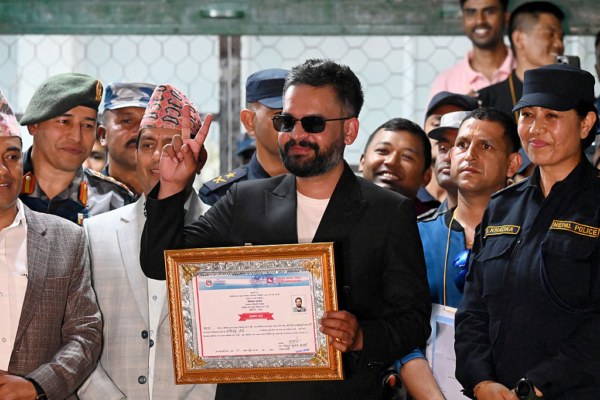
Nepal’s election results are in, with the reformist party, the National Independent Party (RSP), winning an overwhelming victory. The leader of this emerging party, Balendra Shah, is poised to become the youngest prime minister in Nepali history. Meanwhile, former Prime Minister Oli’s Nepal Communist Party (Unified Marxist) suffered a crushing defeat.
According to Reuters, the Nepal Election Commission announced on Thursday (12th) that the National Independent Party led by Shah won 182 out of 275 parliamentary seats, marking the largest single-party advantage in the country in over sixty years.
The Nepali Congress Party ranked second with 38 seats, while the Nepal Communist Party (Unified Marxist) led by former Prime Minister Oli only secured 25 seats.
The National Independent Party’s overwhelming victory brings a glimmer of stability to a country that has experienced 32 government changes in the past 35 years. The frequent changes in government not only damaged investor confidence but also severely hindered economic growth and job creation.
Constitution expert Purna Man Shakya pointed out, “If all goes well, we can expect to welcome a stable government that completes a five-year term.”
Newly elected parliamentarian and senior leader of the National Independent Party, Sisir Khanal, stated, “This victory is highly encouraging, and the trust of the people makes us keenly aware of our significant responsibilities.”
On March 5th, Nepal held its first major election following last year’s youth-led uprising. Dozens of people lost their lives in the authorities’ crackdown during the anti-corruption protests that erupted in September last year. This nationwide uprising forced former Prime Minister Oli to resign.
Subsequently, former Chief Justice Sushila Karki took over as interim Prime Minister after Oli, overseeing the election proceedings.
At 35 years old, Shah, a former rap artist, was elected as the Mayor of Kathmandu four years ago running as an independent candidate. He used rap music to criticize the current political situation and gained significant popular support.
In this election, Shah’s National Independent Party presented core campaign principles such as anti-corruption measures, job creation, and doubling the $42 billion economic size within five years.
However, the radical leader of the National Independent Party, former TV host Ravi Lamichhane, is facing allegations of misappropriating funds from a small savings company. He denies all charges and has been released on bail.
Last September, this ancient South Asian nation located between China and India witnessed a youth-led popular protest. It was triggered by the sudden ban on social media by the authorities. Protesters pointed directly to issues such as government corruption, lack of job opportunities, and economic hardships. The violent crackdown by the authorities led to the deaths of several dozen people.
This popular uprising compelled the Nepali authorities to lift the ban on social media and ultimately resulted in the resignation of then-Prime Minister Oli, the leader of the Communist Party (Unified Marxist).