
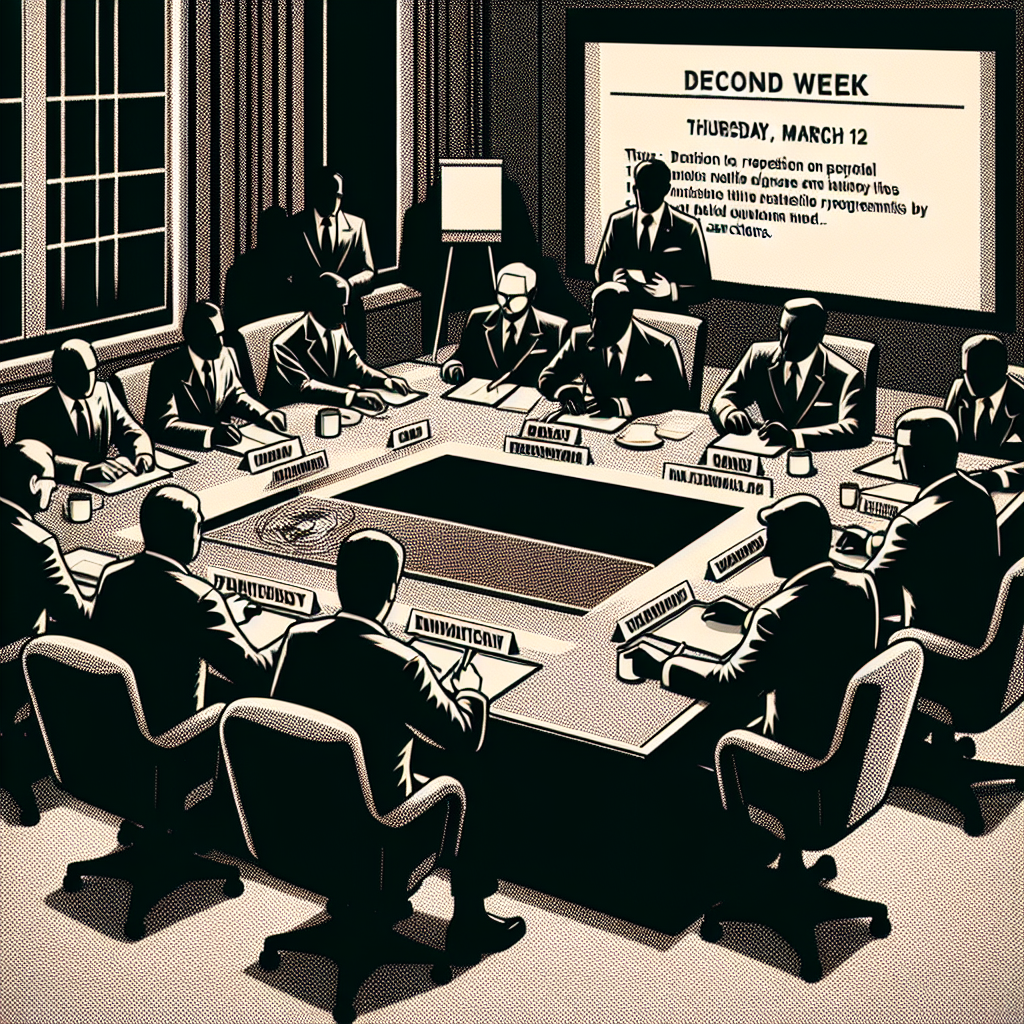
As the “Operation Epic Fury” entered its second week, the diplomatic battlefield between the United States and China and Russia shifted to the United Nations Security Council on Thursday, March 12. Both sides engaged in intense confrontations regarding Iran’s nuclear program and sanctions imposed on Iran.
According to reports from Reuters, the United States, which holds the rotating presidency of the Security Council this month, convened a meeting on Thursday to discuss the restoration of the “1737 Committee” responsible for overseeing sanctions on Iran. Russia and China attempted to jointly block this discussion but were unsuccessful. In the end, with 11 votes in favor, 2 votes against (from China and Russia), and 2 abstentions, the Security Council rejected the proposals from China and Russia and forcefully opened the debate on sanctions.
U.S. Ambassador to the United Nations, Mike Waltz, pointed out in his speech that China and Russia are trying to “protect” Iran. He accused China and Russia of obstructing the committee’s operations in order to maintain prohibited defense and energy cooperation with Iran. Waltz emphasized that “all UN member states should implement the arms embargo, freeze financial assets related to Iran’s nuclear and missile programs.”
The French representative noted that due to Iran’s discontinuation of remote monitoring by the International Atomic Energy Agency (IAEA), the IAEA can no longer guarantee the peaceful nature of Iran’s nuclear program. France warned that Iran’s existing stockpile of enriched uranium is sufficient to produce 10 nuclear devices.
The United Kingdom also supported the reinstatement of comprehensive sanctions, viewing it as a necessary measure to address Iran’s refusal to fulfill its nuclear obligations.
Russian Ambassador to the United Nations, Vassily Nebenzia, accused the U.S. of pursuing “military adventurism” to ensure its hegemony. China’s representative, Fu Cong, described the U.S. as the “instigator” of the crisis.
Currently, the diplomatic maneuvers in the UN hall resonate with the gunfire Iran has been provoking in the Red Sea and the Strait of Hormuz. With global oil prices fluctuating between $90 and $120 per barrel, in addition to the nuclear issue, Waltz proposed expanding sanctions to include overseas financial networks directly related to Iran’s Supreme Leader Khamenei.
The U.S. warned that if the Security Council fails to reach a consensus on comprehensive sanctions, the U.S. will launch large-scale “tier-two sanctions” in conjunction with G7 member countries.
President Trump has repeatedly stated this month that if the U.S. military had not precisely targeted key Iranian nuclear facilities last June, the Iranian regime would have possessed nuclear weapons within two weeks.
Concerning why the Iran nuclear talks ultimately collapsed, triggering “Operation Epic Fury,” Steve Witkoff, President Trump’s Middle East envoy, revealed astonishing details on Tuesday, March 10. Witkoff disclosed that during the final round of secret negotiations before the conflict erupted, Iranian representatives not only failed to show goodwill but resorted to a “threatening start.”
Witkoff revealed, “The Iranian negotiating representative unabashedly informed us that they have 460 kilograms of 60% enriched uranium, boasting that this is enough to manufacture 11 nuclear warheads. They used this as a negotiation chip, attempting to force the U.S. to accept their ‘unlimited enrichment rights.'”
Witkoff emphasized that Iran displayed a proud attitude of “evading international regulatory frameworks,” leading the U.S. to conclude that the diplomatic path was completely blocked, thus accelerating President Trump’s approval of military action.