
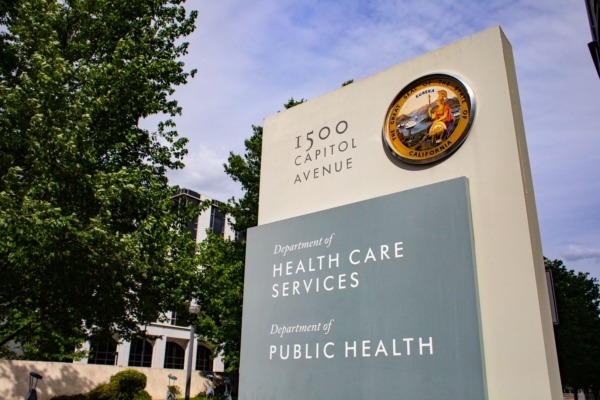
According to the latest budget analysis from the Legislative Analyst’s Office (LAO) in California, the expenditure of the California Medicaid program, also known as Medi-Cal, jointly funded by the state and federal government, is expected to reach a historic high.
Medi-Cal is a healthcare plan provided by California for low-income individuals. The report released by LAO in March stated that for the fiscal year 2026-27, the state government is expected to allocate a total of $222 billion in budget funds for Medi-Cal. This represents a 13.1% increase from the current fiscal year, which ends on June 30. LAO has put forward several recommendations for the state legislature to consider.
The report suggests that the state legislature enhance oversight and require the state government to provide “more robust data” to understand the cost situation of Medi-Cal. LAO stated that more data related to key expenditures are needed to better determine the primary factors driving the increase in expenses.
It was pointed out in the report that per capita costs may rise due to reasons such as increased service utilization, higher service costs, and the recent expansion of welfare coverage by the state government. However, the report also mentioned that without more data on key expenditures, such as managed care medical costs and costs for undocumented beneficiaries, it would be “difficult to comprehensively assess” these trends.
LAO’s report highlighted that information on expenditures related to illegal immigrant beneficiaries and insurance costs “remains very limited, and providing insurance to this group has a significant impact on the state’s general fund.”
The report also noted that policy changes during the pandemic led to a record high number of enrollees in Medi-Cal, and due to more people joining the program than leaving it, the enrollment numbers have remained high. Federal policies at that time required continued insurance coverage and prohibited states from disenrolling many beneficiaries.
It was mentioned in the report that over time, the percentage of elderly and disabled individuals among Medi-Cal enrollees continues to increase. This trend mainly reflects the strong growth of elderly enrollees before and after the pandemic.
LAO stated that Medi-Cal currently stands as the second-largest expenditure item in California, accounting for 20% of the total general fund expenditures, just behind K-14 (K-12 plus two-year community college) education spending. The report mentioned that in recent years, the growth rate of this healthcare plan has surpassed the overall state budget growth.
LAO’s second recommendation is for legislators to weigh the pros and cons of adjusting existing tax policies.
Currently, California has four taxes or fees that fund Medi-Cal, including managed care organization tax, private hospital fee, long-term care quality assurance fees, and ground emergency medical transport quality assurance fee.
LAO suggested temporarily increasing the managed care organization tax and then reassessing the tax revenue to comply with the provisions of federal bill H.R.1, which requires a gradual reduction of the federal income limit on taxes for healthcare providers starting from 2028. Additionally, the bill prohibits states from increasing existing taxes on healthcare service providers or establishing new taxes, and prohibits charging higher prices for Medicaid services compared to non-Medicaid services.
However, this recommendation may lead to increased costs for participants in commercial health insurance plans, as the premiums for those plans could rise.
Lastly, LAO recommended adjusting the eligibility criteria for Medi-Cal or modifying the benefits different groups of enrollees can receive.
Two recent expansions of the healthcare plan, providing comprehensive coverage regardless of immigration status and eliminating asset tests for the elderly and disabled, have “significantly increased” the state’s general fund expenditure on Medi-Cal. LAO suggested that legislators consider retracting some of these expansions for these groups and reassess the eligibility requirements for other groups, such as childless adults.
The report indicated that such measures would reduce government spending but could also decrease certain groups’ access to healthcare services.
In conclusion, the report emphasized that addressing the ongoing rise in Medi-Cal costs is necessary but also cautioned that any policy changes will take time to yield significant savings and will still face “considerable uncertainty.”