
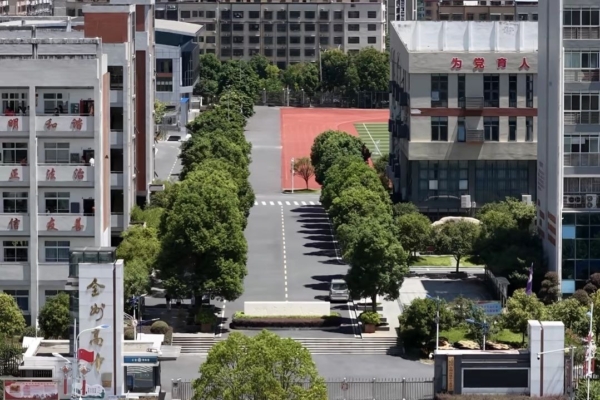
On March 6th, an incident of mass infection with the Norovirus involving over a thousand people occurred at Quanzhou County Senior High School in Guilin City, Guangxi. The school authorities initially kept the information sealed off. However, a student named Xiaoming (pseudonym) disclosed the details of the event to reporters from Dajiyuan Times, shedding light on the school’s sanitation conditions, chaotic extra fee charges for makeup classes, and other realities.
Xiaoming revealed that at noon on March 6th, the food served in the school cafeteria, particularly the garlic shoots, was undercooked and may have been the trigger point. “After class, the whole class went to the cafeteria for lunch, and that’s when my classmates and I started experiencing diarrhea.”
Subsequently, the virus spread rapidly, with multiple classes in the school witnessing collective cases of students suffering from diarrhea and vomiting during class. Xiaoming estimated that approximately one-third of the school’s 4,200 students were infected, emphasizing the highly contagious nature of the virus.
He recounted, “During class, many sudden rushes to the restroom occurred, and the sound of loud vomiting could be heard from inside. In our class, many students vomited directly in the classroom since they couldn’t make it to the restroom in time. I assume the same happened in other classes as well, with students vomiting on each other during class.” He also mentioned that a few teachers were also infected.
Furthermore, Xiaoming mentioned, “The hospital was filled with students from our school. I took a bus directly to the hospital. They prescribed the same medication for everyone, to be taken twice a day, but it didn’t seem to be very effective. Whether you needed to evacuate or vomit, it persisted.”
Following the incident, the school decided to dismiss classes over an hour earlier on that day but did not inform parents through any official channels about the virus infections. Xiaoming stated, “The school only issued a notice about the early dismissal, forwarded by the class teacher. The parents only found out about the virus infection after the break when the students informed them.”
Expressing his opinion, Xiaoming believed that the school failed to report the incident as classes were not halted. He suggested that unwell students should have been allowed to take leave and return home, “Handling the matter internally seemed more convenient for the school, since going through the reporting procedures would have likely resulted in class suspension.”
He added, “The school is aggressively dealing with students who talked about the incident. Even my comment was deleted. They seem more focused on silencing those who raise concerns rather than actually solving the problem.”
Moreover, Xiaoming suspected a link between the spread of the virus and the unhygienic way in which the cafeteria chopsticks were handled. He described, “The chopsticks were just left in a big box for everyone to grab with their hands, which is particularly unhygienic. If someone’s hands were not clean, it could easily lead to transmission.” He also highlighted the terrible condition of the school restrooms, saying, “There are no doors, and the stench is unbearable. They’ve never been repaired.”
Attempts to verify the incident with the school by the Dajiyuan reporters were unsuccessful.
The incident has not been reported by the media, but some parents commented on Douyin, with one saying, “I am a parent of a student who got infected with the Norovirus, and the virus was in the food.”
Another parent expressed concerns, “My son’s school, Quanzhou High School, has emptied out, and all the students are on a break.”
“People must investigate rigorously as my daughter is showing similar symptoms – vomiting, stomach ache, and fever!”
“My son is also experiencing stomach pain, vomiting, and diarrhea, with no energy even to walk. The cafeteria needs to be thoroughly inspected.”
Apart from the outbreak, Quanzhou High School faced criticism for various management issues. Students suffered severely from lack of sleep, as the night self-study sessions ended as late as 10:00 PM, followed by waking up at 6:20 AM the next day – exceeding the physiological limits of the students. This resulted in many students dozing off in class, impacting their learning efficiency negatively. The school violated the education bureau’s regulations on rest days, allowing for a break after Saturday exams but continuing classes on Sunday and Friday nights for self-study, charging a makeup class fee of 5 RMB per session. In a semester consisting of 21 weeks (with the previous one having 17 weeks), the total makeup fee could reach up to 680 RMB per student. The fee collection process lacked transparency with fee standards never being disclosed in the parent group, only accepting cash payments without mentioning the amount per person, on average.
Additionally, the school charged a hefty data fee of over 2,000 RMB per semester, with more than 60% of it being deemed unnecessary. Xiaoming revealed that many books costing around 50-60 RMB each were never used, and the assignments were done haphazardly. The photocopying fees were also inflated, with one sheet costing 2 RMB, compared to the standard cost of 1 RMB elsewhere, indicating a significant profit margin. Although the cafeteria food was delicious, the portion of meat decreased by 40% following the appointment of the new school principal, coupled with a price hike. Xiaoming mentioned the frequent appearance of luxury cars in the school parking lot, raising suspicions of corruption, questioning whether the teachers’ salaries could afford such vehicles.
The school was further exposed for a student suicide incident that happened in the previous semester. Reportedly, a female student had her phone confiscated by the principal for using it outside school hours during a break, which led to a dispute upon returning to school and eventually ended in the student leaping from a building. Xiaoming remarked, “We heard arguments and then a not-too-loud not-too-small sound of someone falling from a height. Nobody knew what had happened, and the school silenced the news.” Students attempting to report the issue were either discouraged or expelled.