
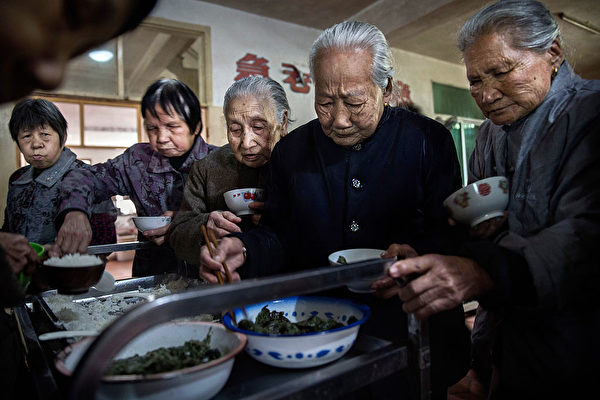
China is facing a typical “premature aging before becoming rich” crisis as the population rapidly ages, economic growth slows down, and social costs soar. Official figures show that in 2025, China’s annual birth rate hit a record low since 1949, with only 7.92 million births. The total population decreased by 3.39 million from the previous year, marking the fourth consecutive year of negative growth. Experts estimate that China’s total fertility rate has dropped to between 0.7 to 1.0, far below the replacement level of 2.1 needed to maintain population stability.
Premier Li Keqiang proposed the creation of a “child-friendly society” and accelerating the development of the “silver economy” in his government work report during the recent meetings. However, experts warn that China is facing a severe crisis of demographic imbalance and rapid aging. The proportion of the population aged over 60 in China has reached approximately 23%, with an annual increase of about 10 million elderly people.
According to demographic scholars such as Lu Jiehua and Liang Zhongtang, China is experiencing an unprecedented population structure transformation. The country is struggling as the number of newborns declines while the retiring population increases. The population aging issue has become critical, with significant imbalances in demographic composition.
The aging population has raised concerns about the sustainability of the pension system and the overall economic impact. Experts predict that by 2035, the number of people over 60 in China will exceed 400 million, approaching the total population of the United States and Italy.
Renowned demographer Wang He pointed out the alarming pace of population aging in China compared to Western nations. He emphasized that China has rapidly entered a devastating stage of demographic transformation, with aging occurring much more quickly than in developed countries.
In an effort to reverse the population decline, the Chinese government has introduced various measures, including cash subsidies, childcare services, housing support, and medical insurance. However, experts like Wang He argue that these subsidies are insufficient to change people’s willingness to have children due to the high cost of raising a child in China.
Despite government efforts to encourage childbirth through subsidies and support, many young Chinese express skepticism, citing high living costs as a significant deterrent to having children. The prevailing sentiment is that financial assistance alone cannot address the fundamental challenges of raising a family in a society where housing and education costs are soaring.
As China confronts the challenges posed by an aging population, the authorities view the elderly market as a new economic engine. Official policies aim to develop the “silver economy,” encompassing eldercare services, healthcare, pensions, technology-enabled aging solutions, and the tourism industry.
Experts caution that while promoting the silver economy can help alleviate some issues related to aging population, the financial constraints faced by a significant portion of the elderly may limit the market potential. Challenges also persist in addressing the structural issues contributing to population decline, including income expectations, high housing and education costs, unstable employment, delayed marriage, and declining marriage rates.
In addition to demographic challenges, Beijing has outlined goals to improve employment, education, eldercare, and healthcare in its policy reports. However, experts like Wang He emphasize that addressing these issues requires more than just financial support but also significant institutional reforms to ensure effective implementation and distribution of resources.
China is at a critical juncture as it grapples with the repercussions of a shrinking workforce, aging population, and economic slowdown. The country’s attempts to stimulate childbirth and boost the silver economy are seen as essential strategies to mitigate the impending demographic crisis. However, experts caution that without comprehensive reforms and broader societal changes, the challenges of low fertility rates, economic pressures, and insufficient social security may persist, underscoring the complex nature of China’s demographic transformation.