
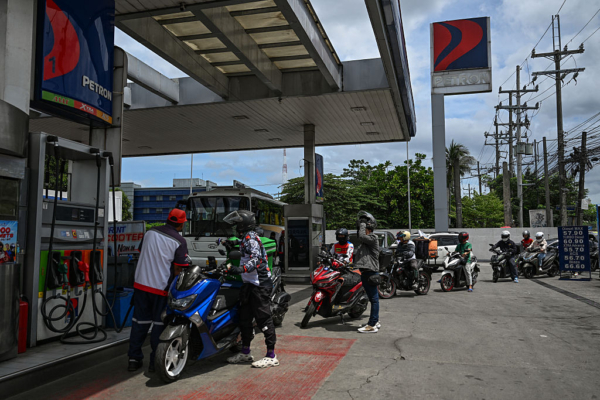
As major oil-producing countries in the Gulf reduce production and Tehran announces that hardliners will continue to hold power, concerns about long-term disruption in energy supply have intensified, leading to historically high oil prices. On Monday, Asian countries have implemented emergency measures to mitigate the economic and consumer impacts of the potential Iran conflict.
According to reports from Reuters, South Korea, which relies on the Middle East for 70% of its oil imports, has taken significant steps. President Lee Jae-myung announced on Monday that Seoul will implement fuel price controls for the first time in nearly 30 years, while also warning citizens against panic-buying.
Lee added that South Korea will seek alternative sources for energy outside the Middle East and will expand a market stabilization plan worth 1 trillion won ($670 billion) if necessary.
A senior Japanese lawmaker stated on Sunday that the government has instructed the national oil reserves to prepare for possible oil releases. However, the Chief Cabinet Secretary of Japan mentioned on Monday that the government has not made a decision regarding releasing oil reserves.
Japan relies on imports from the Middle East for about 95% of its oil consumption, and its oil reserves are adequate to meet 354 days of demand.
Furthermore, the Vietnamese government announced plans to suspend fuel import tariffs until the end of April to ensure a stable supply.
Bangladesh plans to shut down all universities on the following Monday to begin the Eid al-Fitr holiday early as one of the emergency measures to conserve electricity and fuel.
Authorities in China have instructed oil refineries to halt fuel exports and cancel existing export orders.
On Monday, Iranian authorities announced that Mojtaba Khamenei, son of the hardliner Ayatollah Khamenei, will succeed his father as the Supreme Leader. This development suggests that the conflict between the US and Iran could escalate further. Following this announcement, oil prices surged by 25%, marking a record-breaking increase for Brent crude oil in a single day.
Meanwhile, as the blockade of the Strait of Hormuz continues, OPEC oil-producing countries Kuwait and Iraq have reduced crude oil production over the weekend.
Additionally, Iranian oil storage facilities were targeted in an Israeli air raid on Saturday night, intensifying concerns in the market about retaliatory strikes on Middle Eastern energy facilities by Iran.
Muyu Xu, a senior oil analyst at commodity and shipping data platform Kpler, stated, “Current oil prices have all the elements to trigger a perfect storm – reduced production from oil-producing countries in the Middle East, the prolonged closure of the Strait of Hormuz… and the pessimistic sentiment regarding a swift improvement in the current situation is intensifying.”
Three industry sources revealed on Sunday that Iraq has cut production in its major southern oilfields by 70% to 1.3 million barrels per day, while the Kuwait Petroleum Corporation announced on Saturday that it encountered force majeure and began production cuts.
The second-largest liquefied natural gas exporter globally, Qatar, has halted exports of the fuel. Analysts anticipate that the UAE and Saudi Arabia will soon face mandatory production cuts due to the depletion of oil storage space caused by the blockade of the Strait of Hormuz.