
During the National People’s Congress of the Chinese Communist Party, the operation of the Hainan Free Trade Port, which has been closed since December 18th last year, has been in operation for less than three months. Local officials have publicly requested policy and financial support from the central government. According to reports, it is rare for local governments to directly request “policies and funds” from higher authorities during the open day activities of the national congress delegations.
On March 8th, the Hainan Province delegation held an open day event. Liu Xiaoming, the Governor of Hainan Province, introduced the progress of the policies in the Free Trade Port during the meeting, while also presenting multiple demands to the National Development and Reform Commission, including further support for foreign investment development, studying and formulating coordinated policies for domestic and foreign capital access, relaxing restrictions on foreign capital access, and supporting the issuance of local government bonds to overseas investors.
A financial scholar from Guangdong, Mr. Zeng, told reporters that the direct request for a series of policy and financial needs by local governments during the important political event of the Chinese Communist Party’s National People’s Congress indicates the financial pressure faced by the construction of the Hainan Free Trade Port has been brought to light.
He mentioned that in the past few years, the Chinese Communist Party has continuously portrayed the Hainan Free Trade Port as a so-called “new highland of reform and opening up”, but in reality, it heavily relies on financial support and policies from the central government. Once local funds are tight, local governments have to reach out to the central government for resources again.
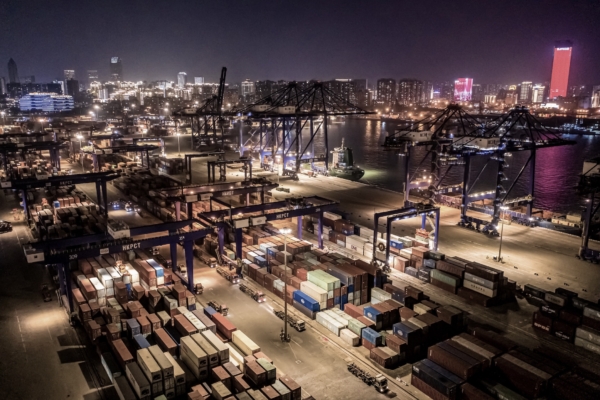
Mr. Zeng also noted that despite the Free Trade Port operating for nearly three months since its closure, the local economic atmosphere remains subdued. He mentioned seeing a lackluster scene when two of his friends visited Haikou and Sanya for the New Year, with few ships at the docks loading and unloading goods, similar to the situation in Xiong’an. It remains unclear how their grand publicity campaigns will end up.
Liu Xiaoming also proposed that he hopes the central government would support the preliminary construction of the new airport in Sanya, include the project in the national “14th Five-Year Plan”, and promote the launch of the Zhanhai High-Speed Railway project, as well as accelerate the development of offshore wind power and other industrial projects.
Regarding this, a media person from Hainan, Fang Xiaomin, told reporters, “Many companies are behind in paying wages, how can these infrastructure projects costing tens or even hundreds of billions of yuan push forward? Without companies contributing taxes, where will the local government get the money to invest? Beijing keeps demanding Hainan to continue promoting infrastructure projects, but the funds are not coming in. I heard some construction sites have already ordered to stop work, with no money coming in, the migrant workers who went home for the New Year are not willing to come back.”
Hainan has been under sealed-operated since December 18, 2025. Cai Qiang, Director of the Finance Department of the Hainan Provincial People’s Congress, admitted during the meeting that the “initial stage after the closure of the Free Trade Port is the most difficult,” and publicly requested more investment support from the central government, hoping that the National Development and Reform Commission will lean towards Hainan in arranging major projects. He also revealed that the investment scale for Hainan from the national budget in 2025 has decreased compared to 2023 and 2024, indicating a tightening of financial support from the central government.
Some scholars pointed out that while the Chinese Communist Party has long touted the policy benefits of the Free Trade Port, local financial pressures have begun to emerge.
Economist Wang Bing told reporters that the Hainan Free Trade Port has been heavily reliant on financial and policy support from the central government since its planning stages, due to the weak foundation of local industries and limited tax revenue sources. He stated that while the Free Trade Port appears grand in scale, it has always relied on financial injections from the central government to sustain operations.
He further explained that now the central government is facing financial pressure as well, with funding support beginning to tighten: “Starting this year, the reduction in financial support, Hainan officials are urgently hoping for more funds from the higher-ups of the Chinese Communist Party, these complaints during the two sessions may not bring practical results, ultimately it’s their own making.”
In terms of tax systems, Cai Qiang stated that the proportion of zero-tariff goods after the closure will increase from 21% to 74%, with the future goal being to gradually increase it to 90%. Currently, there are over six thousand types of goods enjoying zero tariffs. However, he also admitted that there are still more than 2300 types of consumer goods that have not been included in the zero-tariff range, with the official explanation being the need for policy coordination and consideration of smuggling issues.
At the group meeting of the National People’s Congress delegation, Feng Fei, Secretary of the Hainan Provincial Party Committee, continued to drum up support for the Free Trade Port policy. He stated that since the closure, the number of inbound and outbound passengers through Hainan’s open ports reached 653,000, a 35.1% increase compared to the previous year, with 158,000 inbound visa-free arrivals, a 53.7% increase; 51,000 new operating entities were added, including 41,000 new enterprises, marking a 43.6% increase year-on-year; and there was a 30% increase in new foreign-funded enterprises and a 74% increase in recorded foreign trade enterprises.
However, analysts have pointed out that the frequent use of growth data by Chinese officials during the two sessions to endorse policies has long become a common practice, but these figures may not necessarily reflect the true economic situation in the region. As local financial pressures continue to mount, the disparity between policy projects hyped up and actual economic performance is becoming increasingly evident.