
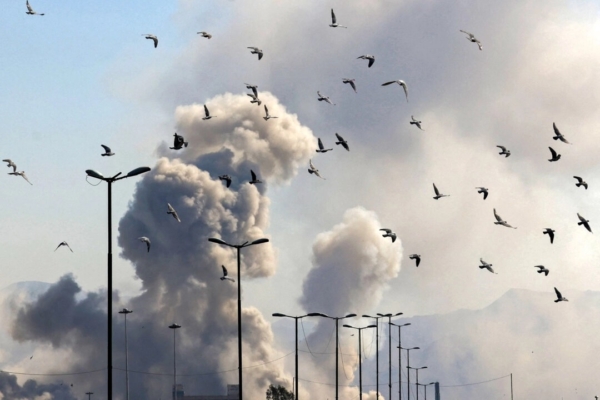
A few days ago, the strikes by the United States and Israel against Iran exposed the limitations of the Chinese regime’s support for its strategic partner, making Beijing susceptible to economic and political losses. Simultaneously, it also revealed China’s inability to confront the power of the United States in the Middle East region.
Before the joint airstrikes by the US and Israel on Iran on February 28, Chinese influence had been expanding in technological cooperation with Tehran, bolstering Iran’s capability to resist conflicts with Washington.
Beijing has been striving to replace Western software used by Iran with Chinese network security and digital systems to reduce the risk of cyberattacks from Israeli and American intelligence agencies. This initiative aligns with China’s broader strategy of promoting its network security and digital systems overseas, with digital sovereignty at its core, evident in its digital partnerships under the Belt and Road Initiative (BRI).
Reports released just days before the attacks indicated that Beijing provided Iran with defensive and limited offensive systems, including HQ-16 and HQ-17AE anti-aircraft platforms and kamikaze drones.
Meanwhile, it is alleged that China and Iran are negotiating further weapon sales, including the CM-302 anti-ship cruise missile that could threaten US Navy ships in the Arabian Sea and neighboring waters, as well as the purchase of China’s hypersonic glide missile DF-17 designed to evade air defense systems through high maneuverability.
Reportedly, some funds used by Iran to purchase Chinese weapons are paid through oil shipments, reflecting the deep energy relationship between the two countries as China buys a significant portion of Iran’s crude oil exports. An article in the Financial Times on February 22 noted a procurement agreement between Iran and Russia for the Verba Man-Portable Air-Defense System, with deliveries expected between 2027 and 2029.
China has briefed some Arab countries allied with the US government on the weapons delivery situation, with analysts suggesting that this move aims to deter US attacks and demonstrate Beijing’s readiness to stand by Tehran.
However, it is worth noting that these are ongoing transactions or future agreements, not weapons being shipped to the conflict zone. Currently, it appears that Beijing does not have plans to deliver weapons to Iran, even if it wishes to support its strategic partner, as the surrounding maritime and airspace of Iran are practically impassable.
The Revolutionary Guard Corps of Iran officially announced the closure of the Strait of Hormuz on March 2. All oil tankers in the strait had stopped emitting AIS signals past midnight, signifying a halt in maritime traffic. Since March 5, Iran has revoked shipowner’s liability insurance, exposing shipowners to high economic risks. Any Chinese or Russian arms shipments would now have to pass through the closed Strait of Hormuz.
With the near complete aerial dominance achieved by the US and Israel in Iran and ongoing airstrikes on strategic targets, Iran’s airspace is no longer a coveted target for engagement. Therefore, weapons or aid provided by China to Iran practically cannot be transported by air, as Iran has effectively shut down the import of military supplies through its airspace.
Land transportation via Turkey, Iraq, or the Caucasus region requires transit through nations not currently conducive to facilitating weapon transfers. Up to early March, there have been no definitive reports confirming that China or Russia has delivered any weapons to Iran since February 28.
China is exerting pressure on Iran to keep the Strait of Hormuz open. Beijing is concerned that conflicts could disrupt its supply of cheap oil and impact the lucrative export markets for Chinese goods. Additionally, China worries that major investments and strategic projects under its 25-year comprehensive strategic partnership with Iran could be jeopardized.
Beijing has invested billions of dollars in Iran’s infrastructure, communications, and ports, and destruction of these assets would result in direct economic losses. Iran is also a vital component of China’s BRI, implying that instability in Iran could undermine Beijing’s broader regional ambitions.
If Iran’s economy collapses, Beijing faces the risk of non-payment of debts by Iranian businesses and the government. Therefore, China finds itself in a dilemma: allowing Iran to suffer strategic setbacks would come at a high cost for Beijing, yet openly supporting Tehran could provoke severe secondary sanctions from the US. Given these factors, China’s responses have predominantly been diplomatic so far. Beijing has condemned the US and Israel’s airstrikes and urged all parties to exercise restraint, return to dialogue, and safeguard their interests.
The US and Israel’s strikes on Iran pose a crucial test for China’s regional influence. Failing to prevent these attacks has weakened China’s external image as a capable protector of allies. Chinese officials have warned that these strikes violate international law and set a dangerous precedent. They fear that these attacks could provide a pretext for similar interventions in other regions where China holds sway.
This conflict has exposed Beijing to economic losses, diplomatic setbacks, and reputational damage. Importantly, it showcases China’s inability to confront the US and Israel’s power even when one of its closest partners is under attack.
The author, Antonio Graceffo, is an economics professor and China economic analyst who has lived and worked in Asia for over twenty years. He holds a bachelor’s degree from the Shanghai Institute of Physical Education, a master’s degree in business administration from Shanghai Jiao Tong University, and has conducted research on defense issues at the American Military University.
Note: This article only represents the author’s personal views and does not necessarily reflect the stance of the publishing source.