
The conflict between the United States and Iran entered its seventh day. American officials said that “Operation Epic Fury” has made significant progress.
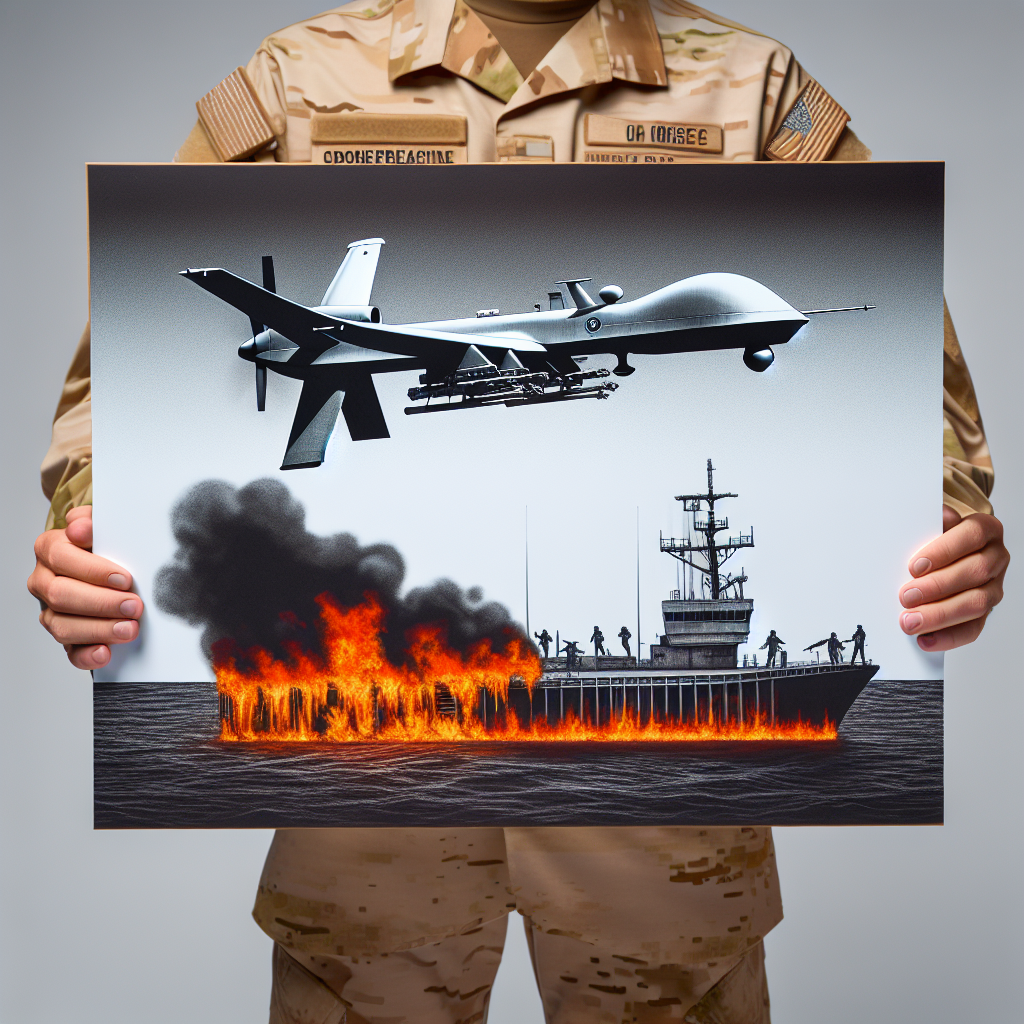
On Thursday, the US Central Command (CENTCOM) released a video showing an Iranian “drone aircraft carrier” being heavily damaged and on fire, marking a crucial stage in the mission to “sink the entire Iranian navy”.
At the same time, the Israeli Defense Forces (IDF) and the US military launched a “massive airstrike” on the Iranian capital Tehran, targeting regime infrastructure and security headquarters, and deploying B-2 stealth bombers to carry out precise strikes on deep targets within Iran.
Under military pressure, internal political unrest is brewing in Iran, as state television confirmed that the leadership council is urgently discussing the process of selecting a new supreme leader.
To prevent a crisis in energy supply due to the war, the Trump administration has taken practical measures, including authorizing India to continue purchasing Russian oil. The Trump administration also urged Iranian military and police to defect, working together to shape a “better Iran”.
Despite concerns about the escalation of the conflict in American political circles, the House of Representatives rejected a resolution to limit presidential powers, allowing “Operation Epic Fury” to continue under political authorization.
Here are the latest updates:
On Thursday night, the US Central Command (CENTCOM) released a stunning video on social media confirming the targeting of a strategic asset of the Iranian navy – the drone aircraft carrier “IRIS Shahid Bagheri”.
The ship, which was converted from a cargo vessel and has a 180-meter runway, is roughly equivalent in size to aircraft carriers from World War II.
Adm. Brad Cooper, the commander of CENTCOM, stated: “In the past few hours, we hit an Iranian drone carrier equivalent in size to a World War II aircraft carrier, and right now, it’s on fire.”
Israel continued its intense airstrikes on the southern outskirts of Beirut from Thursday night into Friday, with at least 11 airstrikes reported. Some bombs fell near gas stations, sparking fires.
Although there have been no reports of casualties so far, the airstrikes have paralyzed local traffic, leading to mass evacuations and many residents forced to sleep on the streets along the seaside promenade.
Hezbollah issued evacuation warnings to northern Israeli towns for the first time as a countermeasure.
To prevent the leakage of information affecting military operations, the Dubai police has sent text messages to residents warning that filming, sharing locations, or spreading false information will result in legal consequences.
Satellite imaging provider Planet Labs also announced a 96-hour delay in the release of images of the Persian Gulf, Iraq, Kuwait, and other areas to prevent adversaries from using recent data for battle damage assessment (BDA).
According to the latest data from the US military, Iran’s offensive capabilities have significantly decreased under intense airstrikes. Adm. Cooper announced at a press conference that since the operation began, missile attacks by Iran have decreased by 90%, and drone attacks have dropped by 83%.
He revealed that the US military has struck approximately 200 deep targets within Iran in the past 72 hours, including military facilities around Tehran, and deployed B-2 stealth bombers to drop dozens of 2,000-pound “bunker busters” to destroy missile launchers inside bunkers.
President Trump expressed extreme optimism about the progress of the conflict at a White House event honoring a football team. He said, “The American military, along with our outstanding Israeli partners, are completely destroying the enemy at a pace never seen before.”
Trump pointed out that Iran’s navy, air force, air defense systems, and communication capabilities have been largely dismantled. He joked, “Their navy is finished. Twenty-four ships gone in three days, that’s a lot of ships. Their air defenses are gone, they have no air force, no air defense. All their planes are gone. Their communication is gone. Missiles are gone. Other than that, they’re in great shape.”
Azerbaijan accused Iran on Thursday of launching drone attacks on its territory and vowed to retaliate. This shows that the conflict is no longer confined to the Gulf region and is spreading towards the Caucasus.
To mitigate the global oil price surge caused by the Iran conflict (US oil briefly exceeding $80), the US Treasury announced emergency measures, authorizing India to continue unloading and purchasing Russian oil already at sea within the next 30 days.
Treasury Secretary Scott Bessent stated that this is a temporary measure aimed at relieving the pressure from Iran’s attempts to “hold the global energy supply hostage”.
Trump also instructed providing oil tanker “political risk insurance” to ensure energy flow through the Strait of Hormuz.
In retaliation against nearby countries supporting the US military, Kuwaiti military authorities confirmed that 67 soldiers were injured in the attacks, and an 11-year-old girl tragically lost her life when missile fragments hit a residential home.
Additionally, two hotels and a residential building in Bahrain were damaged in Iranian attacks. Due to security concerns, the US embassy in Kuwait announced a complete closure, making it the second US embassy abroad to cease operations since the outbreak of the war.
Iran’s state-run television reported that the highest leadership council in the country has convened a meeting to discuss how to convene an “Assembly of Experts” to select a new supreme leader.
Trump publicly stated that he hopes the US will have influence in selecting Iran’s next leader and openly declared that potential successor Mojtaba Khamenei is “unacceptable” and “inadequate”.
To undermine the enemy from within, President Trump publicly appealed to the Iranian military and diplomatic system to lay down their arms and seek political asylum.
He emphasized, “Now is the moment to support the Iranian people and reclaim your country.”
Trump promised full amnesty and safety to those willing to cooperate, while warning that those who don’t will face inevitable death. “I don’t want to see that happen.”
In the US, the House of Representatives narrowly voted 219 to 212 to reject a resolution aimed at limiting Trump’s authority to wage war against Iran.
House Speaker Mike Johnson attempted to downplay the scale of the war, calling it a limited operation in terms of scope and duration, stating, “We are not in a state of war, nor do we intend to go to war, the mission is nearing completion.”
Australian Prime Minister Anthony Albanese confirmed that three Australian military personnel were undergoing training aboard a US nuclear submarine when it sank an Iranian vessel. Albanese stated that Australia was not involved in the attack.
Canadian Chief of the Defence Staff Gen. Jennie Carignan stated that they were discussing how to assist Gulf nations in self-defense but were not participating in “Operation Epic Fury”.
Furthermore, the Japanese government confirmed the detention of a second Japanese citizen in Iran and is seeking their immediate release.