
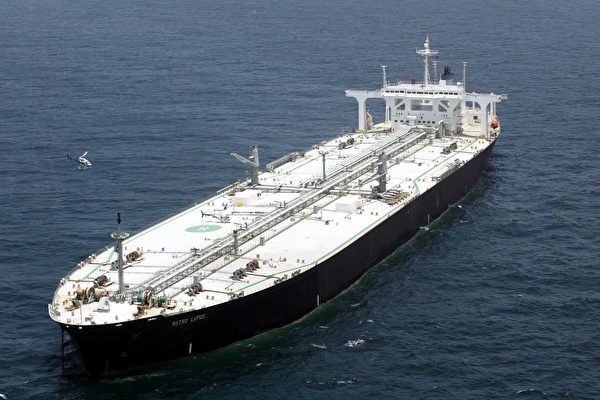
The U.S. Department of the Treasury announced on Friday, March 6, that in response to the escalating tensions in the Middle East leading to global energy supply pressures, it has officially granted India a 30-day temporary waiver, allowing Indian refiners to purchase Russian crude oil and petroleum products.
According to the permit issued by the U.S. Department of the Treasury in a PDF document, the waiver took effect on March 5 in Washington time and will expire on April 4.
This waiver comes with strict technical restrictions, limited to Russian crude oil and refined products that were already loaded on ships before March 5 and are currently stranded at sea, and must be purchased by Indian companies and shipped to India.
U.S. Treasury Secretary Scott Bessent stated on the social platform X, “In order to ensure the continued flow of oil to the global market, the Treasury Department is issuing a 30-day temporary waiver allowing Indian refiners to purchase Russian oil.”
He emphasized that this is a “deliberately designed short-term measure” and will not provide significant financial benefits to the Russian government as it only authorizes the processing of goods already stranded at sea.
After the U.S. and Israel launched “Operation Epic Fury” against Iran, the conflict has entered its seventh day, with the U.S. and Israel continuing massive airstrikes on military targets within Iran.
The Israeli military stated that most of Iran’s air defense systems have been destroyed, and the U.S. has sunk over 30 Iranian vessels, including the strategically significant unmanned aerial vehicle carrier “IRIS Shahid Bagheri.”
In response, Iran launched attacks on neighboring Gulf countries and declared the cutting off of transportation through the Strait of Hormuz. If the strait is blocked, it will directly impact around 20% of global oil and natural gas trade. With market concerns about supply disruptions, U.S. crude oil futures prices have surged to over $80 per barrel.
This is the key background for the U.S. urgently granting oil waivers to India.
As the world’s third-largest oil importer, about 40% of India’s imported crude oil passes through the Strait of Hormuz. Currently, India’s national strategic oil reserves can only support demand for about 25 days, and some refineries have already felt the impact of tight supplies.
Reports indicate that Mangalore Refinery and Petrochemicals Limited (MRPL) in India has closed one of its three crude distillation units (CDUs) and halted the export of petroleum products due to insufficient inventory.
Market data shows that around 11 million barrels of Russian crude oil are currently stranded on oil tankers in Asian waters, with nearly 70% concentrated near the coasts of China and the Singapore Strait. This waiver is seen as a “safety valve” to alleviate market concerns and is expected to allow the stranded goods to smoothly enter the Indian market and stabilize its refining operations.
Secretary Bessent stated in a declaration, “India is an important partner for the United States, and we fully expect New Delhi to increase its procurement of U.S. oil in the future.”
He further added that this temporary buffer measure will help “alleviate the pressure of Iran’s attempts to hijack global energy.”