
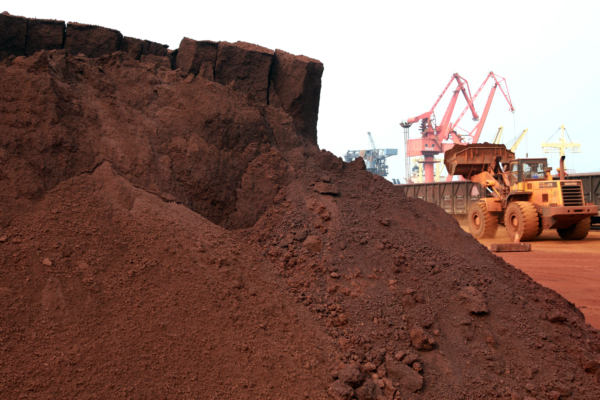
Recent military strikes by the United States and Israel against Iran have heightened tensions in the Middle East. Sources have revealed that the Chinese Communist Party (CCP) has increased its export controls on strategic resources such as tactical drones, rare earth elements, and refined oil. Analysts believe that these measures are approaching a state of wartime export control and could indirectly assist the Iranian authorities to some extent.
In the backdrop of the tense situation in the Middle East, Huang Juguang, an insider in China’s foreign trade industry, disclosed to Epoch Times on March 6 that the CCP authorities have instructed domestic enterprises to enhance their export management of certain strategic resources. These include tactical drones, rare earth elements, rare minerals, and refined oil. Some tech and trade companies have been verbally notified to conduct additional reviews on related orders and to impose stricter approval procedures on exports to sensitive regions.
In response to foreign media reports on China’s restriction of refined oil exports, the Chinese Ministry of Foreign Affairs stated in a routine press conference on March 5, “I am not aware of the situation you mentioned.” Previously, Bloomberg cited insiders saying that China’s National Development and Reform Commission had informed large domestic oil refining companies to suspend diesel and gasoline exports, halt the signing of new export contracts, and negotiate the cancellation or postponement of some orders with overseas buyers.
Huang Juguang mentioned that such measures are typically not announced in public documents but are transmitted through industry regulatory departments or state-owned enterprise systems. “However, customs ultimately enforces them. Companies may be required to re-register the export countries and destinations for drone equipment, rare earth materials, and some energy products, and some orders may be delayed in execution.”
He explained that tactical drones and their key components have been widely used in international conflicts in recent years, while rare earth elements and rare minerals are essential raw materials for manufacturing missiles, radars, electronic equipment, and precision weapon systems. “Once these resources fall under control, they could affect the military equipment supply chains in related regions.”
Regarding China’s stance on the Iran issue, industry insider Mou commented that the administrative notifications reflect the CCP’s clear bias towards Iran. By reducing refined oil exports, China can to some extent alleviate the sales pressure on Iranian crude oil and create room for Iranian crude to enter the Asian market, indirectly increasing the difficulty for the U.S. and Israel to impose energy sanctions or military strikes on Iran.
Mou stated, “In recent years, China has been expanding energy cooperation with Iran. Before the (US-Iran) conflict, China had imported a large amount of Iranian crude oil. Now, suddenly restricting refined oil exports, I judge that it is very likely due to a demand from Iran, hoping that China will create space in the market.”
Furthermore, he added, “If the situation in the Middle East continues to escalate, China now needs to prioritize ensuring domestic fuel reserves rather than continue selling fuel to overseas markets.”
China is one of the largest oil-importing countries globally, with a long-term external dependence on crude oil exceeding 70%. The Middle East is an important source of China’s crude oil imports, with countries such as Saudi Arabia, Iraq, the UAE, and Iran being major oil suppliers to China. The Strait of Hormuz is a critical channel for oil transportation in the Middle East. Any impact on that strait could affect energy supplies in Asia.
At the same time, China is an important producer of refined oil globally. The country has dozens of large refineries, with the refining system mainly composed of state-owned energy enterprises such as Sinopec, PetroChina, and CNOOC, as well as large private refining projects like Zhejiang Petrochemical.
According to reports from Singapore’s The Straits Times website, the Chinese government has requested oil refining companies to temporarily halt some refined oil exports to ensure domestic fuel supply in the tense situation in the Middle East.
Beijing trade researcher Wu Kegang told reporters that China holds a critical position in the global key mineral supply chain, and once the government strengthens export restrictions, it could have an impact on the international market. He said, “These resources are used in China as strategic materials, indispensable in high-tech industries and the defense sector. From the current policies, it is already akin to activating wartime export restrictions.”
Wu Kegang also mentioned that if the war continues, the authorities may further tighten export measures, even suspending the export of related resources.