
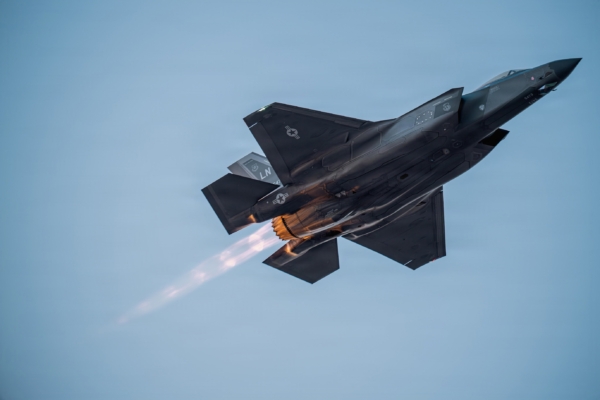
Since February 28, the United States and Israel have launched a large-scale joint airstrike operation against Iran, aiming to destroy Iran’s missile network and nuclear facilities. US officials and analysts have described this as one of the most coordinated allied operations in modern warfare.
US Secretary of War Haggeses stated that this operation is rapidly establishing control over Iranian airspace. He said on Wednesday, “Starting from last night, it can be completed within a few days… the two most powerful air forces in the world will have full control of Iranian airspace. This will be an uncontested airspace.”
Israeli Defense Forces spokesperson General Effie Defrin stated in an exclusive interview with Fox News Digital Channel on Tuesday, “The cooperation between us and the US military is amazing. We have common planning and execution in our operations in Iran and other regions.”
John Spencer, the Director of Urban Warfare Research Institute, told Fox News Digital Channel that Israel effectively responded to the initial air power reinforcement from the US military.
Spencer said, “Israel has deployed a comparable number of aircraft in the air as the US.” “For Israel, this represents about 80% of its air force capability.”
He added that the level of coordination between the US and Israel represents a new model of allied combat.
“This is not every man for himself,” Spencer said, “This is joint warfare. It’s integrated, synchronized joint operations.”
The Wall Street Journal reported that Iran has spent decades building underground bunkers to protect its large missile arsenal from destruction. However, less than a week after the outbreak of war with the two strongest opponents, the strategy seems to have backfired.
Analysts say that nearly all of Iran’s dozens of missile bases are located underground, but their above-ground structures, roads, and entrances make it possible to identify these bases through satellite images. The Pentagon and the Israeli military have been searching for these facilities for years.
Since the war began, US and Israeli warplanes and armed drones have been circling over dozens of underground bases, striking immediately when missile launchers rise from the ground to launch. At the same time, multiple heavy bombers have been dropping munitions on these bases, apparently burying Iran’s weapons underground.
Recent satellite images show remnants of Iranian missiles and launchers destroyed in airstrikes by the US and Israel near the entrances of the underground bases in what Iranian officials call “Missile City” still smoldering.
The US Central Command responsible for the airstrikes stated on Wednesday that the number of missile launches by Iran has decreased by 86% within four days.
Analysts suggest that US airstrikes appear to be mainly focused on bases in southern Iran, while Israeli aircraft are primarily targeting facilities in the north.