
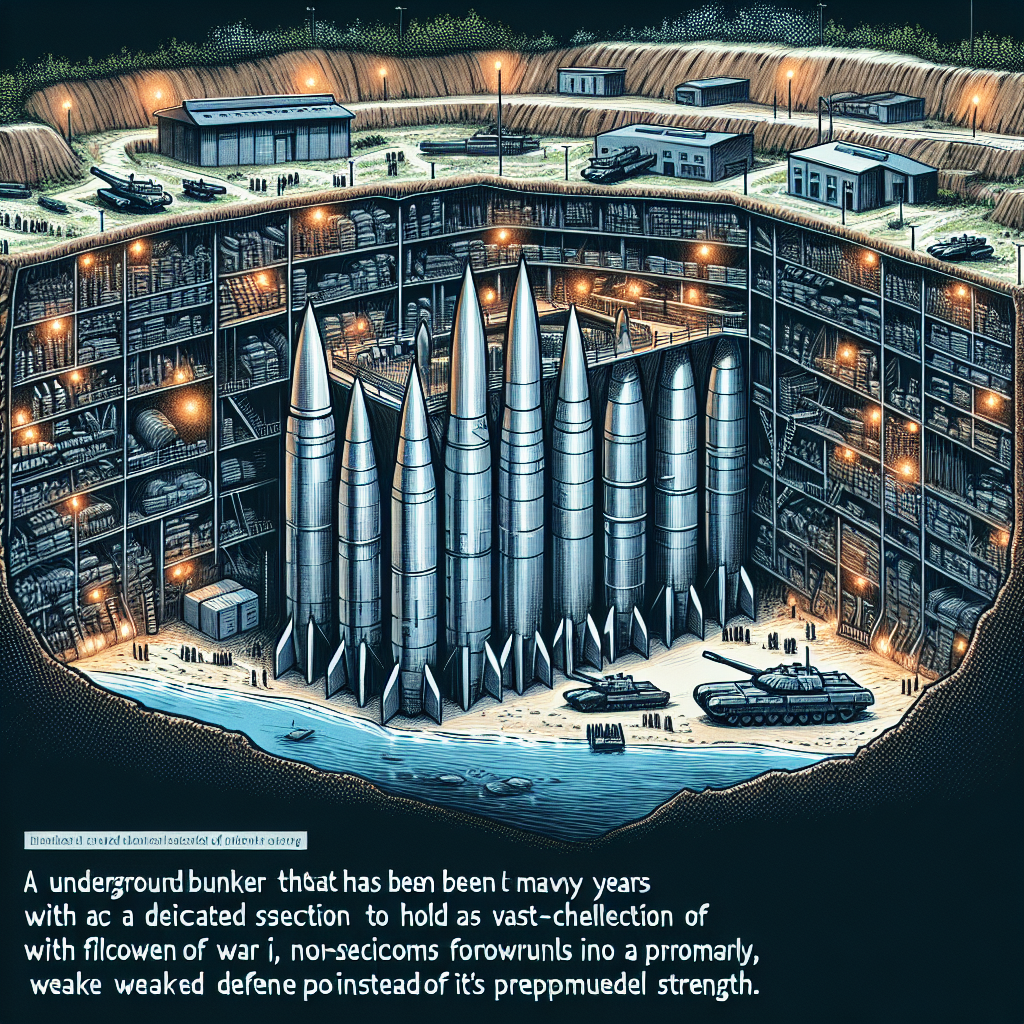
Iran has spent decades building underground bunkers to protect its massive missile arsenal, but in less than a week of conflict with the United States and Israel, the “missile city” has become its biggest defensive weakness.
According to a report by The Wall Street Journal on Thursday, American and Israeli warplanes and drones are constantly circling over dozens of huge underground bases, ready to destroy any launched missile vehicles instantly. Heavy bombers have also targeted multiple entry points, causing some facilities to collapse and trap weapons inside.
Satellite images show debris of missile launch vehicles scattered at the entrances of the facility known as “missile city.”
Since the conflict erupted, Iran has launched over 500 missiles, but the frequency of large-scale salvos has significantly decreased. Admiral Brad Cooper, the top U.S. commander in the Middle East, pointed out on Tuesday that the U.S. and Israeli coalition is systematically hunting down Iran’s remaining launch capabilities.
According to the latest statistics from U.S. Central Command (CENTCOM) on Thursday, Iran’s missile launch frequency has dropped over 90% since the beginning of the war; hundreds of missiles, launch vehicles, and drones have been destroyed by the U.S. and Israel.
Researcher Sam Lair analyzed in the report that Iran’s concept of “missile city” has a fundamental flaw: the originally mobile launch devices are now trapped in fixed entrances, making them easier targets for destruction.
With Iran’s air defense systems largely disabled, U.S. and Israeli surveillance aircraft are using a “hit and run” tactic, hovering at low speeds to strike when targets expose themselves:
Shiraz:
On March 2, images show a launch vehicle destroyed before exiting the shelter, leaking nitric acid fuel creating a distinct red smoke.
Isfahan:
Remaining launch vehicles on March 1 were destroyed the following day by heavy bunker-buster strikes from the U.S. military.
Kermanshah:
Satellite images on March 3 show the main access routes at the base being precisely severed by heavy bombing.
Despite the missile threat diminishing, Iran’s remaining “Shahed” suicide drones continue to harass neighboring countries. Ukrainian President Zelensky confirmed on Thursday that Ukraine has received requests for assistance from the U.S., Israel, and Middle Eastern partners to send experts and technical means for defense.
In an interview with Rai Italia, Zelensky highlighted the “defense math” dilemma faced by Middle Eastern allies:
“They have Patriot missiles, but intercepting thousands of cheap ‘Shahed’ drones with million-dollar missiles is costly and insufficient in quantity.”
Zelensky proposed a “quid pro quo” transaction: Ukraine offering the low-cost “Sting” drone interception for only £750 (approximately $950) in exchange for PAC-2 and PAC-3 Patriot interceptors urgently needed by Ukraine. This deal is believed to align with former President Trump’s preference for transactional diplomacy.