
China’s electricity market is undergoing a widespread price reform. Recently, electricity purchasing prices for March 2026 from power grid enterprises in various provinces have been successively announced, with electricity prices in 27 provinces dropping, including a significant reduction in Liaoning. Analyses suggest that the rapid development of new energy sources without proper planning, as well as the overall oversupply and lack of orders in China’s manufacturing sector, have led to a situation where many enterprises operate at low capacity throughout the year, inevitably reducing overall electricity demand.
Strangely, this decrease in electricity prices has not significantly lowered the electricity expenses for both businesses and individuals. For example, the electricity price for industrial and commercial enterprises in Liaoning has only slightly decreased, with analyses pointing to the Chinese government’s support policies for new energy generation as the main culprit.
According to recent reports from “China Electric Power News,” “Polaris Electricity Market Network,” and the WeChat public account “Global Zero Carbon,” China’s electricity market is undergoing a comprehensive price reform.
In March, the national electricity market has shown a trend of “more decreases than increases,” with electricity prices in 27 provinces dropping and only 4 provinces witnessing price hikes. The price decrease in Eastern Inner Mongolia, Shandong, Shanxi, and other regions exceeded 25%; Liaoning’s electricity purchasing price reached only 0.199096 yuan/kWh, representing a nearly 40% decrease month-on-month and a 53.07% decrease year-on-year, making it the “diving champion” in electricity price reductions.
In January, electricity purchasing prices from grid enterprises in 28 provinces collectively decreased, from a more than 20% drop in Liaoning to Guangdong’s electricity price touching the lower limit. This broke the traditional pattern of winter peak electricity prices trending upwards.
Electricity purchasing refers to commercial and industrial users who temporarily do not directly purchase electricity from the electricity market, instead entrusting grid enterprises to centrally purchase power for them. The electricity prices provided to these commercial and industrial users by the grid include the purchasing price, transmission and distribution costs, government fees, and other additional charges, collectively known as the “total electricity price.”
An article by “Polaris Electricity Market Network” mentioned that electricity purchasing users mainly include a large number of small and medium-sized enterprises, industrial complexes, light manufacturing enterprises, and some public service institutions within Liaoning province. The March electricity price of 0.199 yuan/kWh in Liaoning is seen as a microcosm of the future evolution of the national electricity market.
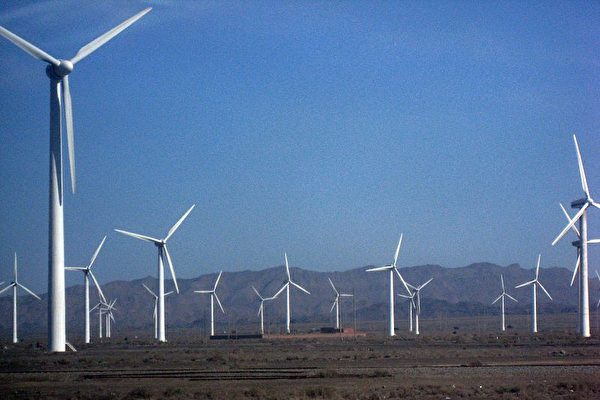
David Huang, an economic scholar in the United States, analyzed that the main issue lies in the excessive generation of new energy. In recent years, China has seen a significant increase in wind and solar power installations, resulting in very low generation costs. When the generation capacity increases, it puts downward pressure on market electricity prices, leading to price drops in many provinces.
Additionally, China’s oversupply situation and the downturn in the manufacturing sector are significant contributing factors.
According to the latest data from the National Energy Administration, industrial sectors remain the “basic foundation” of electricity consumption in 2025, accounting for approximately 64%. However, with China’s manufacturing sector facing long-term challenges such as export disruptions and weak domestic demand, companies are struggling with overcapacity, insufficient orders, and consistently low operating rates, ultimately reducing overall electricity demand in society.
On Wednesday, the National…