
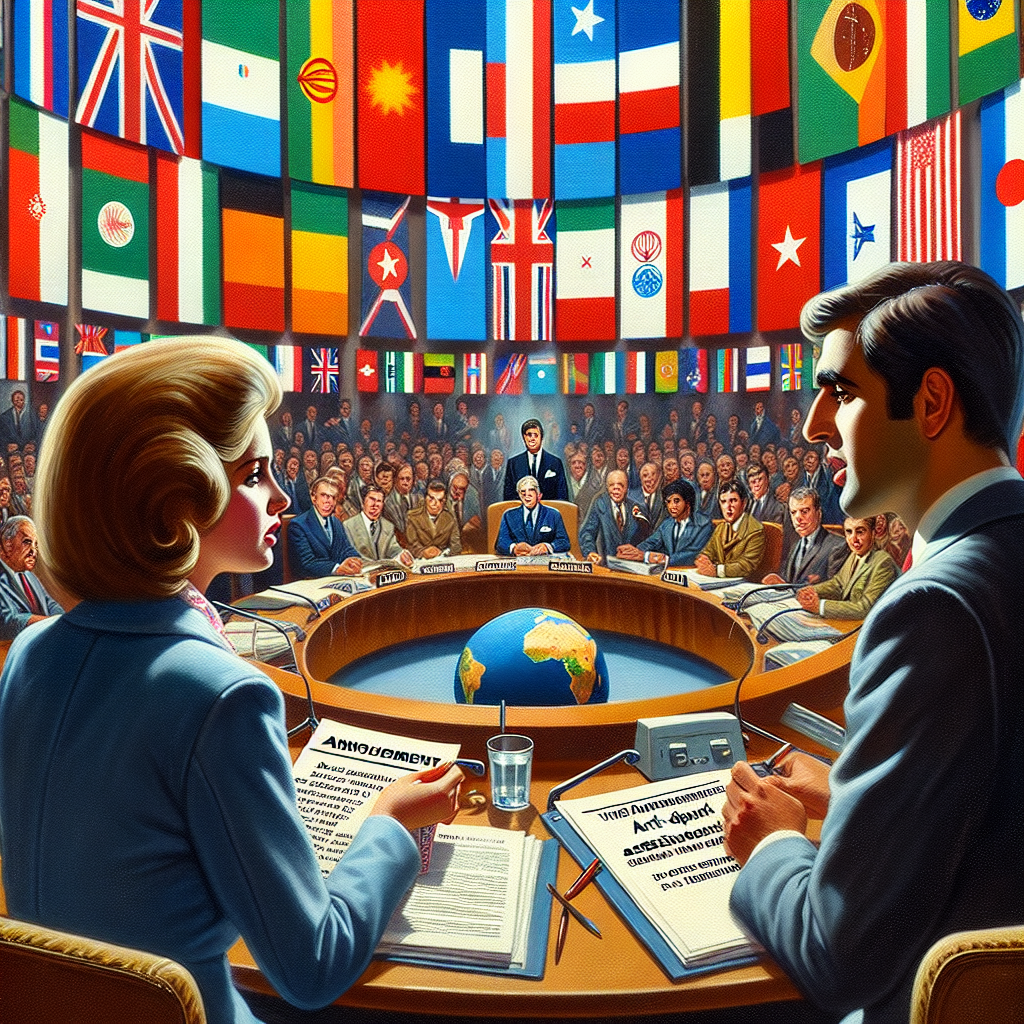
Italian Prime Minister Georgia Meloni announced on Thursday (March 5) that Italy plans to provide anti-aircraft assistance to the countries in the Persian Gulf region in response to recent Iranian airstrikes targeting multiple nations. Additionally, Canadian Prime Minister Carney also expressed support for the United States.
Meloni stated in an interview with RTL 102.5 radio station, “Like the United Kingdom, France, and Germany, Italy intends to provide assistance to the Persian Gulf countries, especially in the defense and air defense sectors.” This decision is not only based on diplomatic relations but also because tens of thousands of Italian expatriates reside in the Persian Gulf region, with about 2,000 Italian troops deployed there.
This move highlights the high level of concern of the Roman authorities for the safety of local citizens, stationed troops, and the stability of energy supply. Meloni emphasized, “These are the people we want and must protect.” She also pointed out that the Persian Gulf region is crucial for energy supply to Italy and the entire Europe.
Regarding the potential use of military bases in Italy by the United States, Meloni responded that Italy and its allies adhere to the norms of existing bilateral agreements. “This means that the contents stipulated in the agreements will not be questioned, I believe this applies to everyone, including us.”
Italy is home to military bases used by the US, established according to an agreement signed in 1954 and periodically updated. Meloni stated that under these agreements, logistical support and so-called non-kinetic operations (which she described as non-bombing activities) have received technical authorization.
Meloni concluded by stating that if the US requests an expansion of Italy’s base usage rights, the government has the authority to decide whether to grant it, subject to parliamentary approval. “However, so far, we have not received such requests.” She added, “We are not in a state of war and do not wish to be involved in one.”
On March 5, Canadian Prime Minister Mark Carney, along with Australian Prime Minister Anthony Albanese, held a joint press conference in Canberra, Australia, where Carney expressed a new stance, “We absolutely cannot rule out the possibility of participation. As long as circumstances are reasonable, we will stand shoulder to shoulder with our allies.”
He also clarified, “The United States and Israel have taken and are taking attacking actions without prior consultation with Canada and other allies, hence we have not been involved. However, when allies call, we will certainly step up and defend them, and protect Canadians.”
During the past weekend, the US and Israel launched attacks on Iran, resulting in the deaths of senior Iranian officials, including General Qasem Soleimani. At that time, Carney expressed support for the US actions against Iran, stating, “Canada supports the US actions to prevent Iran from obtaining nuclear weapons and prevent the regime from threatening international peace and security.”
After arriving in Australia, Carney’s attitude towards the earlier US airstrikes seemed to have softened. He stated, “We are concerned about our current position because the ongoing conflict once again confirms the failure of the international order. These actions seem to be against international law.”
When asked by reporters if he is calling for a ceasefire with Iran, Carney responded that the priority is to de-escalate hostile actions and for Iran to stop targeting civilians and civilian infrastructure. As for whether he regrets not calling for a de-escalation sooner, Carney firmly replied, “No.”
He emphasized, “This is a very volatile, extremely complex situation, and it has become more complicated over time. But we absolutely adhere to one fundamental principle: we cannot allow Iran to possess nuclear weapons.”
Fen Osler Hampson, a professor of International Affairs at Carleton University in Canada, stated that Canada may be drawn into the conflict under pressure from the US president or the Persian Gulf nations.
As the conflict has significantly impacted global energy supply, Iran has threatened to block the Strait of Hormuz, a strategic chokepoint controlling one-fifth of the world’s oil and liquefied natural gas transportation. In response, Trump has announced that the US will send patrol ships to escort oil tankers through the strait.
Hampson believes that Trump may rely on navies from countries like Canada with naval capabilities to assist in escorting, without necessarily requiring deploying fighter jets to bomb Iran. Currently, Carney is seeking investments from Qatar, the UAE, and Saudi Arabia in Canada, and these nations could also ask Canada to deploy its navy to protect their oil shipments.