
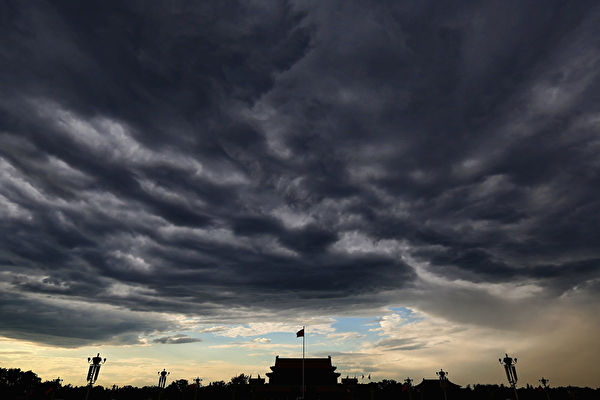
In 2026, the two sessions of the Chinese Communist Party (CCP) were shrouded in high-level turmoil, increased pressure on local finances, public discontent, and the shadow of the assassination of Iran’s top leader. In Beijing, there were whispers of unease in the air, and security checks were unusually strict.
The road from Chang’an Avenue to Tiananmen Square is one of the most heavily guarded areas during the CCP’s two sessions every year. A journalist from Hong Kong’s “Ming Pao” newspaper described in his report from Beijing that along this street towards the Great Hall of the People, there were multiple layers of inspection checkpoints. Temporary police posts were stationed at every intersection. Only pedestrians with appointments to visit certain places were allowed to enter after undergoing identity card checks and opening their bags for inspection by the police.
On March 4th, there were a large number of tourists visiting the National Museum and Tiananmen Square, with long queues at every checkpoint. The security check at the entrance to Tiananmen Square was the strictest, requiring visitors to remove their down jackets for inspection. Beside the X-ray machines for security checks, there were three staff members inspecting the backpacks of visitors, checking each compartment thoroughly. Papers with writing and notebooks were opened to check for prohibited content or slogans, and even the contents of sealed boxes were examined. The journalist, who usually carried pain relievers with him, had the label on the medicine box carefully examined by security personnel, who asked, “Do you have any sleeping pills or sedatives with you? If so, discard them.” Moreover, the journalist’s phone case was also required to be opened to check for any concealed items.
The journalist mentioned that they also had to swipe their credentials before entering Tiananmen Square. However, the inspection tool used by the armed police failed to register the credentials, causing delays before finally gaining entry. The hotel was 1.5 kilometers away from the Great Hall of the People, and it took more than 40 minutes to reach there in the end.
Security measures in downtown Beijing were noticeably enhanced. After dinner on March 4th, on the overpass near Zhu Shikou, at least two personnel were stationed on each bridge to “watch the bridge.” Several groups of staff took turns standing guard, ensuring 24-hour surveillance.
Some netizens on overseas social media platforms believed that the heightened security measures at the 2026 two sessions were bordering on “paranoia”, mainly due to the extreme internal and external pressures facing the leadership in Zhongnanhai. Internally, the power vacuum left by the restructuring of the military high command and the collapse of local finances have stoked public discontent, resembling a volcano on the brink of eruption; externally, the precedent of the assassination of the Iranian leader has shattered Beijing’s sense of security.
In fact, Beijing always enters a state of high alert during the two sessions each year …