
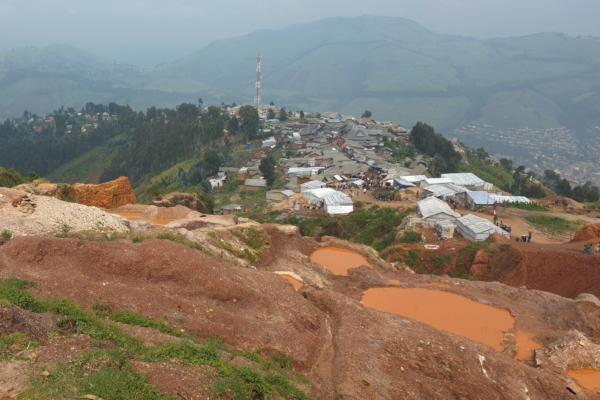
The government of the Democratic Republic of the Congo (DRC), also known as Congo (Kinshasa), announced on Wednesday (March 4) that a highly productive coltan mining area in the eastern part of the country has experienced a devastating landslide due to heavy rain, resulting in the death of over 200 people, including approximately 70 minors. This is the second major collapse incident at the mine this year.
According to a statement from the DRC Ministry of Mines, the incident occurred at the Rubaya coltan mine in North-Kivu province, where torrential rains on Tuesday (March 3) triggered the landslide, burying multiple mining tunnels. The statement mentioned that the mine is currently under the control of the anti-government armed group “AFC/M23,” posing significant challenges to rescue efforts.
The Ministry of Mines stated that the collapse has resulted in significant casualties, with around 70 children losing their lives, while most of the injured have been transported to the eastern capital of Goma for treatment.
The statement further pointed out that in November 2025, the DRC government designated the Rubaya coltan mining area as a “red zone,” prohibiting mining and mineral trading activities in the region.
However, on the same day, a senior official from AFC/M23 told Reuters reporters that the incident only led to 5 to 6 deaths, and the damaged mining area had previously halted operations due to inadequate safety measures and incomplete protective facilities for miners.
The Rubaya mining area plays a crucial role in the global tech industry, producing approximately 15% of the world’s coltan, a mineral that, when processed, yields the rare metal tantalum. Tantalum is a high-temperature resistant metal with excellent conductivity and corrosion resistance, widely used in smartphones, electric cars, fighter jets, medical implants, and other high-tech sectors.
In the local context, many residents engage in high-risk manual mining work for a meager income of a few dollars per day. Since April 2024, the Rubaya mining area has been under the control of the rebel group AFC/M23, raising concerns about its safety and management issues from the international community.
On January 28 this year, a similar collapse incident occurred in the Rubaya mining area, also resulting in over 200 deaths.
As of now, an AFC/M23 spokesperson has not issued a statement regarding the disaster announced by the government. The United Nations has stated that AFC/M23 has been exploiting the resources of the Rubaya mining area, making approximately $800,000 in profits per month through mineral trade and transportation taxes to fund their insurgency. The rebel group is alleged to have the support of the neighboring Rwandan government, although Rwanda denies these allegations.