
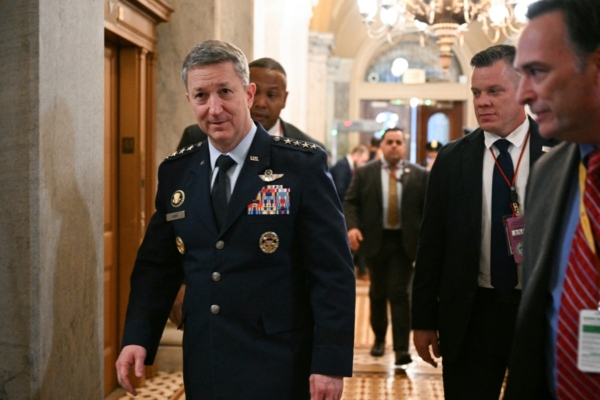
On Wednesday (March 4), at a press conference in the Pentagon, Dan Caine, Chairman of the Joint Chiefs of Staff, stated that the US military has established partial air superiority in the southern coastal region of Iran. Caine announced that they would now begin expanding inland gradually, launching strikes deeper into Iranian territory and creating greater operational freedom for the US military.
Caine also briefly introduced the operational strategy of the US Central Command responsible for this strike operation. He mentioned that over the past few weeks, General Cooper and the Central Command team had refined their operational methods in the region. Their planners identified key “centers of gravity” that allowed Iran to project its power beyond its borders. They also analyzed how to isolate critical weaknesses of the adversary and determine where precise strikes could have the most significant strategic impact.
“As the Central Command entered the fourth day of operations, they have started to shift their operational approach from using long-range stand-off munitions, launching large-scale planned strikes beyond enemy range, to conducting close-range precise strikes in Iranian airspace,” Caine stated.
“This will enable the Joint Forces to significantly increase the precision of their strikes against targets. As the Minister of Defense mentioned, the intensity of the strikes is escalating, not diminishing. This will allow us to continue to apply pressure on the adversary in the coming days, disrupt their launch plans, and continuously inflict losses on them,” he added.
The US Secretary of Defense, Haggis, stated at the Pentagon on Wednesday, “Starting from last night and within the next few days, the two most powerful air forces in the world, the US and Israel, will have full control of Iranian airspace, achieving uncontested air superiority.”
“I hope everyone paying attention understands what ‘uncontested air superiority’ and ‘full control’ mean,” he said. “This means that we will fly around the clock, day and night, searching, tracking, and destroying Iranian military missiles and defense industry bases; simultaneously locating and targeting their leaders and military officials.”
He further explained that gaining air superiority over Iran also meant that Iranian leaders would only be able to look up and see American and Israeli air power, a situation that would persist until “we decide to end all of this — and Iran will be powerless to stop it.”