
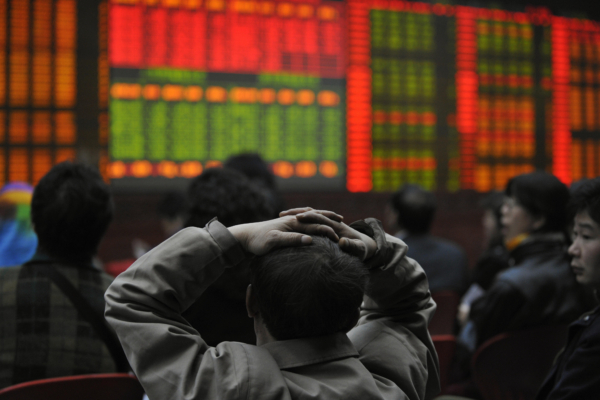
On March 4th, the three major Chinese A-share indexes, including the Shanghai Composite Index, experienced another decline. The Shanghai Composite Index fell below the 4100-point mark, while the trading volume in Shanghai and Shenzhen markets significantly shrank. Industry experts predict that A-shares will likely continue to fluctuate widely. This marks another day of decline for A-shares following the drop on March 3rd.
Throughout the day on the 4th, A-shares struggled. By the closing bell, the Shanghai Composite Index was at 4082.47 points, a decrease of 0.98%, falling below the 4100-point mark. The Shenzhen Component Index dropped by 0.75% to 13917.75 points, and the ChiNext Index fell by 1.41% to 3164.37 points. Both the SSE 50 Index and the STAR 50 Index saw declines, with the SSE 300 Index and the CSI 50 Index both falling by over 1%.
On the 4th, the market saw more declines than gains, with over 3600 individual stocks dropping. The total trading volume in Shanghai and Shenzhen amounted to 2.37 trillion RMB, a decrease of 763.8 billion RMB compared to the previous trading day, indicating reduced market activity.
In terms of sectors, the shipping sector saw significant declines, with companies like Cosco Shipping Ports, Nanjing Port, and Phoenix Shipping hitting their downside limits. The “three barrels of oil” – CNOOC, PetroChina, and Sinopec – also experienced limit-downs. Non-bank financial sector stocks dropped by over 2%, while other sectors like non-ferrous metals, precious metals, logistics, transportation, food and beverage, communications, pharmaceuticals, retail, banking, textiles, apparel, and real estate also faced significant losses.
In response to the market situation, Guo Yiming from Great Wisdom Securities was quoted by Yingwei Finance on the 4th, stating that in terms of market sentiment, it appears that the panic selling has not been fully absorbed yet. The core contradiction in the current market lies in the sustained geopolitical conflicts and the risks of spreading.
On March 5th, the International Financial News cited Chen Jiande, the general manager of Tianlang Fund, who analyzed, “The significant market declines over the past three days are mainly due to concerns about the prolonged duration of the US-Iran conflict.”
He Jinlong, the general manager of Umei Li Investments, believes that “the short-term trend of A-shares depends on market expectations for the duration of the US-Iran conflict.” If signs of conflict resolution are not clear, the market may remain in consolidation or experience further declines.
According to analysis from Cai Xin Securities published by The Paper, it is expected that from the Chinese New Year to the end of April, the A-share market will likely continue to see wide fluctuations, with the possibility of increased volatility.