
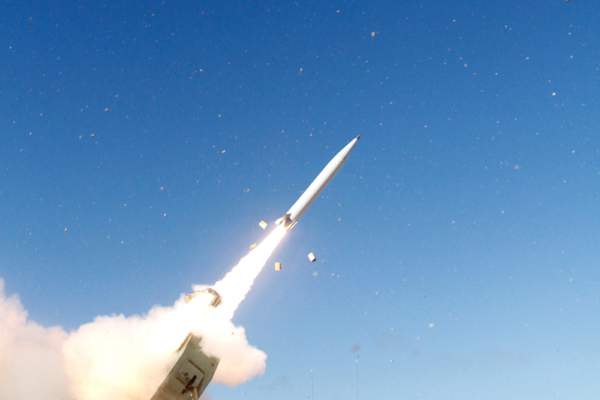
The United States Central Command (CENTCOM) announced on Wednesday, March 4th, the historic first deployment of long-range Precision Strike Missiles (PrSM) in the “Operation Epic Fury” targeting Iran. The CENTCOM emphasized that this weapon provides unparalleled deep-strike capability and released a video of missile launches on the social media platform X.
Admiral Brad Cooper, the commander of CENTCOM, expressed pride in the troops for using innovative technology to create challenges for the enemy. The successor to the Army Tactical Missile Systems (ATACMS), PrSM demonstrated high tactical value in this operation with a range exceeding 499 kilometers and a smaller size allowing platforms like HIMARS to carry double the payload.
Despite Iran launching over 500 ballistic missiles during the conflict, Western officials cited intelligence indicating a significant decline in Iran’s firepower output due to the successful destruction of numerous launch sites by the American-led coalition.
According to Joint Chiefs of Staff Chairman Dan Caine, Iran’s ballistic missile inventory is now down to a “few days’ worth” at the current launch rate. The volume of ballistic missile launches has dropped by 86% since the first day, and suicide drone launches have decreased by 73%.
With Iran’s air defense systems near paralysis, there is reduced demand for stealth aircraft by the U.S. military, which is now deploying larger bombers for precision “carpet bombing.” B-2 and B-1 bombers have conducted multiple precise strikes on missile facilities deep inside Iran. Recently, a squadron of B-52 bombers successfully targeted Iranian command and missile sites.
U.S. Defense Secretary Pete Hegseth stated that American forces are utilizing nearly unlimited reserves of 500 to 2,000-pound precision guided bombs (GPS and laser-guided) to carry out tactical “find, fix, and finish” operations against senior Iranian military figures.
Meanwhile, the Israeli military announced a successful attack on a comprehensive building in eastern Tehran housing key Iranian security institutions, including the IRGC, Basij militia, and cyber warfare headquarters. U.S. Central Command data also shows that American forces have hit or sunk over 20 Iranian ships in the waters.
As the Iranian regime’s military strength nears collapse, they are attempting a last-ditch counterattack by sowing chaos. In the Strait of Hormuz and surrounding areas, Iran has launched indiscriminate attacks on civilian shipping and neighboring facilities, sparking collective anger among regional countries. On Wednesday, the Turkish government urgently summoned the Iranian ambassador, expressing concerns over threatened territorial security.
Qatar’s Prime Minister and Foreign Minister, Sheikh Mohammed, revealed that the Iranian Foreign Minister claimed the attacks were solely against American interests, not Qatar’s. Sheikh Mohammed strongly rejected this assertion, called for an immediate ceasefire, and emphasized Qatar’s right to full self-defense.
The European Union’s High Representative for Foreign Affairs and Security Policy, Kaja Kallas, stated that Iran’s actions of “sowing chaos” through attacks on neighboring countries provide strong reasons for the regime’s downfall.