
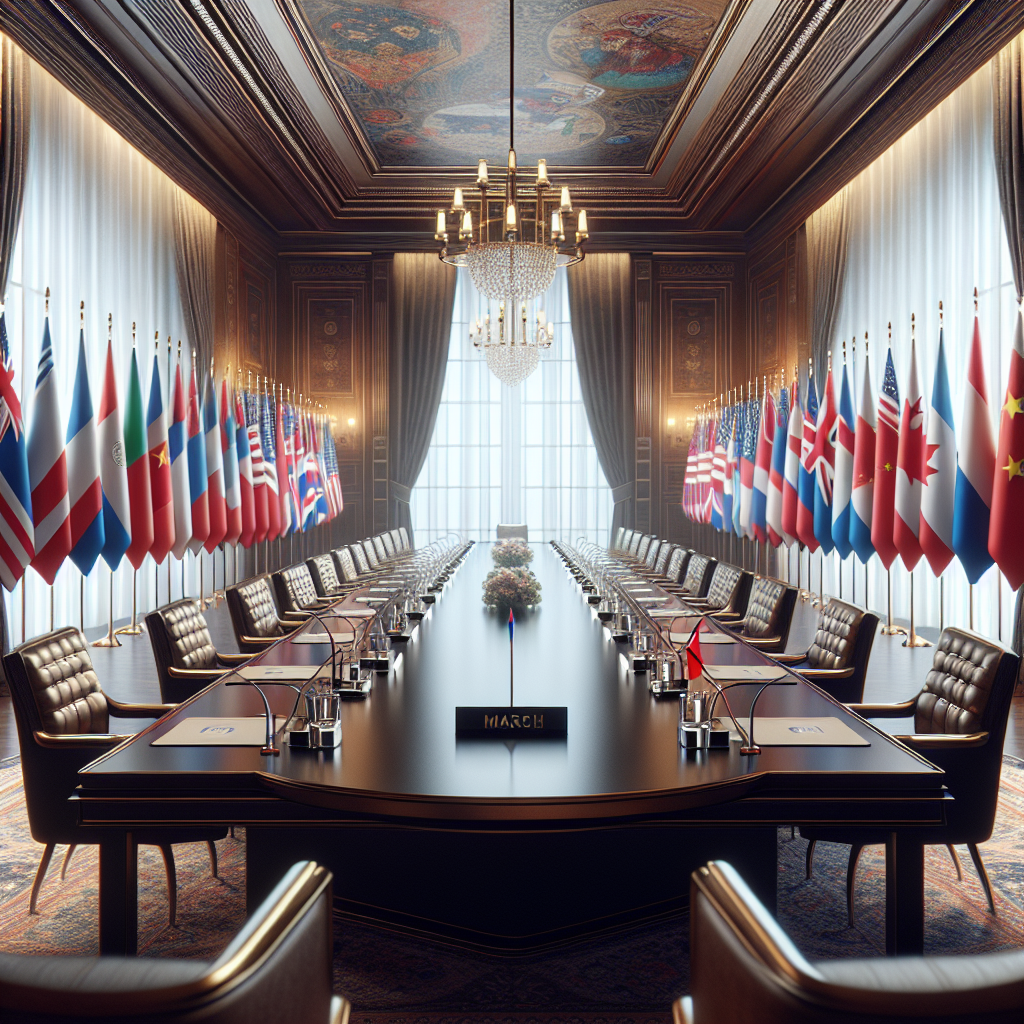
The upcoming meeting between representatives from the US and China for trade negotiations is scheduled to take place in mid-March, in preparation for a possible summit between US President Trump and the Chinese Communist Party leader Xi Jinping. Against the backdrop of recent US military strikes against Iran, the two countries are still advancing high-level contacts, highlighting once again the diplomatic pressure faced by China in the current complex international situation.
According to sources cited by Bloomberg, US Treasury Secretary Scott Benett, US Trade Representative James Grier, and Chinese Vice Premier He Lifeng are expected to meet in Paris, France to discuss potential business deals that could result from a meeting between the leaders of the two countries. Sources indicate that the specific timing and location of the meeting may still be subject to adjustments.
Feng Lin, a scholar with expertise in international politics, stated in an interview with a reporter that, “Based on the arrangement of this meeting, it appears that the US has not altered its diplomatic pace due to its military actions in Iran. Trump is still pushing forward with plans to visit China, while the Chinese side is currently progressing with relevant preparations according to the established schedule.”
Sources further revealed that topics that may be discussed include whether China will expand its purchases of Boeing aircraft from the US, continue to increase imports of American soybeans, and address the Taiwan issue. Additionally, the US Supreme Court’s recent overturning of the policy regarding “fentanyl tariffs” could also become a topic of discussion during the meeting.
Feng Lin mentioned that Xi Jinping needs to solidify his power base within the Chinese Communist Party through a meeting with Trump, while Trump hopes for a full restoration of rare earth exports from China to the US. He stated, “Various indications show that Xi Jinping’s position within the party is facing increasing challenges. Over the past two years, he has carried out large-scale purges of officials deemed disloyal, triggering significant dissent within the party.” Feng Lin expressed that under these circumstances, Xi aims to strengthen the legitimacy of his personal rule through diplomatic events like Trump’s visit to China.
According to an exclusive report from Epoch Times, turmoil has been observed within the military following the arrest of Zhang Youxia. A family member of a military officer serving in the local grassroots forces confirmed to an Epoch Times reporter that within these local units, some soldiers and officers have privately begun referring to “Old Xi” as “Steamed Bun.”
If the Trump-Xi meeting proceeds as planned, the international environment has also undergone changes. Prominent Venezuelan leader Maduro, who had close relations with China, was captured by the US military and brought to New York for trial. Another ally of China, Iranian leader Khamenei, perished during a joint US-Iran operation. Maduro and Khamenei have long been referred to as “old friends” by China, and both countries are crucial oil suppliers to China.
Trump previously mentioned that the military action against Iran could last for four weeks. Considering that the conflict began on February 28th, the timing roughly coincides with the ongoing high-level interactions between China and the US. Independent Chinese scholar Zhang Kuang expressed to Epoch Times that based on the information currently available, both China and the US still hope to facilitate Trump’s visit to Beijing, but uncertainties remain in the situation over the next month.
Zhang Kuang believes that the unique aspect of Trump’s visit to China lies in the background. He remarked, “Before Trump’s scheduled visit to China, the US had already taken military actions against Beijing’s significant partners. Previously, the US pressured Venezuela and took action against the Maduro regime; more recently, military strikes were launched in the Middle East against Iran. This indicates that Trump did not give Xi Jinping face, as he moved against his two good friends before the meeting.”
Mr. Liu, an international relations scholar, stated during an interview with Epoch Times that this situation places Xi Jinping in a delicate diplomatic position. He commented, “Should he meet with Trump or not? If he doesn’t, he may face more challenges within the party. At the same time, this scenario could also complicate matters for China in terms of diplomacy.”
Mr. Liu specified that this situation might put Beijing in a dilemma in handling diplomatic issues. On one hand, the US military actions did not directly target China, making it difficult for the Chinese authorities to reject the visit based on this reason; on the other hand, if they continue to host the visit with high standards amidst the current atmosphere, it may raise public scrutiny.
Some scholars believe that China still faces difficulties in reaching consensus with the US on issues related to “core interests” such as Taiwan. The Beijing leadership is also concerned about holding a summit without sufficient preparation, and the potential challenge of achieving “significant results.”
Inside political circles in Beijing, there are discussions that for Xi Jinping, the true significance of this meeting involves his power base within the Chinese Communist Party.
Recent US military actions in Venezuela and Iran have created a more complex diplomatic situation for Beijing in managing Sino-US relations. Both countries are crucial oil suppliers to China and have been important partners for China in international politics over the long term. These actions not only impact regional dynamics but also challenge China’s energy supply and foreign strategic arrangements.
In this context, the future of China-US relations remains uncertain for some time. If the conflict in Iran continues to escalate and affects global energy and strategic patterns, the proposed “Trump-Xi meeting” arrangement might encounter variables, potentially leading to postponement or cancellation.