
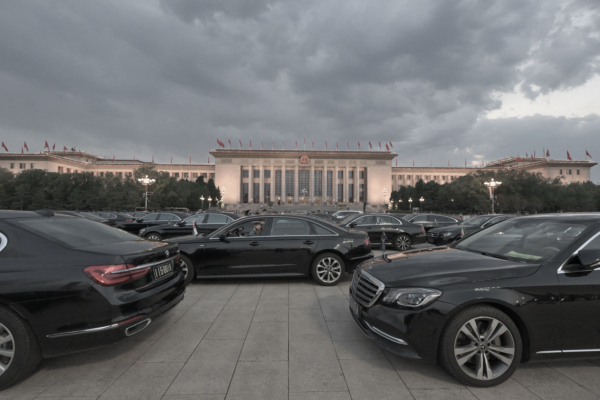
The 2026 National Two Sessions of the Chinese Communist Party (CPPCC and the National People’s Congress) officially opened on March 4-5. Observers believe that the recent escalation of internal struggles within the Chinese Communist Party, with the fall from grace of top military leader Zhang Youxia, along with external impacts from the situation in the Middle East, have cast a shadow over the Two Sessions.
According to official sources from the Chinese Communist Party, the 14th National Committee of the CPPCC opened on March 4 at 3 p.m. and is scheduled to close on the morning of March 11, with a session lasting 7 days. The 14th National People’s Congress also commenced on March 5, with a similar expected duration of 7 days, following recent years’ conventions. Today, the Chinese National People’s Congress held a press conference discussing hot topics such as China’s economic situation and the Middle East situation.
According to the official agenda, both sessions will address the government work report and the draft outline of the “15th Five-Year Plan for National Economic and Social Development.”
The public is particularly concerned about the Chinese Communist Party’s official economic targets.
The CPPCC spokesperson Liu Jie admitted during a press conference yesterday that the “Chinese economy faces top-level pressures.”
Official reports claim that the GDP growth last year was 5%, meeting the expected target. While industrial production and exports continue to grow, domestic consumption remains weak, the real estate market continues to stagnate, leading to an economic “K-shaped” differentiation. Many analysts predict that the Chinese Communist Party may lower this year’s economic growth target to a range of 4.5% to 5%.
The veracity of the GDP data released by Chinese officials has long been questioned.
A report by the U.S. think tank “Rhodium Group” at the end of last year suggested that China’s real GDP growth in 2025 ranged between 2.5% and 3.0%. The substantial decrease in economic growth is attributed to a significant decline in fixed asset investment in the second half of the year.
Professor Sun Guoxiang from the Department of International Affairs and Business at Nanhua University in Taiwan told Dajiyuan that the core issue is not whether the 5% figure is entirely fabricated but rather that it increasingly resembles a politically necessary target value that may not fully reflect the overall public sentiment towards the economy.
He explained that Reuters’ compilation of 2025 data clearly shows China’s industrial production growing by 5.9% throughout the year, while retail only increased by 3.7%, real estate investment plummeted by 17.2%, and nominal GDP growth was only around 4%. The GDP deflator index decreased by about 1%, indicating significant deflationary pressure, inadequate supply and demand, and a stark disparity between production strength and weak consumption. In other words, the official growth seems more like a result of export and industrial manipulation rather than genuine domestic recovery.
Sun Guoxiang believes that the official growth target for 2026 might need to be revised downwards. Beijing also understands that the old growth narrative is becoming increasingly unsustainable.
Another focus is whether China’s military budget will rise amid changing international geopolitical dynamics.
In 2025, China’s defense expenditure stood at 1.78 trillion yuan, with an annual growth of 7.2%, consistent with previous years and roughly around the 5% economic growth target for the same year.
Sun Guoxiang’s analysis indicates that military spending is not only crucial for the Chinese leadership but that political priorities within the Chinese Communist Party often trump the restoration of people’s livelihoods and consumption. Even as the economy slowed down in recent years, Beijing maintained steady increases in military spending above the GDP target. This is not simply a response to potential wars but rather a comprehensive investment in safeguarding political power, the deterrence in the Taiwan Strait, military-civilian integration in technology, and great power competition.
He stated, “The worse China’s economy becomes, the less likely the Chinese Communist Party will easily cut military spending; instead, they will reinforce a narrative of security being a top priority. This is not because Beijing is more confident externally but rather reflects a lack of security internally and externally, facing challenges in U.S.-China competition, the Taiwan Strait, the South China Sea, and turbulence in the Middle East, relying on the army, armed police, and national security system to maintain control of political power.”
China expert Wang He noted that with the recent outbreak of the Iran war, the Chinese Communist Party may further accelerate its military spending, expecting higher expenditures this year.
Internal purges within the Chinese Communist Party have intensified over the past three years and took a sudden turn in January with the announcement of the fall from grace of Zhang Youxia, Vice Chairman of the Central Military Commission, and Liu Zhenli, a member of the Military Commission, causing a stir.
Sun Guoxiang stated that the crackdown within the military not only shows no signs of ending but is expanding, with negative implications from the Zhang Youxia incident. It undermines the myth of Xi Jinping’s absolute control within the military since Zhang Youxia has long been considered one of his key allies in the military. Furthermore, it weakens the consistency of the Chinese Communist Party’s military command chain and wartime execution. Finally, this event intensifies a culture in official circles where it is preferable not to take action to avoid repercussions, making the Two Sessions more like a conference focused on stability maintenance rather than actively addressing policy issues.
Numerous military representatives and members have been dismissed recently.
This year’s Two Sessions have seen significant reductions in personnel. A notice issued by the Standing Committee of the National People’s Congress on February 26 terminated the qualifications of 19 national people’s representatives, including 9 military representatives, among them 5 senior generals. In the past two years, around 36 military national people’s representatives have been removed from office. The latest update on the official website of the National People’s Congress shows that there are currently only 243 military national people’s representatives.
On March 2, the Standing Committee of the National Committee of the CPPCC announced the removal from political advisory positions of three senior generals, including Han Weiguo, and the recognition of the revocation of the CPPCC membership for 10 fallen officials, including Wang Xinghuan, Zhang Dongchen, Cao Jianguo, Liu Guoyue, Ma Zhengwu, Fan Youshan, Zeng Yi, Yu Peigen, Tian Xuebin, and He Song.
The original 14th National People’s Congress had 2977 members, now reduced to 2878, a decrease of 99 members, possibly the largest reduction in representatives since the Cultural Revolution. The original 14th National Committee of the CPPCC had 2169 members, with approximately 2100 remaining members currently (a net decrease of 60-70 members), although authorities have not provided a unified and accurate figure.
On the external front, the U.S. and Israel launched military actions against Iran, resulting in the death of Ayatollah Khamenei after 36 years in power on March 1. The upheaval in Iran presents challenges to China, given that over 90% of Iran’s oil exports flow to China. Iran is a strategic location for China’s Belt and Road Initiative. In 2021, China and Iran signed a 25-year comprehensive cooperation agreement. Under this agreement, China initially planned to invest $400 billion in Iran.
Wang He explained that in case the Iran war prolongs for months or half a year, which blocks the Hormuz Strait, it would have significant repercussions on China’s oil imports as over 70% of China’s oil dependency comes from imports, with more than half passing through the Hormuz Strait. Iran accounts for a substantial portion of China’s oil imports, potentially up to 90%. If the war persists, it may lead to significant issues.
Externally, the death of Ayatollah Khamenei is seen as a direct hit to the top leadership of China.
Wang He suggested that the impact of the Iran war primarily targets the top echelons of the Chinese Communist Party, as the foreign policy portfolios are concentrated at the central level. The Chinese Communist Party will tightly control the National People’s Congress and the CPPCC members, and they are unlikely to make rash statements.
Sun Guoxiang pointed out that the significant shift in Iran poses a double blow to the Two Sessions politically and economically. “For Beijing, this directly affects their narrative against the U.S. and the West, energy security in the Middle East, and the so-called overall positioning in the global South. Beijing’s strong reaction is due to its belief that having a sovereign leader targeted by external forces sets a dangerous precedent.”
A Dajiyuan exclusive report yesterday cited sources in Beijing revealing that the members of the Politburo of the Chinese Communist Party had held numerous meetings discussing the Middle East situation. Authorities have been advised to learn from the lessons of the Soviet Union’s collapse and to pay attention to anti-government protests erupting in Iran that could impact the Chinese people’s thinking.
China expert Li Linyi stated that this indicates the Chinese Communist Party was startled by the “decapitation” of Ayatollah Khamenei and is now more concerned about the possible overthrow of the regime than ever before.