
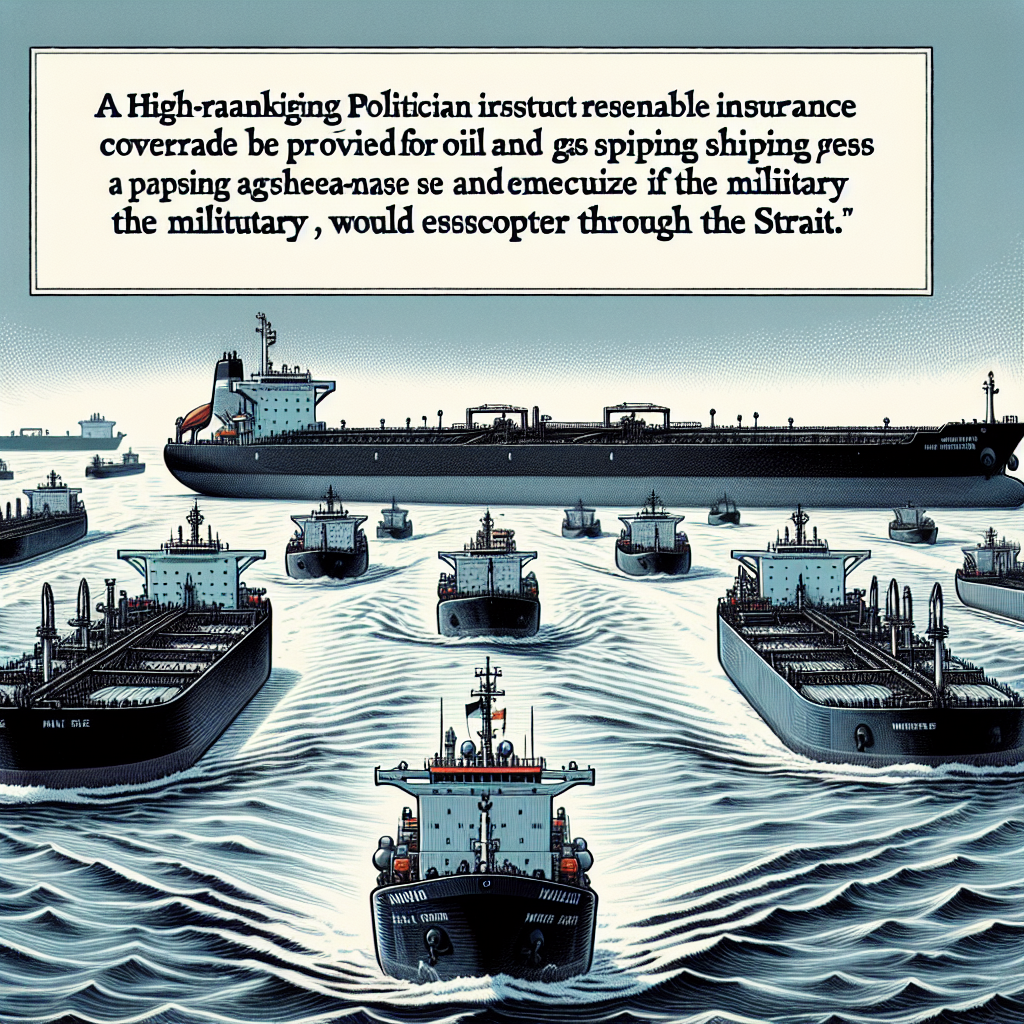
On Tuesday, March 3rd, President Donald Trump instructed that reasonable insurance coverage be provided for oil and gas shipping vessels passing through the Strait of Hormuz and emphasized that if necessary, the U.S. military would escort the tankers through the strait.
This move is the latest sign of the Trump administration taking seriously the skyrocketing prices of oil, natural gas, and road fuels. It aims to respond to threats from Iran to attack this crucial waterway and to mitigate the potential for significant global oil price increases.
The President posted on the social media platform “Truth Social” stating, “I have immediately instructed the U.S. Development Finance Corporation (DFC) to provide political risk insurance and financial security guarantees for all maritime trade passing through the Gulf, especially energy trade, at a very reasonable cost. All shipping companies can access this service.”
He added, “If necessary, the U.S. Navy will begin escorting oil tankers through the Strait of Hormuz as soon as possible. In any case, the U.S. will ensure the free flow of global energy. The United States’ economic and military power stands at the forefront of the world – more actions are forthcoming.”
According to U.S. media outlet “Politico,” earlier on Tuesday, the Trump administration is considering providing military protection for oil and gas shipping vessels passing through the Strait of Hormuz in an effort to curb soaring energy prices.
Following joint U.S. and Israeli military strikes against Iran, Iran has begun frequent attacks on vessels passing through the strategic Strait of Hormuz.
At least three vessels have been attacked near the Strait of Hormuz before, and Iran continues to launch attacks throughout the Middle East in response to ongoing U.S. and Israeli operations.
The UK Maritime Trade Operations Centre (UKMTO) stated that two vessels have been hit, with one “unknown object” reportedly exploding in close proximity to a third vessel.
Iran has warned ships not to pass through the strait. The Strait of Hormuz carries around 20% of global oil and gas shipments, particularly natural gas and crude oil from Qatar and Saudi Arabia.
International shipping at the strait’s entrance has almost come to a standstill, with analysts warning that if the conflict continues, energy prices could further escalate.
In early Asian trading on Monday, Brent crude oil prices surged over 7% to $78.25 per barrel, while U.S. traded crude rose 7.3% to $71.93.
Trump’s latest measures include the U.S. government providing guarantees for insurance coverage for oil tankers continuing to pass through the Strait of Hormuz.
Currently, even though the Strait of Hormuz remains technically open, commercial marine insurance companies are raising premiums and in some cases, even canceling coverage for tankers passing through the region.
A former Defense Department official familiar with the discussions mentioned that the Pentagon is in ongoing discussions about a maritime mission that would be very similar to previous operations in the Red Sea. In the Red Sea, the U.S. had deployed aircraft carriers and destroyers to counter threats from Iran-related groups and to maintain freedom of navigation.