
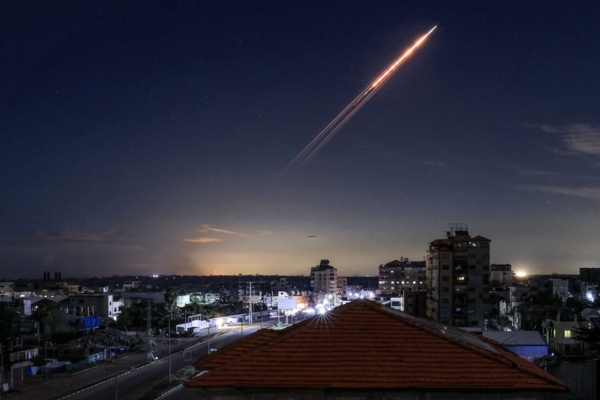
After the start of the US-Iran war, Iran began carrying out “indiscriminate” retaliatory attacks against Middle Eastern countries, triggering counterattacks. The Qatari Ministry of Defense announced on Monday (March 2) that the country had shot down two Iranian Su-24 bombers. This marks the first time a country has shot down Iranian military aircraft since the outbreak of the war. The United Arab Emirates also announced on the same day that it had intercepted numerous Iranian missiles and drones.
In a statement, the Qatari Ministry of Defense stated that in addition to shooting down two Iranian Su-24 bombers, the country also intercepted seven ballistic missiles using its air defense system, and the Air Force and Navy took down another five Iranian drones.
“The Qatari Armed Forces have the full capability and resources to defend national sovereignty and territory and respond firmly to any external threats,” the Ministry of Defense added.
The UAE Ministry of Defense announced on Monday that it had intercepted 9 ballistic missiles, 6 cruise missiles, and 148 drones launched by Iran.
According to the UAE Ministry of Defense, since February 28, Iran has launched a total of 174 ballistic missiles, 8 cruise missiles, and 689 drones at the United Arab Emirates, making it the most targeted among the Arab Gulf countries by Iran so far.
The UAE stated that it had intercepted 161 ballistic missiles (with the remaining 13 falling into the sea), 645 drones (with the remaining 44 falling within UAE territory), and all 8 cruise missiles. The Ministry of Defense reported that these attacks resulted in 3 fatalities and 68 injuries.
The success rate of these interception operations exceeded 90%, thanks to the UAE’s THAAD missile defense system and the cooperative operation of the US Patriot missiles.
According to Bahrain’s official news agency, Bahrain’s National Communication Center announced on Monday that Bahrain’s missile defense system successfully shot down the latest wave of attacks by Iran, including 70 missiles and 59 drones.
Jordan has also been intercepting Iranian missiles and drones in the past two days. The country reported that since Iran began launching retaliatory attacks, 5 people have been injured, and several houses have been damaged.
Since last Saturday (February 28), Iran has been recklessly launching drones and missiles towards Middle Eastern countries, causing outrage. While Iran’s top national security official claimed the targets were US military bases in these countries, Gulf countries countered that Iran’s attacks also targeted hotels, ports, airports, and residential buildings.
Iran’s attacks have prompted Gulf countries to consider military responses. The Gulf Cooperation Council held a video conference on Sunday (March 1). Foreign ministers of member countries stated after the meeting that they would “take all necessary measures to defend their own security and stability… including responding to acts of aggression.”
Security analyst Anna Jacobs told AFP on Monday, “Gulf countries are truly on the front lines of this brutal war now. If Iran continues to attack these countries and escalate the conflict further, they will find it difficult to stand by idly.”
Bahrain authorities stated that Iranian drones attacked Bahrain’s capital, Manama, on Sunday (March 1), causing minor damage. The Crown Plaza hotel in Manama was also damaged in the attack, but fortunately, no casualties were reported.
The United States, along with Bahrain, Jordan, Kuwait, Qatar, Saudi Arabia, and the UAE, released a joint statement on Sunday strongly condemning Iran’s “indiscriminate and reckless” missile and drone attacks in the region, which have posed a “dangerous escalation” to regional stability.