
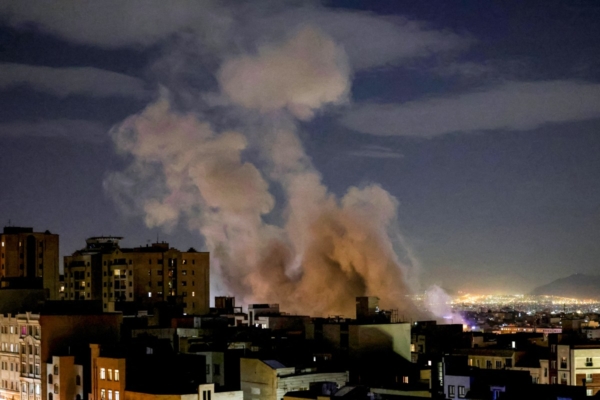
Recent joint airstrikes by the United States and Israel targeted multiple locations within Iran, resulting in the precise “decapitation” of Iran’s Supreme Leader Ayatollah Khamenei and dozens of top leaders. The conflict is ongoing. With the United States and Israel taking military action against Iran, the death of Iran’s Supreme Leader Khamenei and severe damage to Iran’s leadership structure have left the military leadership on the brink of collapse. The Israeli Defense Forces announced on March 1 that in the previous day’s joint attack, 40 senior Iranian commanders were eliminated.
According to an official from the European Union Naval Operation “Aspides,” since February 28, the Iranian Islamic Revolutionary Guard Corps has been sending messages via VHF radio to passing ships stating “ships are not currently allowed to pass through the Hormuz Strait,” leading some shipping companies to halt navigation and increase risk alerts.
On March 1 local time, an oil tanker attempting to pass through the Hormuz Strait was reportedly attacked. This incident has heightened concerns in the market about the security of this strategic waterway.
The Hormuz Strait is one of the world’s most critical energy transport routes, carrying nearly 20% of global seaborne oil trade. Due to escalating supply risks, international oil prices have surged significantly. In early Asian trading on March 2, Brent crude oil futures rose by about 13%, reaching over $82 per barrel, the highest level since January 2025; while U.S. West Texas Intermediate (WTI) crude oil futures also surged close to $72 per barrel.
China, as the world’s largest importer of crude oil, faces increasing scrutiny due to its energy security and economic ties in the Middle East region. According to data from the energy and shipping analytics firm Kpler, China imported an average of about 1.38 million barrels of crude oil per day from Iran in 2025, accounting for approximately 12% to 13% of China’s total seaborne crude oil imports. The actual import volume will vary depending on market conditions and sanctions enforcement.
Analysts from Bloomberg Economics noted in their report that if oil prices continue to rise, major oil importers like China will suffer. The tensions impeding or slowing down the transportation of oil tankers through critical routes like the Hormuz Strait have raised concerns about disruptions in the oil supply market. Given that China imports around 99% of its crude oil exports from Iran, any interruption in Iranian oil supply would impact Chinese refining companies, depriving China of another cheap source of crude oil.
The China-Iran Comprehensive Cooperation Agreement signed in 2021 between the Chinese Communist Party (CCP) and Iran aimed to deepen cooperation in energy, infrastructure, and industry sectors. The agreement was seen as a strategic foothold in the Persian Gulf for China’s Belt and Road Initiative.
However, in the extreme scenario of war and regime change, infrastructure and energy development projects worth billions of dollars could quickly turn into distressed assets. The political orientation of the new regime and contract integrity will become the biggest uncertainties for Chinese investments in the region.
Amid the backdrop of long-standing U.S. sanctions on Iran, some China-Iran energy transactions have been settled in non-dollar currencies. Market analysts believe that this not only tests the resilience of the China-Iran financial front but also potentially hinders the expansion of the renminbi in the Middle East region.