
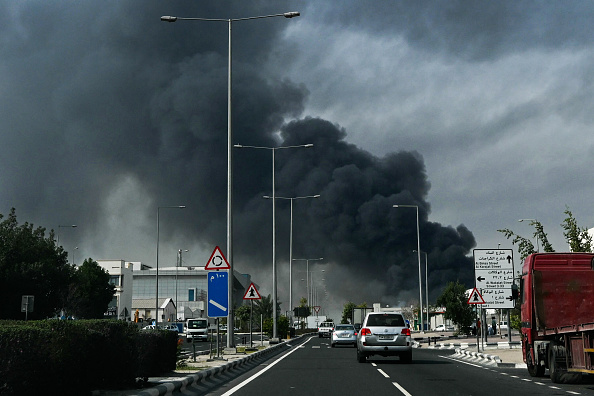
On March 2, after being attacked by Iranian drones and missiles, Qatar announced the suspension of its liquefied natural gas (LNG) production, while Saudi Arabia also shut down its largest domestic oil refinery. With the escalation of the Middle East conflict, oil and gas facilities in the region have taken preventive production measures.
This Monday, oil prices surged by 13% at one point during trading, exceeding $82 per barrel, marking the highest level since January 2025.
QatarEnergy, Qatar’s national energy company, announced the halt of LNG production due to attacks by Iran on its facilities.
The Qatari Ministry of Defense confirmed that two Iranian drones attacked QatarEnergy’s energy facilities in Ras Laffan and the power plant water tower in Mesaieed. Ras Laffan is one of the world’s largest LNG production and processing hubs.
Qatar is one of the world’s largest LNG exporting countries, supplying significant amounts of natural gas for winter heating in Europe. A halt in production at Ras Laffan could lead to drastic fluctuations in global natural gas prices.
As the Middle East conflict entered its third day, the local energy industry has been greatly impacted, marking one of the most serious systematic disruptions since the Gulf War in 1990.
Due to Iran’s drone and missile attacks on oil and gas facilities, ports, and refineries of regional countries, many nations have taken preventive measures by temporarily closing oil and gas facilities and refineries.
Saudi Aramco, the world’s largest oil exporter, has temporarily shut down some units at its Ras Tanura refinery in Saudi Arabia. The refinery processes 550,000 barrels of crude oil daily and serves as a crucial export terminal for Saudi oil along the Gulf coast.
In Iraq’s Kurdistan region, companies such as DNO, Gulf Keystone Petroleum, Dana Gas, and HKN Energy have halted oil field production as a precautionary measure. These companies have stated that their facilities have not been damaged. The region exports 200,000 barrels of oil to Turkey via pipelines in February.
Off the coast of Israel, the Israeli government has instructed Chevron to temporarily close the Leviathan gas field expansion project. A spokesperson for Chevron stated that the facilities at the Tamar gas field, operated by Chevron near Israel, are secure.
Iran, the third-largest OPEC producer, accounts for approximately 4.5% of global oil supply. Iran’s daily crude oil production is around 3.3 million barrels, in addition to 1.3 million barrels of condensate and other liquid fuels.
The conflict has also affected the global shipping industry, as shipping in the Strait of Hormuz has nearly come to a standstill. The strait serves as a vital passage for one-fifth of the world’s oil supply.