
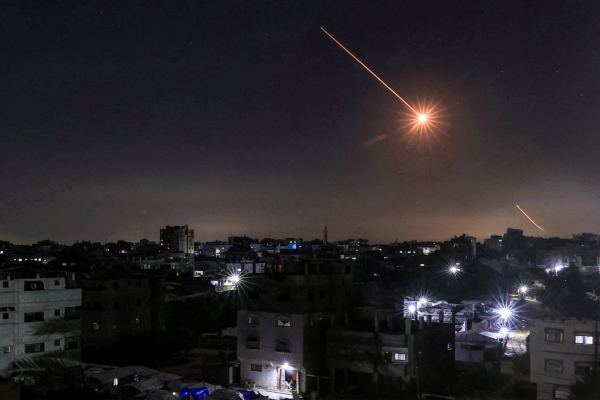
The United States and six Gulf allies including Bahrain, Jordan, Kuwait, Qatar, Saudi Arabia, and the United Arab Emirates issued a joint statement on Sunday, March 1st, strongly condemning Iran for launching “indiscriminate and reckless” missile and drone attacks in the region. These actions have been deemed as a “dangerous escalation” that threatens regional stability.
According to a joint statement released by the U.S. State Department, Iran’s attacks have had a widespread impact, affecting areas such as Bahrain, Iraq (including the Kurdistan Region), Jordan, Kuwait, Oman, Qatar, Saudi Arabia, and the UAE, expanding the targets to countries that were not directly involved in military operations.
The governments of the United States, Bahrain, Jordan, Kuwait, Qatar, the Kingdom of Saudi Arabia, and the United Arab Emirates strongly denounced Iran for carrying out indiscriminate and reckless missile and drone attacks on multiple sovereign territories in the region. The joint statement emphasized that these unjustified attacks targeted sovereign territories, endangered civilian lives, and damaged civilian infrastructure.
“We stand united in defending our citizens, sovereignty, and territories, and reaffirm our right to self-defense in the face of these attacks,” the statement noted. “We remain committed to maintaining regional security and commend the effective cooperation in air defense and missile defense, which has prevented more extensive loss of life and destruction.”
In recent years, Iran has been expanding its missile and drone capabilities. While Tehran insists that its plans are purely defensive in nature, officials from Western countries and Gulf nations believe that this has altered the security balance in the region. Over the weekend, the United States and Israel jointly carried out airstrikes against Iran, destroying hundreds of military targets and resulting in the death of Iran’s top leader, Ayatollah Khamenei. The U.S. and Israel emphasized that this action was a “preemptive strike” aimed at preventing Iran from acquiring nuclear weapons and long-range missiles.
The United States maintains military bases in the Gulf region and has longstanding defense partnerships with Bahrain, Qatar, Kuwait, Saudi Arabia, and the UAE. Integrating a regional air defense system has been a key pillar of U.S. strategy to counter missile and drone threats from Iran and its allied groups.