
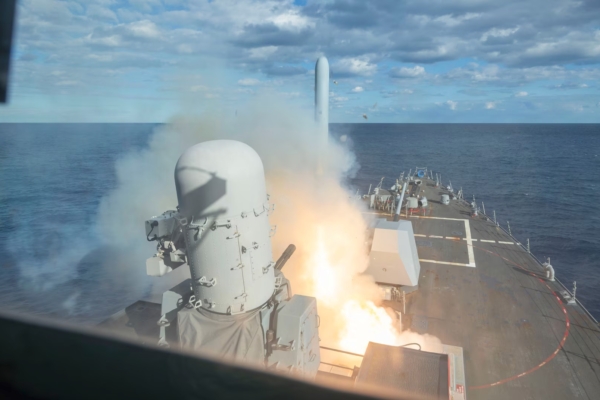
On February 28, 2026, the United States and Israel launched a joint airstrike codenamed “Epic Fury,” targeting and killing Iran’s top leader, Ayatollah Khamenei, and several key officials in a high-stakes operation. Analysts believe that this action not only tested the operational effectiveness of Russian and Chinese military support to Iran, but also caused a chain reaction affecting China’s energy strategy in the Middle East, the Belt and Road Initiative, and the strategic situation in the Taiwan Strait.
The U.S.-Israeli coalition conducted a large-scale precision airstrike on February 28, targeting key facilities such as the Islamic Revolutionary Guard Corps command system, air defense network, missile bases, and military airports. The U.S. Central Command later confirmed in an official statement that Khamenei and multiple military and political core figures were killed in the airstrike.
The speed, accuracy, and intensity of the operation were described by U.S. Defense Secretary Hagsees as a “highly complex and unprecedentedly lethal” joint military operation.
This operation exposed the weaknesses of Russian and Chinese military equipment in actual combat, according to analysts Qin Peng, Shishan, and Zhou Ziding, who provided detailed analysis on the “Good Morning China” program.
Qin Peng’s analysis pointed out that Iran’s multi-layered air defense network, including Russian-made S-300 air defense systems and some Chinese radar systems such as the JYL-1, failed to effectively intercept attacks in the “Epic Fury” operation.
“Iran relies most on Russian weapons, and while China’s systems are deployed, they have yet to achieve the expected performance,” he said, highlighting the fundamental vulnerability of Iran’s military defense system exposed in this real-world scenario.
Zhou Ziding explained that the U.S. military effectively utilized MQ-9 surveillance and attack drones, kamikaze drones, and cruise missiles in a “swarm-like” saturation attack formation. Iran’s missile bases and launch facilities on the ground were destroyed, severely limiting their retaliation capabilities.
He believes that this operation marks a significant event in the transition towards “warfare turning unmanned,” with tactical paradigms directly influenced by real combat experiences on the Ukrainian battlefield.
Notably, during this operation, the U.S.-Israeli coalition simultaneously launched a cyber warfare campaign, spreading the news of Khamenei’s death by hijacking Iranian communication applications to undermine the morale of Iranian military personnel.
The turmoil in Iran directly impacts China at both an energy and geopolitical level. Shishan noted that as the risks of shipping disruptions in the Strait of Hormuz rise, causing severe fluctuations in oil prices, it will directly pressure China’s energy security.
Iran is an important source of oil for China, and any disruptions in the shipping through the Strait of Hormuz would directly impact energy supply and price stability in China.
He further stated that the internationalization of the renminbi may suffer setbacks, and regional turmoil could potentially impede the progress of China’s Belt and Road Initiative in the Middle East.
Regarding the impact of the shifting strategic landscape, Qin Peng noted that a decrease in tensions in the Middle East would allow the United States to redirect its strategic resources towards the Asia-Pacific region, narrowing Beijing’s space to alleviate pressure on China by dispersing conflicts in the region, as well as changing the strategic rhythm around the Taiwan Strait.
In terms of diplomatic implications, Zhou Ziding assessed that the lukewarm response from the Chinese Ministry of Foreign Affairs to the incident may be due to China’s lack of long-range military deployment capabilities, making it difficult for Beijing to intervene substantively in this crisis.
The dramatic changes in the situation in Iran will directly impact the long-term strategic cooperation framework carefully constructed between China and Iran.
The “Comprehensive Cooperation Plan for 25 Years between China and Iran” signed in 2021 is seen as a key point in China’s Middle East layout. It is reported that China’s investment in Iran could reach up to $400 billion within 25 years. Previously, Beijing had promoted regional reconciliation processes, shaping an image as a “mediator.”
Professor Zhang Tianliang from the Department of Humanities and Social Sciences at the University of Sino-U.S. relations pointed out in a self-media program that in this round of military action, the security choices of many countries still revolve around the United States, indicating that the regional security structure remains centered on the United States.
Zhang Tianliang bluntly stated, “This strike is not just a matter of Iran, but also an indirect blow to Beijing in terms of geopolitics.”
Independent commentator Cai Shunkun noted in a self-media program that if there is a fundamental change in the Iranian regime, the entire power balance in the Middle East will undergo structural reorganization. At that time, China’s existing energy arrangements and the supply of cheap crude oil from Iran may also come to an end.
Reviewer Jason analyzed in a self-media program that the Middle East and South America are two critical energy supply chains for China. Once the conflict in Iran spills over, China as a major importer will face dual pressures of supply and price.
He emphasized, “When Iranian missiles fly towards Gulf countries, the regional balance structure that Beijing has cultivated for years will collapse within hours.” Strengthening cooperation between Gulf countries and the United States will systematically weaken China’s diplomatic influence in the region.
The deterrent effect of this military operation has surpassed the scope of Iran and is beginning to transmit to a broader authoritarian political ecology.
Independent commentator Cai Shunkun pointed out in a self-media program that Khamenei ruled Iran for over 36 years, shaping the country into a powerful anti-American force and using a heavy hand to suppress domestic protests. The precise strike by the U.S. and Israel to end his rule is not only a military blow but also a direct challenge to the legitimacy of the theocratic regime.
He believes that this operation holds deep psychological ramifications for Beijing. He analyzed that the U.S. and Israel’s ability to directly behead a long-regarded “regional power” like the theocratic core will trigger deep-seated security anxieties within other authoritarian regimes. The historical logic of “good and evil will be repaid” is accelerating in the form of real events.
Zhang Tianliang also noted the chain reaction from the situation in Iran to the Russian-Ukrainian battlefield. He pointed out that Iran has long provided unmanned drones and military technical support to Russia. If Iran’s military-industrial complex suffers significant damage, the Russian military supply chain will also be affected, subsequently altering the balance of power on the Ukrainian battlefield and speeding up the conclusion of the Russia-Ukraine conflict.