
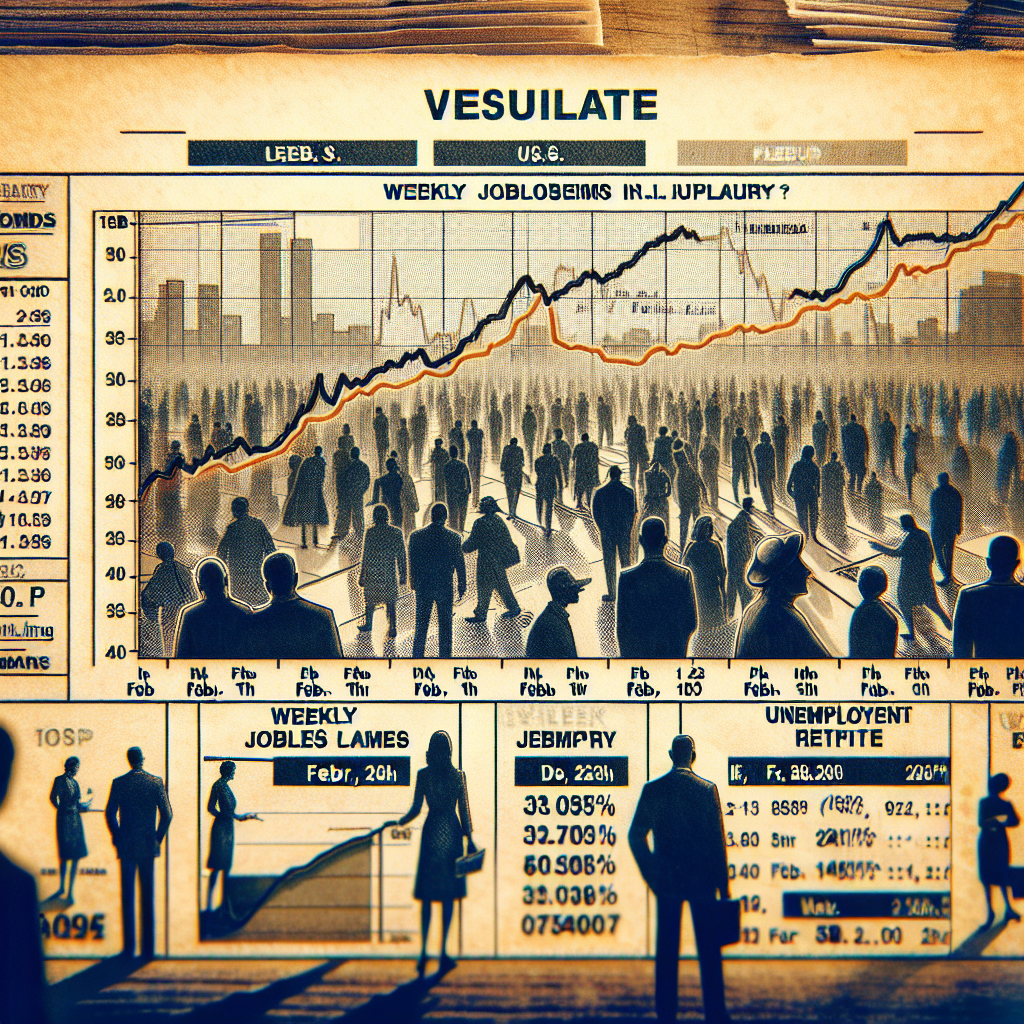
According to the weekly jobless claims report released by the U.S. Labor Department on Thursday, February 26th, the number of people applying for unemployment benefits increased slightly last week, while the unemployment rate for February seems to remain stable.
The labor market is still in a state of “low hiring, low layoffs,” confirming economists’ expectations that the Federal Reserve Chairman Jerome Powell is unlikely to cut interest rates before his term ends in May.
Despite the labor market experiencing weakness due to uncertainty last year, it is gradually regaining strength.
Carl Weinberg, Chief Economist at High Frequency Economics, stated, “When the labor market shows weakness in the early stages of a hypothetical economic downturn, we usually expect a wave of layoffs. However, data shows no sign of this currently. Given the stability of the labor market and inflation above target levels, traders who believe that the Federal Reserve will not cut interest rates soon will be encouraged.”
As of the week ending February 21, seasonally adjusted initial claims for unemployment benefits increased by 4,000 to 212,000. Economists surveyed by Reuters had predicted 215,000 claims last week. The previous week’s numbers included the Presidents’ Day holiday, which may have had some impact on the data. Nevertheless, the number of claims remains below the levels of the same period last year.
Last Friday, the U.S. Supreme Court rejected former President Trump’s tariff measures invoked under a law aimed at addressing national emergencies. In response, Trump quickly implemented a 10% global tariff for 150 days to replace some emergency tariffs, raising the rate to 15% over the weekend.
Economists suggest that the latest measures are expected to have minimal impact on the economy, but the uncertainty caused by the failure of the import tariff policy could lead to a reluctance among businesses to increase hiring.
The widespread adoption of artificial intelligence has exacerbated this cautious sentiment.
Nancy Vanden Houten, Chief U.S. Economist at Oxford Economics, mentioned, “Low hiring rates remain the most concerning aspect of the labor market, but the trend of continued claims for unemployment benefits indicates that employers are not further reducing workforce size.”
The report on unemployment benefit applications shows that, as of the week ended February 14, continuing claims for unemployment benefits one week after initial claims (a gauge of employment conditions) decreased by 31,000 to 1.833 million after seasonal adjustments. These continuing claims cover the period when the government conducted household surveys to determine the February unemployment rate.
During the survey periods in January and February, there was a slight increase in continuing claims for unemployment benefits. The unemployment rate in January dropped from 4.4% in December to 4.3%. The Chicago Fed predicts the February unemployment rate to stabilize at 4.28%, rounded to 4.3%.
A survey by the Conference Board this week revealed that the proportion of consumers in February who perceived jobs as “hard to get” reached the highest level in five years, while some households believed that job opportunities had improved.
Data from the labor market indicates that the median duration of unemployment is near the highest level in nearly four years, and young college graduates still face challenges in finding employment. Graduates without work experience are not eligible to apply for unemployment benefits, so their unemployment situations do not appear in the claims data.
The decrease in continuing claims may be due to some individuals exhausting their eligibility, as most states have a 26-week limit on benefits.
Oliver Allen, Senior Economist at Pantheon Macroeconomics, commented, “The relationship between continuing claims for unemployment benefits and unemployment is far from tight, as long-term unemployed individuals, newcomers to the labor market, and those re-entering the labor market from non-employment status are not eligible to claim unemployment benefits.”
He added that the “hard-to-get-jobs” indicator in the Conference Board survey has been “a very reliable indicator in the past” and predicts that “the unemployment rate will rise again soon.”
(Reference: Reuters)