
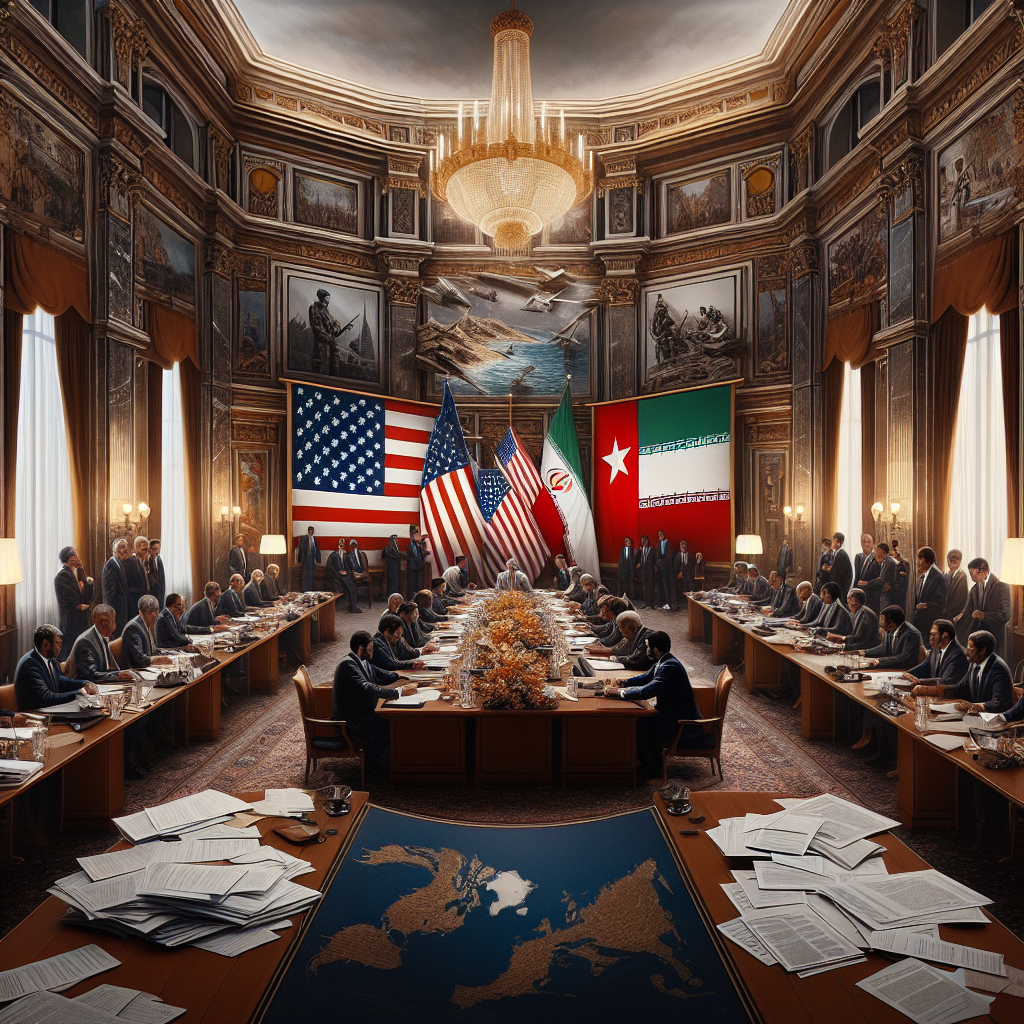
On Thursday, February 26, in Geneva, Switzerland, under the mediation of Oman, teams from the United States and Iran held the third round of negotiations to address Iran’s nuclear issue. This was considered a crucial meeting and seen as the last chance for diplomatic resolution. Experts warn that if the talks fail, the risk of war would significantly increase.
The US delegation was led by Special Envoy Steve Witkoff and President Trump’s son-in-law Jared Kushner. The Iranian negotiating team was led by Foreign Minister Abbas Araghchi.
Oman’s Foreign Minister Badr Albusaidi, who served as the mediator, stated on Thursday that the US and Iran exchanged “creative and positive ideas”. After several hours of talks on Thursday morning, the two sides took a brief recess and planned to resume discussions later.
Albusaidi expressed hope that more progress would be made once the negotiations resumed later on Thursday.
The reason for the brief recess is currently unclear, but Iran’s official news agency Tasnim News Agency reported that the indirect talks between the US and Iran were halted due to “delegate consultations” and would resume in the afternoon on Thursday.
Ali Vaez, the Iran Project Director at the International Crisis Group, told CNN that both Iran and the US must be willing to “soften their red lines” in order to achieve a breakthrough in today’s talks and reduce the risk of war.
“I believe today’s negotiations are crucial; if some breakthrough can be achieved, there may still be a glimmer of hope in diplomacy. However, if the talks collapse, I believe the risk of war will significantly increase, possibly even erupting this weekend,” Vaez said.
When discussing the possibility of a diplomatic breakthrough, Vaez expressed concern about the current US military buildup in the Middle East and Iran’s readiness for potential conflict.
“At the moment, the momentum for military action is much stronger than diplomatic means,” Vaez stated.
President Trump had announced last Thursday, February 19, that he would give Iran approximately 10 to 15 days to reach an agreement.
While diplomatic negotiations between the US and Iran were ongoing, the US had been assembling a large number of weapon systems near Iran in the Middle East region, deploying warships and fighter jets in the nearby waters and American bases in the region. This represents the largest military buildup by the US in the Middle East region since the Iraq War in 2003.
As part of Trump’s escalating pressure on the Iranian regime, most of the troops deployed to the region had been put in place. For example, last month, the Abraham Lincoln Carrier Strike Group was relocated from the Pacific to the Arabian Sea; at least 18 US F-35 Lightning II stealth fighter jets are stationed at the Muwaffaq Salti Air Base in northern Jordan. Trump also deployed the world’s largest and most advanced aircraft carrier, the USS Gerald R. Ford, to the Middle East.